


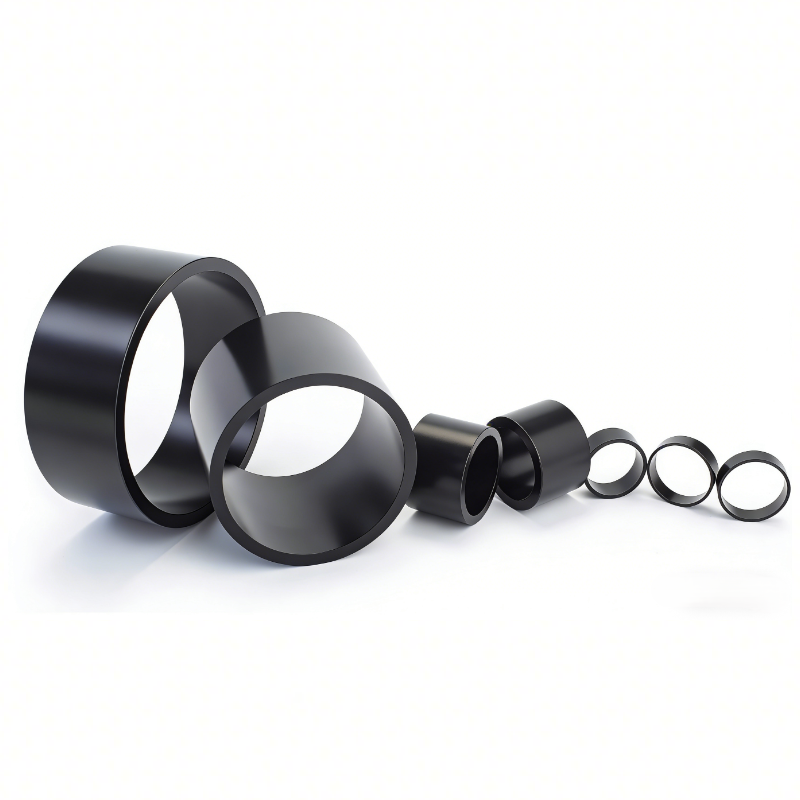
Designing high-performance industrial linear motors demands precise magnetic solutions — where even minor mismatches in magnet geometry, magnetization orientation, or environmental resilience can degrade force linearity, thermal stability, or long-term positional accuracy. Engineers face increasing pressure to balance precision motion control with manufacturability, integration readiness, and lifecycle durability — especially in servo systems, automation systems, and precision drive systems operating under dynamic load profiles. Selecting the right permanent magnets for linear motors is not merely a materials decision; it’s a system-level engineering commitment. This guide focuses exclusively on validated technical parameters — no speculation, no extrapolation — to support evidence-based selection of bonded NdFeB magnet solutions engineered for real-world industrial linear motor applications.
Understanding the Selection Challenge
Unlike rotary motors, industrial linear motors require magnets with tightly controlled spatial field distribution across extended lengths or planar arrays. Traditional sintered NdFeB magnets offer high energy product but limited geometric flexibility and brittle mechanical behavior — problematic for segmented rail designs or compact U-channel configurations. Meanwhile, ferrite magnets lack sufficient remanence for high-acceleration motion control. The challenge lies in identifying a permanent magnet solution that delivers consistent field integrity, dimensional repeatability, and seamless integration — without compromising manufacturability or coating compatibility. That’s why linear motor magnet selection increasingly converges on Permanent Magnet > Bonded NdFeB Magnet — a category uniquely enabled by the compaction process and tailored magnetization strategies.

Key Evaluation Criteria
Four interdependent criteria govern optimal selection of industrial linear motor magnet solutions:
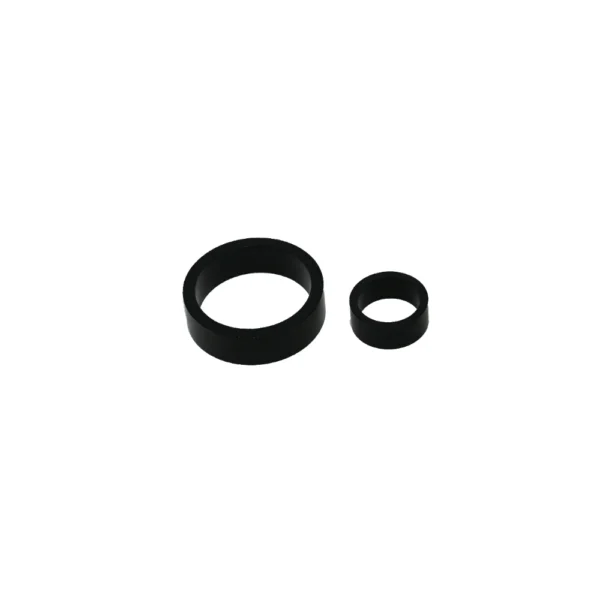
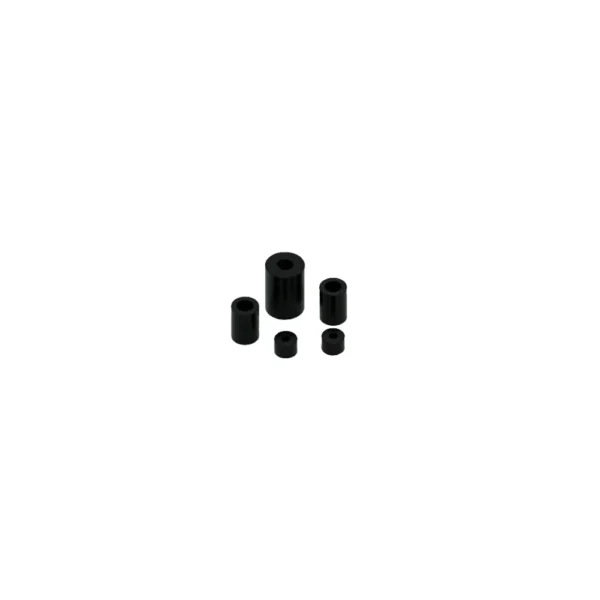
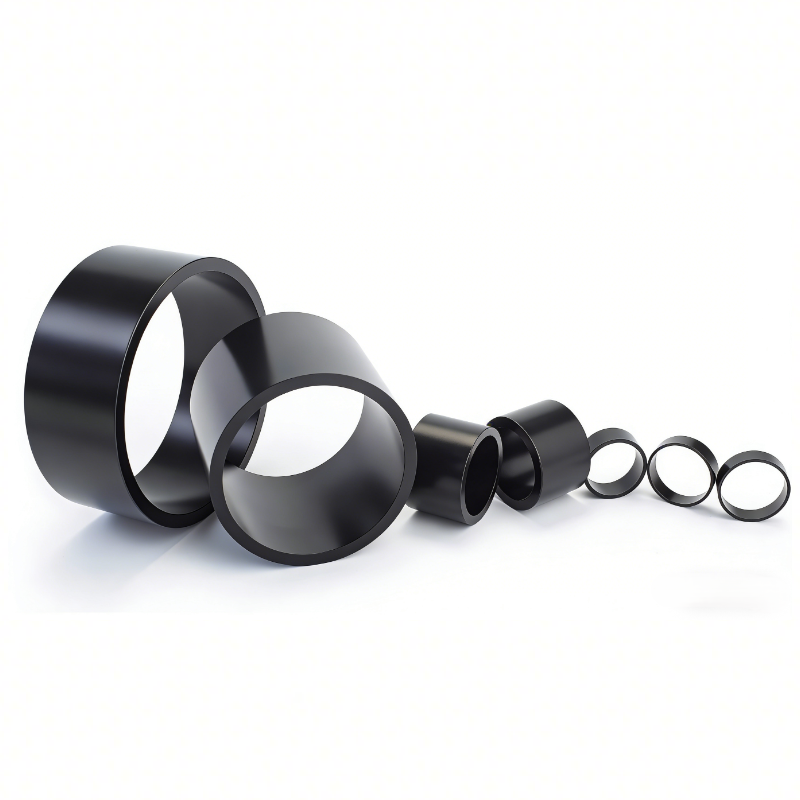
- Geometric Fidelity: Linear motor topologies — including ironless, slotted, or tubular designs — demand tight tolerance alignment between magnet arrays and coil windings. Only magnets produced via the Compaction Process support complex custom shapes and sizes per customer design, enabling direct fit into linear stators or moving platen assemblies.
- Magnetization Alignment: Field directionality must match motor topology. Axial magnetization suits simple push-pull configurations; multi-pole magnetization enables high-resolution commutation in servo-grade linear motors; radial magnetization supports cylindrical or arc-segmented linear actuators; oblique magnetization addresses skewed-field or torque-compensated designs. All four methods are technically supported for bonded NdFeB magnet.
- Environmental Integration: Automation environments expose magnets to humidity, lubricants, cleaning agents, and temperature gradients. Coating selection directly impacts corrosion resistance and adhesion stability. Epoxy provides cost-effective barrier protection; Parkerising enhances metal substrate bonding and wear resistance; Parylene delivers ultra-thin, conformal, pinhole-free insulation ideal for precision motion control equipment.
- Assembly Readiness: Time-to-integration matters. A magnetic rotor assembly concept does not apply literally to linear motors — but the principle extends: bonded NdFeB magnets can be pre-integrated with structural carriers, mounting plates, or alignment fixtures. More critically, they support full rotor-style integration for hybrid linear-rotary modules, where bonded magnet segments are assembled onto cores, hubs, and shafts as unified subassemblies.
Common Mistakes Buyers Make
Procurement teams often prioritize nominal magnetic strength over application-specific functionality — leading to avoidable integration failures:
- Assuming all NdFeB variants are interchangeable: Sintered and bonded NdFeB differ fundamentally in microstructure, mechanical behavior, and manufacturing scalability. Only bonded NdFeB magnet offers isotropic properties, near-net-shape compaction, and multi-pole magnetization capability — critical for distributed linear motor arrays.
- Overlooking magnetization method constraints: Selecting a magnet shape without confirming compatible magnetization — e.g., specifying a thin arc segment intended for radial magnetization but receiving axial-only magnetization — results in nonfunctional field orientation and wasted NRE costs.
- Delaying coating specification until late-stage sourcing: Epoxy, Parkerising, and Parylene require distinct surface preparation and process sequencing. Late-stage coating changes risk dimensional shift, delamination, or adhesion failure — particularly when magnets are pre-assembled into cores or hubs.
Recommended Solution
For engineers developing industrial linear motor magnet systems — especially those embedded in servo systems, motion control equipment, or precision drive systems — the Bonded NdFeB Magnet represents a purpose-built engineering solution. Its Compaction Process enables precise replication of customer-defined geometries — from trapezoidal rail segments to tapered pole pieces — without secondary machining. Four magnetization methods (Axial, Multi-pole, Radial, Oblique) ensure field vector alignment matches electromagnetic simulation outputs. And with Epoxy, Parkerising, or Parylene coating options, environmental robustness is engineered-in from the first specification review. Crucially, this custom bonded NdFeB magnet can be delivered either as discrete magnet elements or fully integrated into rotor assemblies — including shafts, cores, and hubs — accelerating prototyping and reducing final assembly complexity.
FAQ
Q: Can Bonded NdFeB magnets be manufactured in custom shapes?
A: Yes. Bonded NdFeB magnets can be manufactured in various sizes and shapes according to customer design.
Q: What magnetization methods are available for Bonded NdFeB magnets?
A: Bonded NdFeB magnets can be magnetized using axial, multi-pole, radial, or oblique magnetization methods.
Q: Can Bonded NdFeB magnets be supplied as rotor assemblies?
A: Yes. Bonded NdFeB magnets can be integrated with shafts, cores, hubs, and other components to form rotor assemblies.
Q: Why is the Compaction Process essential for linear motor applications?
A: The Compaction Process enables net-shape manufacturing of complex geometries required for segmented linear motor topologies — supporting tight dimensional repeatability and eliminating post-machining that risks magnetic property degradation.
Q: Which coating is recommended for cleanroom-compatible motion control equipment?
A: Parylene is widely specified for cleanroom and vacuum-rated precision drive systems due to its ultra-thin, conformal, and particle-free dielectric properties.
Conclusion
Selecting permanent magnets for linear motors requires aligning material behavior, manufacturing capability, and system integration requirements — not just magnetic performance metrics. For industrial linear motor magnet applications demanding geometric flexibility, precise field orientation, and reliable environmental protection, Permanent Magnet > Bonded NdFeB Magnet stands out as the only category meeting all three criteria through verified technical capabilities: Compaction Process manufacturing, four defined magnetization methods, and three industry-validated coatings. Whether designing next-generation automation systems or upgrading legacy motion control equipment, this solution supports rapid iteration, reduced assembly risk, and long-term field reliability. Contact our engineering team to discuss your application requirements.