


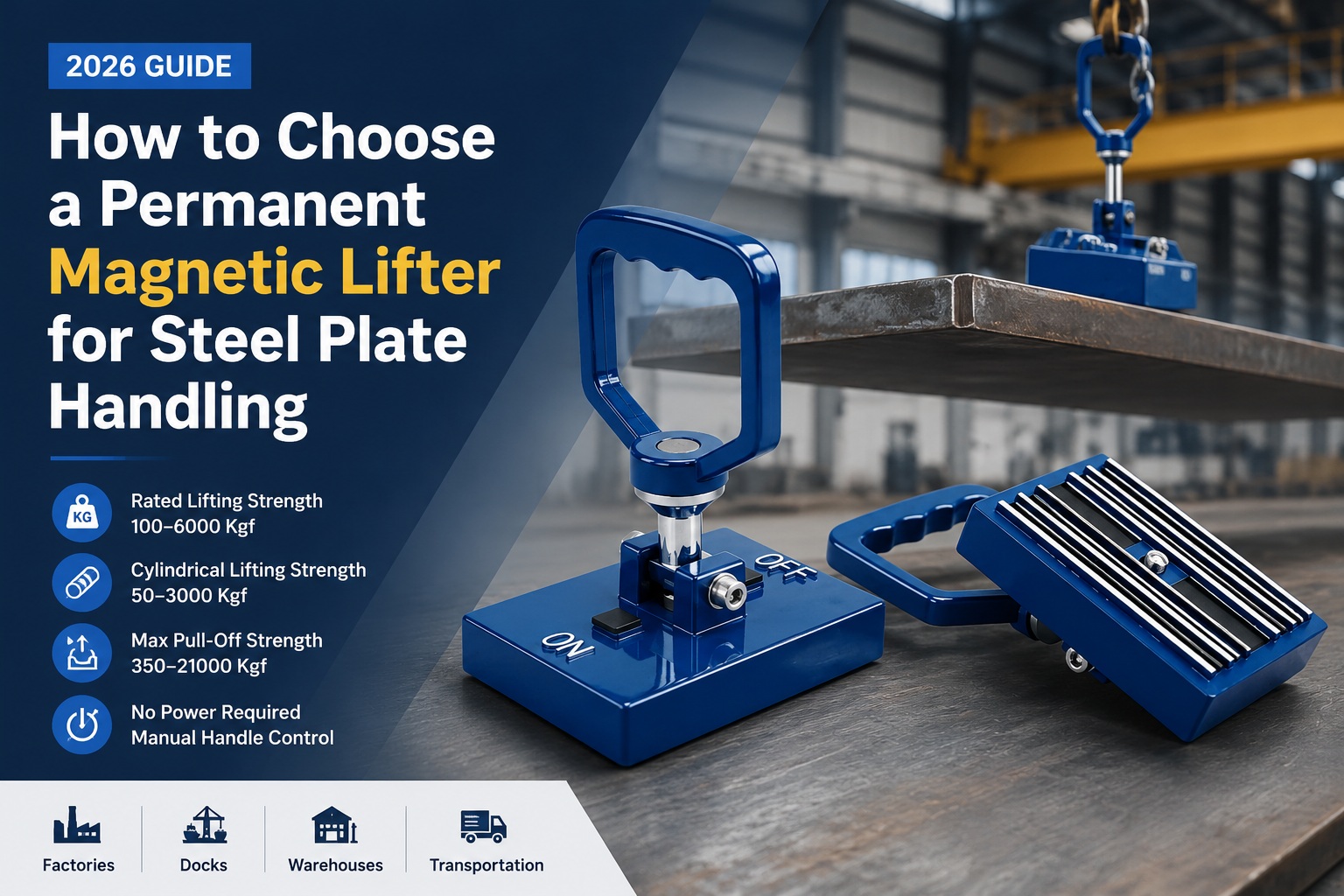
Understanding the Selection Challenge
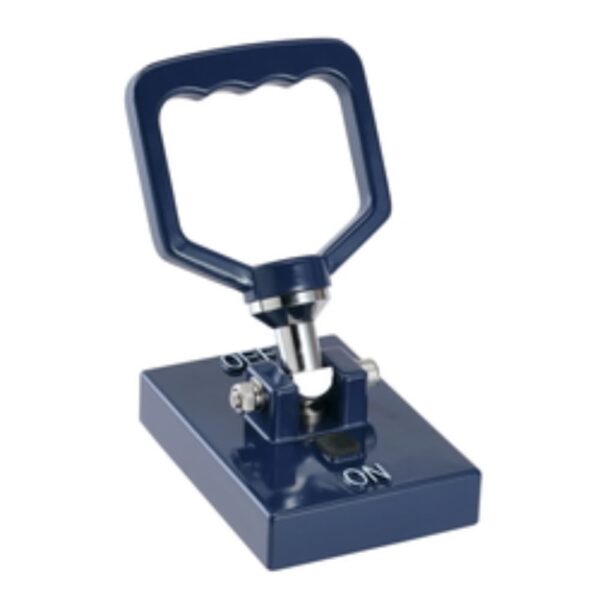
Steel plate handling requires buyers to match lifting requirements with verified product specifications rather than relying on general category assumptions. When evaluating a magnetic lifter for steel plates, the most useful starting points are the rated lifting strength, cylindrical lifting strength, maximum pull-off strength, operating temperature, product dead weight, and the actual geometry of the workpiece.
The PML Series is designed for ferromagnetic material handling and covers a wide capacity range, from lighter lifting tasks to heavier steel plate and steel ingot applications. Because the product page lists different values for flat and cylindrical lifting, buyers should evaluate the workpiece type before selecting a model.
Key Evaluation Criteria
1. Rated Lifting Strength
The permanent magnetic lifter series provides rated lifting strengths from 100 Kgf to 6000 Kgf across the PML100A to PML6000A models. This is the primary specification buyers should compare with the required lifting load for flat ferromagnetic workpieces.
Rather than choosing a model by size or dead weight alone, procurement teams should compare the required load with the rated lifting strength listed for the corresponding PML model and confirm that the workpiece condition and contact arrangement are suitable for the intended lift.
2. Cylindrical Lifting Strength
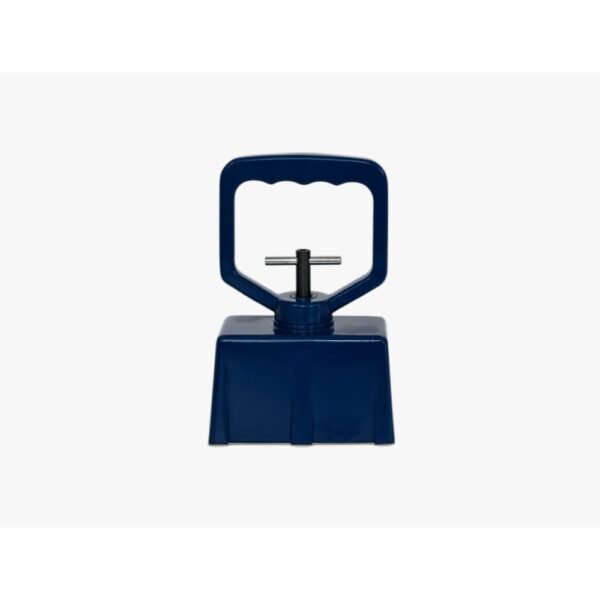
The PML Series also publishes cylindrical lifting strength from 50 Kgf to 3000 Kgf. This specification is relevant when the workpiece is cylindrical or when the magnetic contact differs from a flat plate application.
Buyers handling round ferromagnetic materials should use the cylindrical lifting specification rather than assuming the flat rated lifting strength applies in the same way. The appropriate model should be selected according to the actual workpiece geometry and required lifting load.
3. Maximum Pull-Off Strength
The listed maximum pull-off strength ranges from 350 Kgf to 21000 Kgf across the PML Series. This value gives buyers an additional reference when comparing model performance and should be reviewed together with the rated lifting strength and cylindrical lifting strength.
For project selection, these specifications should be treated as separate parameters rather than interchangeable values. The final model should be chosen according to the actual lifting requirement and workpiece type.
4. Magnet Type and Manual Operation
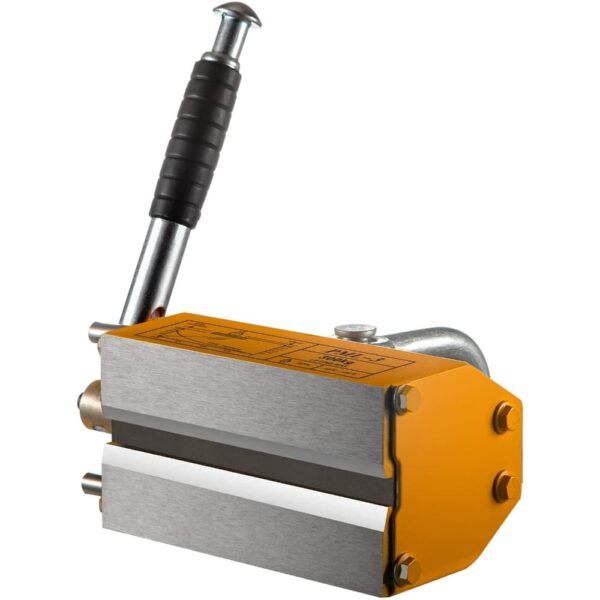
The PML Series uses NdFeB permanent magnets and a manual handle-controlled magnetic circuit. The handle is used to switch the magnetic field on or off during operation.
Because the lifter uses permanent magnets, no electrical power supply is required. This allows the product to be used in material handling applications where buyers prefer a lifting solution that does not depend on an external electrical connection.
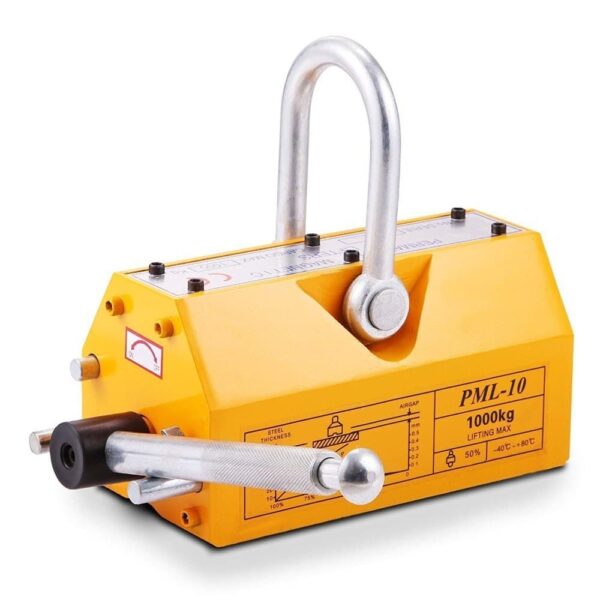
The listed operating temperature for the PML Series is <80°C. Buyers should compare this limit with the actual temperature of the workpiece and the intended operating environment before selecting the lifter for a project. If the handling process involves temperatures outside the published range, the suitability of the standard product should be confirmed before use. The dead weight of the PML Series ranges from 3 kg to 440 kg depending on the model. Product weight should therefore be considered together with lifting capacity when evaluating how the lifter will be incorporated into the buyer’s handling equipment and workflow. A higher-capacity model will also have different physical and handling requirements, so model selection should be based on the required lifting specification rather than capacity alone. The PML Series Magnetic Lifter is intended for lifting and handling ferromagnetic materials such as steel plates and steel ingots. The product page identifies applications in factories, docks, warehouses, and transportation. This makes the series relevant to industrial material handling operations where buyers need a permanent lifting magnet for moving steel workpieces without relying on an external electrical power supply. The PML Series Magnetic Lifter covers models from PML100A to PML6000A, with rated lifting strengths from 100 Kgf to 6000 Kgf. Cylindrical lifting strength ranges from 50 Kgf to 3000 Kgf, while maximum pull-off strength ranges from 350 Kgf to 21000 Kgf. The series uses NdFeB permanent magnets and manual handle-controlled operation, so no electricity is required. For buyers selecting a model, the appropriate choice should be based on the required lifting load, workpiece geometry, operating temperature, and the corresponding specifications listed for each model. The PML Series covers rated lifting strengths from 100 Kgf to 6000 Kgf. Buyers should compare the required lifting load with the rated lifting strength and review the cylindrical lifting strength and maximum pull-off strength where applicable. Yes. The PML Series specifies cylindrical lifting strengths from 50 Kgf to 3000 Kgf. The model should be selected according to the cylindrical workpiece and the required lifting load. No. The PML Series uses NdFeB permanent magnets and a manual handle-controlled magnetic circuit, so no electricity is required for operation. Selecting the right magnetic lifter for steel plates requires buyers to compare the actual workpiece and lifting requirement with the published specifications of the PML Series. The key parameters are rated lifting strength from 100–6000 Kgf, cylindrical lifting strength from 50–3000 Kgf, maximum pull-off strength from 350–21000 Kgf, operating temperature below 80°C, and model dead weight from 3–440 kg. With NdFeB permanent magnets, manual handle-controlled operation, and no need for an electrical power supply, the PML Series is suited to ferromagnetic material handling in factories, docks, warehouses, transportation, steel plate lifting, and steel ingot handling. Buyers should select the final model according to the actual load and workpiece geometry rather than relying on a single capacity figure.
3>5. Operating Temperature
6. Dead Weight and Handling Requirements
Common Selection Mistakes to Avoid
Where the PML Series Is Used
Recommended Solution: PML Series Magnetic Lifter
FAQ
Which PML magnetic lifter should I choose for different lifting loads?
Can the magnetic lifter handle cylindrical ferromagnetic workpieces?
Does the permanent magnetic lifter require an electrical power supply?
Conclusion