


Overview
Designing or specifying industrial encoders demands precise magnetic performance—especially when resolution, repeatability, and long-term stability are non-negotiable. A common engineering challenge arises early in the design cycle: selecting a permanent magnet for encoders that delivers consistent multi-pole field geometry, dimensional fidelity, and thermal resilience—without over-engineering cost or complexity. For motion control engineers and OEM encoder designers, the choice between bonded NdFeB and SmCo magnets isn’t theoretical—it directly impacts signal integrity, production scalability, and total cost of ownership.
Material Comparison
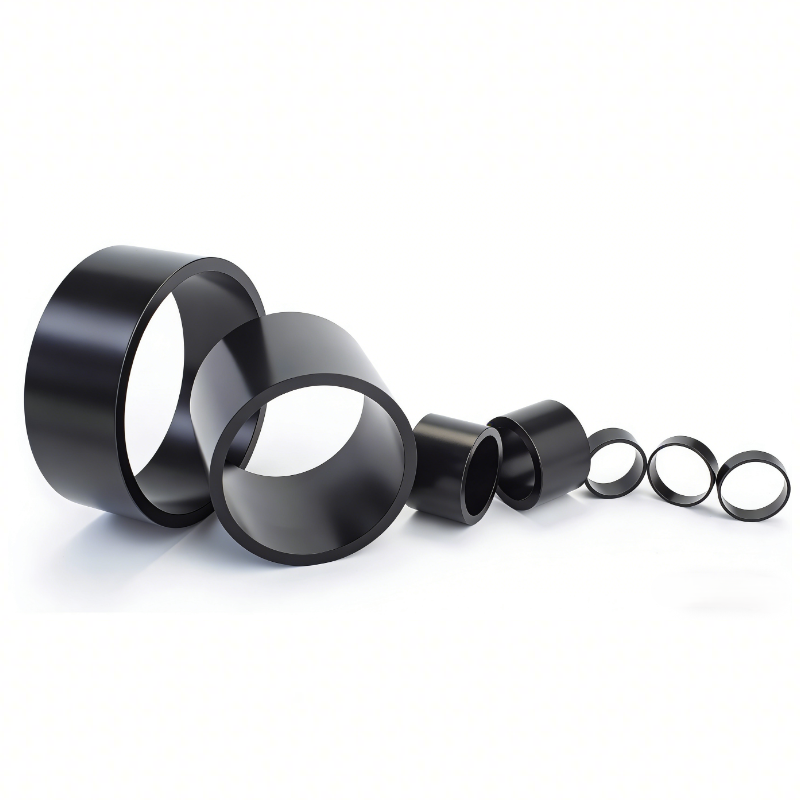
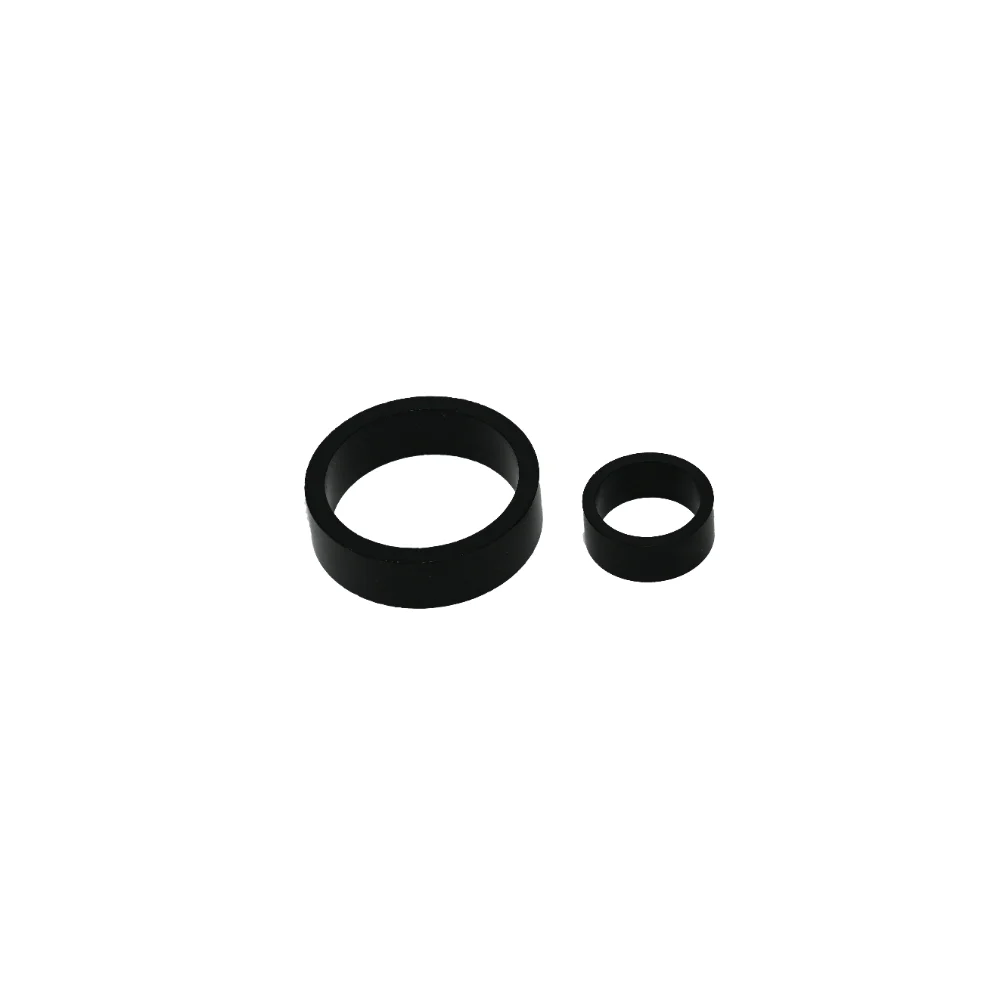
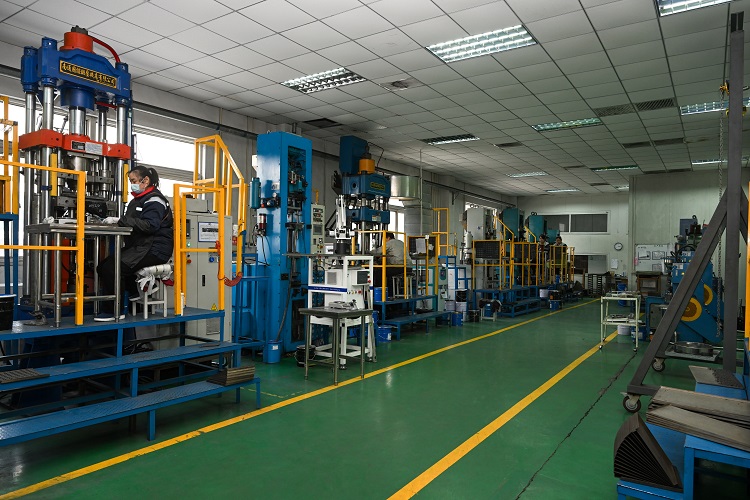
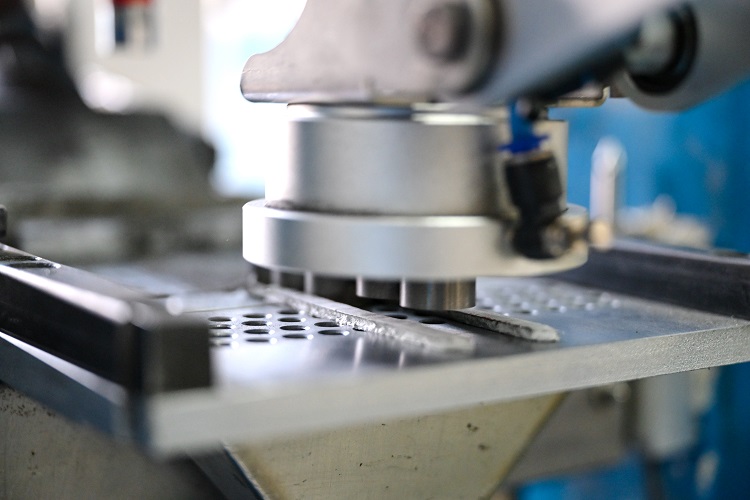
The foundational distinction lies in composition and process. A bonded NdFeB magnet consists of NdFeB magnetic powder uniformly dispersed in an epoxy binder and formed via compression molding. This yields a composite material with inherent isotropy, excellent shape complexity, and tight geometric tolerances—critical for high-resolution industrial encoder magnets.
In contrast, SmCo magnets are sintered alloys—typically Sm2Co17 or SmCo5—with no polymer binder. They offer higher intrinsic coercivity and superior resistance to demagnetization at elevated temperatures, but lack the design freedom of compression-molded geometries.
Crucially, bonded NdFeB is classified under Permanent Magnet > Bonded NdFeB Magnet > Industrial Encoder Magnets—a category defined by its manufacturing method, magnetization capability, and application-specific validation—not generic magnet performance.
Performance Comparison
Magnetization Flexibility
Industrial encoders require precise angular field distribution—often with 16, 32, 64, or more poles per rotation. Bonded NdFeB supports multi-pole magnetization, including axial, radial, oblique, and custom pole patterns—all achievable without secondary machining. This is enabled by uniform particle alignment during compression molding and controlled post-molding magnetization.
SmCo magnets can be multi-pole magnetized, but their brittle, sintered nature limits pole count density and increases risk of cracking during high-field magnetization cycles—particularly in thin rings or complex profiles.
Thermal Stability
Maximum operating temperature is application-dependent. Bonded NdFeB offers up to 160°C, depending on grade—sufficient for most servo systems and precision automation equipment where ambient + self-heating stays within this envelope. SmCo retains useful magnetization beyond 250°C, making it preferable only where sustained exposure above 160°C is unavoidable (e.g., certain aerospace or high-speed spindle environments).
For precision encoder magnet applications in industrial encoders, servo systems, and motion control, thermal derating rarely exceeds 120–140°C—well within bonded NdFeB’s validated range.
Dimensional Consistency & Surface Finish
Compression molding delivers exceptional repeatability—key for encoder rotor/stator assemblies requiring sub-10 µm runout and uniform air gap. Surface coatings—including epoxy, Parkerising, and Parylene—enhance corrosion resistance and mechanical robustness without affecting magnetic geometry.
SmCo parts typically require grinding or diamond machining to meet encoder-grade tolerances—adding cost, lead time, and variability. No standard SmCo surface coating matches the functional integration of epoxy or Parylene in bonded NdFeB.
Cost and Manufacturing Considerations
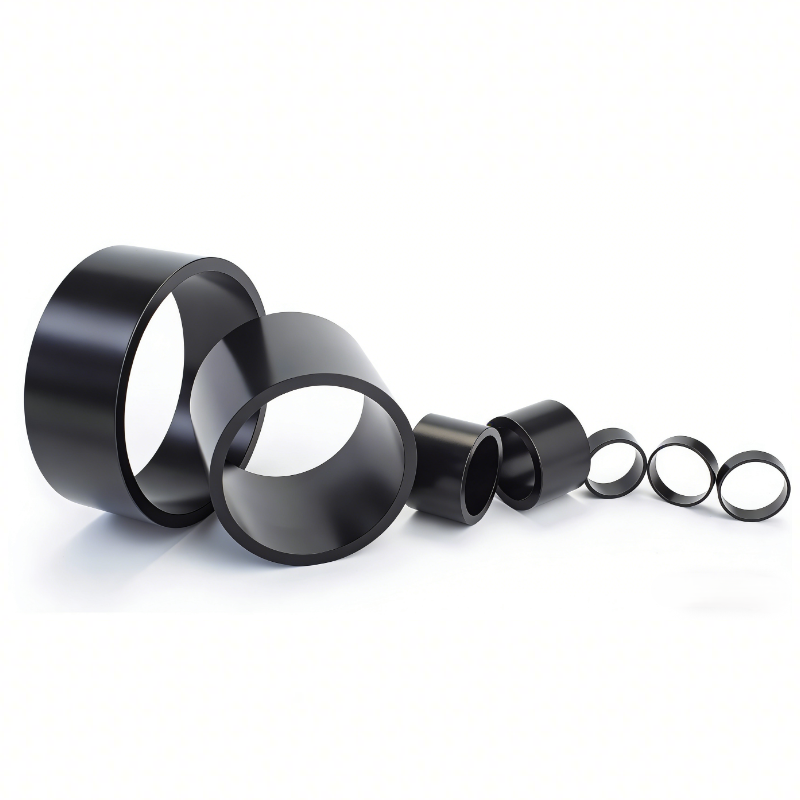
From a procurement perspective, bonded NdFeB offers significant advantages for volume OEM production. Compression molding enables net-shape or near-net-shape manufacturing—eliminating costly secondary operations like cutting, grinding, or bonding. Tooling amortization scales efficiently across batches, supporting just-in-time supply for encoder manufacturers.
SmCo involves high raw material costs (cobalt price volatility), energy-intensive sintering, and mandatory post-processing—resulting in longer lead times and higher unit cost. Unless extreme temperature or radiation resistance is mandated, SmCo introduces unnecessary overhead for magnetic encoder applications in standard industrial environments.
Importantly, bonded NdFeB’s OEM bonded NdFeB magnet configuration—designed for direct integration into encoder housings or motor rotors—reduces assembly steps and improves system-level reliability.
Best Applications for Each Option
Bonded NdFeB magnet excels where:
- Multi-pole field geometry is required (e.g., 32-pole incremental or absolute encoder rings)
- Complex shapes—such as segmented arcs, tapered rings, or integrated mounting features—are needed
- Operating temperatures remain ≤160°C
- High-volume, repeatable production is essential (e.g., BLDC motors, stepping motors, synchronous motors)
- Surface protection must coexist with dimensional stability (epoxy, Parkerising, or Parylene)
This makes it the preferred solution for industrial encoder magnets used in servo systems, motion control platforms, and precision automation equipment—where signal-to-noise ratio, pole-to-pole consistency, and long-term aging behavior are prioritized.
SmCo remains appropriate only when:
- Ambient + operational temperatures exceed 160°C consistently
- Extreme demagnetization resistance is required under combined thermal and reverse-field stress
- Application lifetime justifies premium material and processing cost (e.g., downhole sensors, military-grade inertial systems)

Which One Should You Choose?
For the vast majority of industrial encoder designs—including those embedded in micro motors, BLDC motors, stepping motors, and synchronous motors—the bonded NdFeB magnet is the optimal engineering choice. Its combination of multi-pole magnetization, compression-molded dimensional accuracy, thermally stable performance up to 160°C, and scalable manufacturing aligns precisely with the technical and commercial requirements of modern encoder development.
If your application operates below 160°C—and requires complex geometry, high pole count, or tight batch-to-batch consistency—you do not need SmCo. Over-specifying SmCo adds cost, delays, and integration risk without delivering measurable encoder performance gains.
Our Bonded NdFeB Magnet is engineered specifically for this use case: compression molded, multi-pole magnetized, available with epoxy, Parkerising, or Parylene coating, and qualified for industrial encoders, BLDC motors, and precision motion control applications.
FAQ
Q: Why are bonded NdFeB magnets suitable for industrial encoders?
A: Bonded NdFeB magnets support complex shapes and multi-pole magnetization with excellent dimensional consistency, making them ideal for precision encoder applications.
Q: What is the difference between bonded NdFeB and SmCo magnets?
A: Bonded NdFeB magnets offer excellent design flexibility and cost efficiency, while SmCo magnets provide superior high-temperature stability for demanding environments.
Q: Can bonded NdFeB magnets be magnetized radially or obliquely?
A: Yes—bonded NdFeB supports axial, radial, multi-pole, and oblique magnetization configurations, enabling tailored field geometry for diverse encoder architectures.
Q: Is surface coating necessary for industrial encoder magnets?
A: Surface coating—such as epoxy, Parkerising, or Parylene—is recommended to ensure corrosion resistance, mechanical durability, and long-term stability in industrial environments.
Conclusion
Selecting the right permanent magnet for encoders hinges not on material prestige—but on matching physical, thermal, and manufacturability attributes to real-world application constraints. Bonded NdFeB—specifically in the Permanent Magnet > Bonded NdFeB Magnet > Industrial Encoder Magnets category—delivers proven performance for industrial encoders, servo systems, motion control, and precision automation equipment. Its compression molding process, multi-pole magnetization capability, and operating range up to 160°C make it the technically sound and commercially rational choice in 2026 and beyond.
SmCo remains a niche solution—valuable only where bonded NdFeB’s thermal ceiling is exceeded. For all other scenarios, specifying bonded NdFeB avoids over-engineering while ensuring signal fidelity, production readiness, and lifecycle reliability.
Contact our engineering team to discuss your application requirements.