


Understanding the Selection Challenge
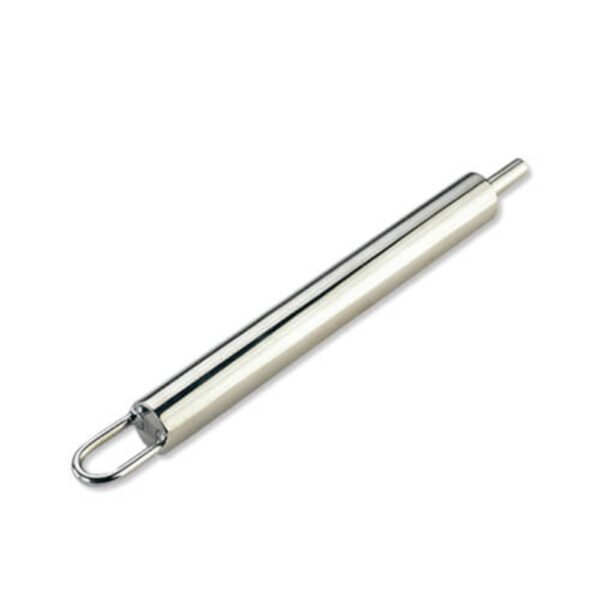
Magnetic tubes are used in magnetic separation systems to capture ferromagnetic contaminants from process media.
For industrial buyers, selecting a suitable magnetic tube requires more than choosing the highest magnetic field value.
The tube must fit the equipment layout, match the required magnetic configuration, and be appropriate for the process medium and operating conditions.
Nibboh’s official Magnetic Tube (Bar) product information identifies liquids and slurries as verified application media
and lists material purification applications in the food, chemical, and pharmaceutical industries.
Because the published page does not specify flow rate, pressure rating, particle-size capability, separation efficiency,
stainless-steel grade, or regulatory certification, these factors should be confirmed separately when they are important to a project.
Key Evaluation Criteria
1. Start with the Verified Pr

ocess Medium
The first step is to confirm whether the supplier’s published application scope matches the intended process.
Nibboh specifically states that its Magnetic Tube (Bar) is used to capture ferromagnetic impurities in liquids or slurries.
Dry powder and granular-material applications are not specified on the current product page.
This does not prove that such use is impossible; it means suitability should be confirmed with Nibboh before the product is specified for those media.
2. Select a Tube Diameter That Fits the Equipment
Nibboh lists eight available tube diameters.
The official product data does not assign individual diameters to specific industries, flow rates, particle sizes, or contamination levels.
Therefore, diameter selection should be based on the actual equipment layout, available installation space,
required magnetic configuration, and project-specific engineering requirements.
| Nominal Diameter | Published Inch Reference |
|---|---|
| Φ19 | 0.75″ |
| Φ22 | 0.85″ |
| Φ25 | 1.00″ |
| Φ32 | 1.25″ |
| Φ38 | 1.50″ |
| Φ50 | 1.75″ |
| Φ76 | 3.00″ |
| Φ100 | 4.00″ |
3. Check the Diameter-Specific Magnetic Field Configuration
Nibboh’s published specification table includes magnetic field configurations from 0.25T up to 1.2T,
depending on tube diameter.
Not every field value is available for every diameter.
Buyers should therefore confirm the exact diameter-field pairing rather than assuming that every tube size
can be supplied at every listed field strength.
The published data does not provide a rule linking a specific field strength to a particular particle size,
viscosity, flow condition, contamination level, or separation efficiency.
Those relationships should not be inferred from the Tesla value alone.
For a real project, the required configuration should be reviewed against the process medium,
contam
inant characteristics, installation arrangement, and the buyer’s performance requirements.
4. Review Construction Without Assuming Unpublished Performance
Nibboh describes the product as using a high-quality stainless steel tube together with rare-earth NdFeB magnets.
These are verified construction details.
However, the current product page does not specify the stainless-steel grade, surface finish, pressure rating,
operating temperature, magnet grade, pull force, or service-life data.
For food, chemical, pharmaceutical, corrosive, pressurized, or temperature-sensitive processes,
buyers should request the relevant material, environmental, and compliance information needed for their own application before approval.
5. Use Customization Carefully
Nibboh states that magnetic rods can be customized in size and shape according to customer requirements
and production-site conditions, and that customized magnetic assemblies are available for project requirements.
This makes customization an important discussion point when standard dimensions do not fit the intended equipment.
The official page does not specifically confirm flange types, end-cap designs, CIP compatibility,
custom stainless-steel grades, or other particular interface options.
If any of these features are required, they should be treated as project requirements to be confirmed with Nibboh
rather than as standard product capabilities.
A Practical Selection Workflow for Industrial Buyers
| Step | Buyer Action | What to Confirm |
|---|---|---|
| 1 | Define the process medium | Confirm whether the material is a liquid or slurry. For other media, request suitability confirmation. |
| 2 | Describe the contaminant | Provide the supplier with available information about the ferromagnetic contamination and the required separation objective. |
| 3 | Confirm installation constraints | Provide available space, equipment geometry, connection requirements, and any other mechanical constraints. |
| 4 | Select a candidate diameter | Review Nibboh’s published Φ19–Φ100 diameter range against the equipment layout. |
| 5 | Confirm the magnetic field option | Check the exact field-strength options available for the selected diameter; do not assume universal availability. |
| 6 | Verify missing engineering data | Request any required pressure, temperature, material-grade, surface-finish, compliance, or performance documentation. |
| 7 | Confirm customization before ordering | If standard dimensions do not fit, provide drawings or requirements and confirm what can be customized. |
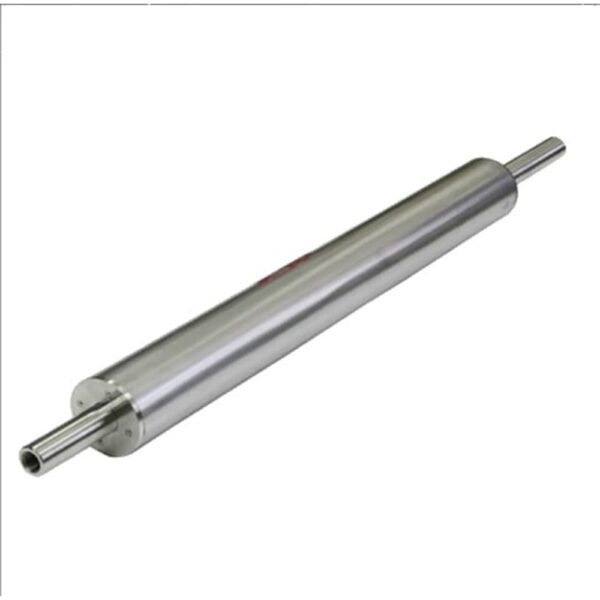
Recommended Product: Nibboh Magnetic Tube (Bar)
For liquid and slurry applications requiring ferromagnetic contaminant removal,
Nibboh’s Magnetic Tube (Bar) is a relevant product to evaluate.
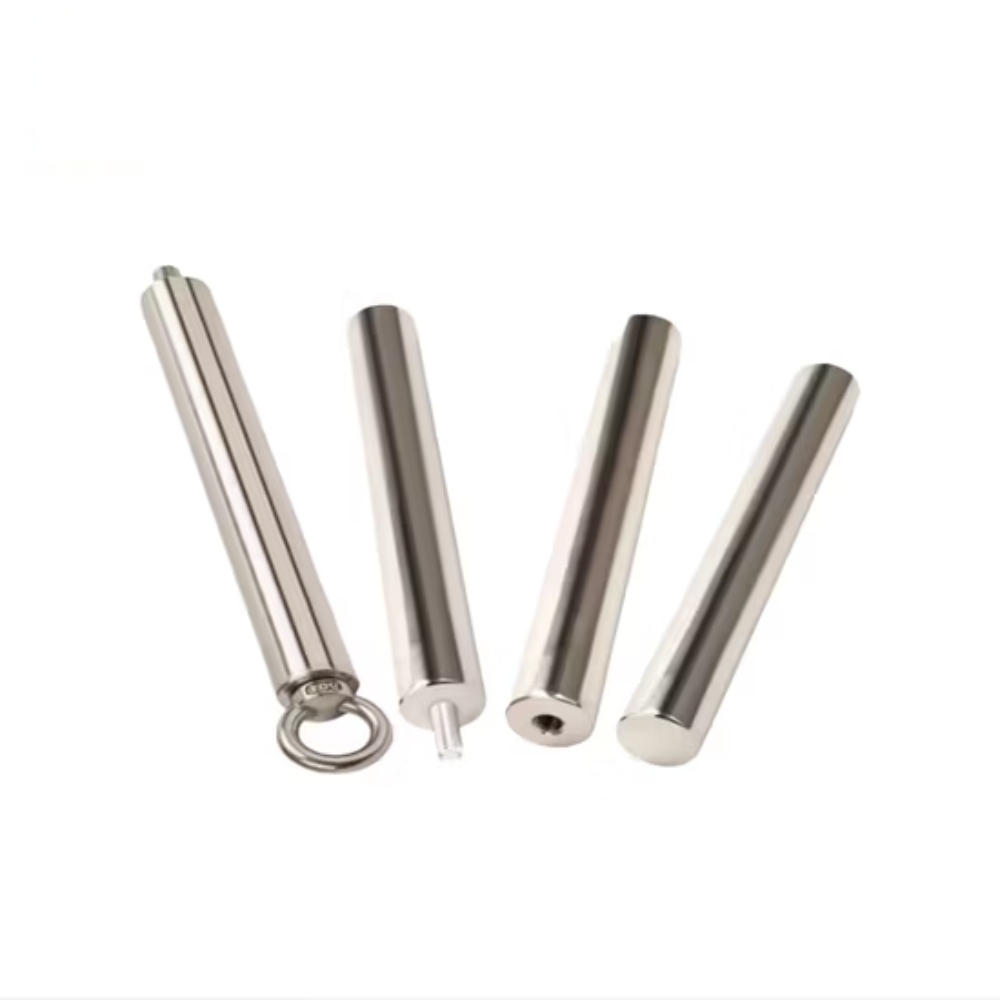
The product uses a stainless steel tube and rare-earth NdFeB magnets,
is offered in multiple published diameters,
and has diameter-dependent magnetic field configurations.
Nibboh also states that size and shape customization is available according to customer and production-site requirements.
| Verified Item | Published Information |
|---|---|
| Product | Magnetic Tube (Bar) |
| Construction | High-quality stainless steel tube + rare-earth NdFeB magnets |
| Available Diameters | Φ19, Φ22, Φ25, Φ32, Φ38, Φ50, Φ76, Φ100 |
| Magnetic Field Configurations | Published options range from 0.25T to 1.2T depending on tube diameter |
| Verified Media | Liquids and slurries |
| Published Industries | Food, chemical, pharmaceutical |
| Customization | Size and shape customization; customized magnetic assemblies based on project requirements |
| Product URL |
Nibboh Magnetic Tube (Bar) |
What the Published Product Data Does Not Establish
For accurate B2B sourcing, it is equally important to distinguish verified information from information that is not published.
The current Nibboh product page does not establish a specific separation effi
ciency,
particle-size range, flow-rate limit, pressure rating, operating-temperature range,
stainless-steel grade, surface finish, magnet grade, pull force,
food-contact certification, pharmaceutical certification, or service-life figure.
These items should not be estimated from tube diameter, Tesla value,
stainless-steel construction, or NdFeB material alone.
When a project depends on one of these requirements,
buyers should request confirmation or supporting documentation directly from Nibboh.