


Understanding the Selection Challenge
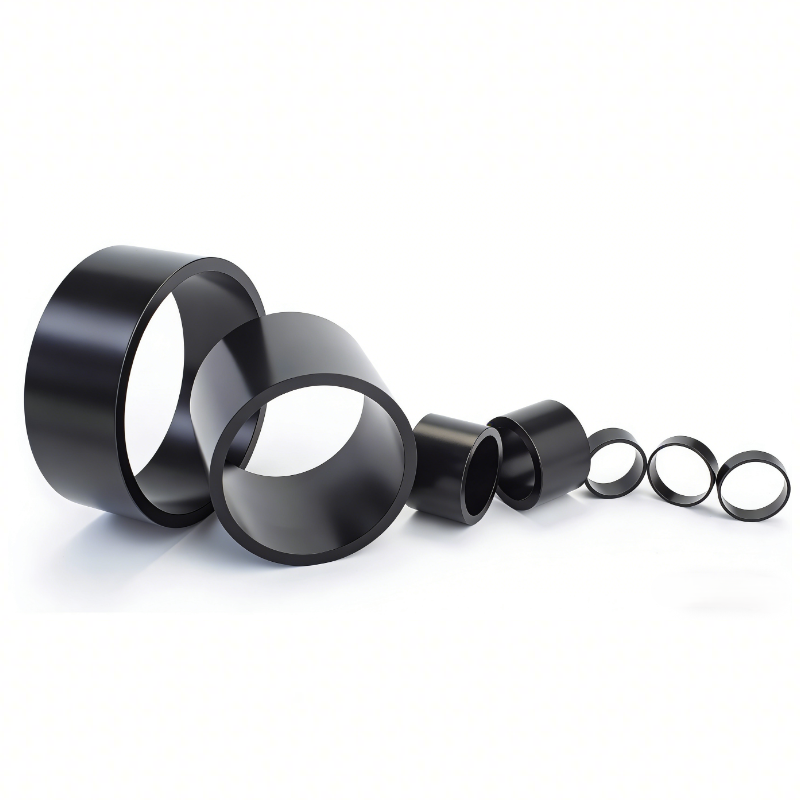
Stepper motor designers and OEMs face a persistent engineering trade-off: achieving high torque density and precise step resolution while maintaining thermal stability, dimensional repeatability, and cost-effective assembly. Traditional ferrite magnets lack sufficient energy product for compact, high-performance designs. Sintered NdFeB offers superior (BH)max but introduces brittleness, tight-tolerance machining costs, and complex multi-pole magnetization challenges—especially for small-diameter rotors or thin-walled geometries. Selecting the right bonded NdFeB magnet is therefore not just a materials decision, but a system-level enabler for next-generation stepper motor architectures.
Key Evaluation Criteria
Magnetization Geometry Must Match Motor Topology
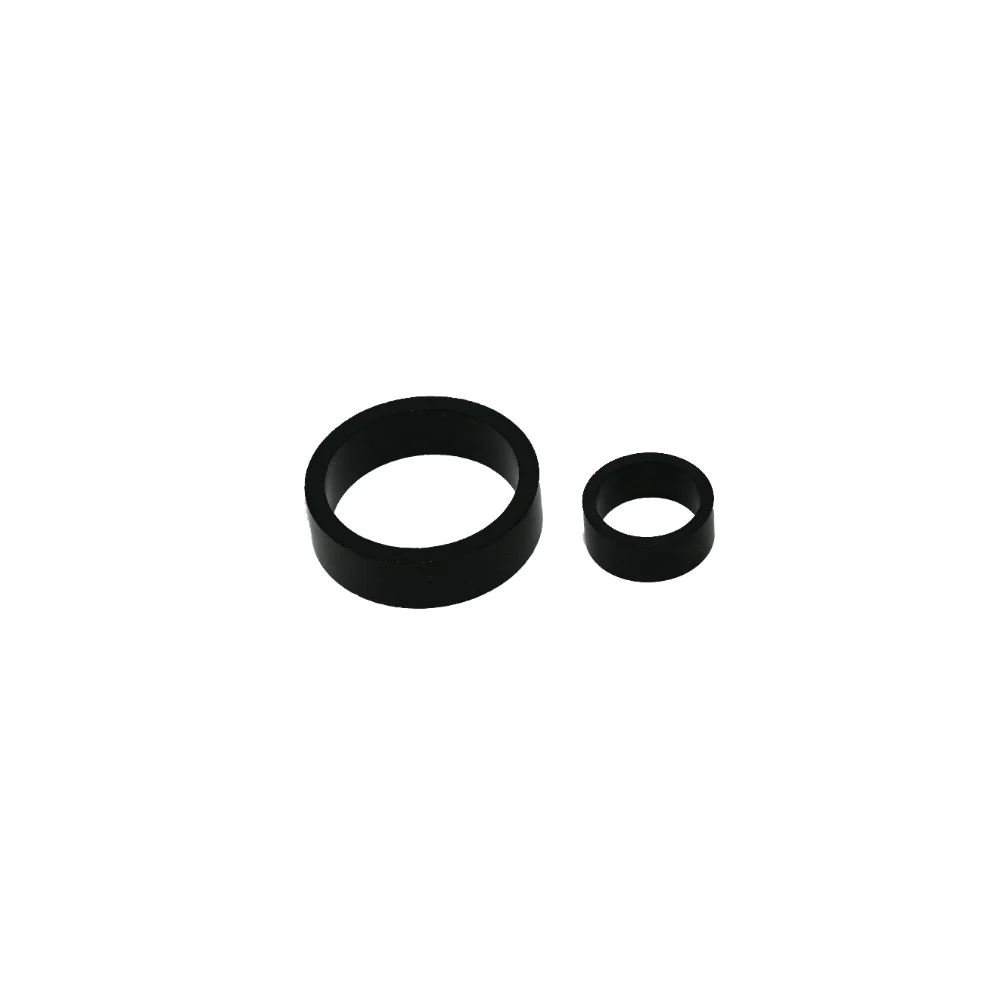
Stepper motors—particularly hybrid and permanent magnet types—rely on controlled flux distribution across stator teeth and rotor poles. Radial magnetization is essential for cylindrical rotor assemblies where flux must project outward toward the air gap. Multi-pole magnetization enables precise pole count alignment. Axial magnetization suits pancake-style or disk-type steppers, while oblique magnetization supports skew compensation to reduce cogging torque. The TNM Series supports all four configurations—axial, multi-pole, radial, and oblique—as standard options, enabling direct integration without post-magnetization rework.
Grade Selection Dictates Thermal & Dynamic Performance
Operating temperature directly impacts coercivity retention and step accuracy. With a temperature coefficient of –0.10 to –0.14 %/°C, bonded NdFeB magnets exhibit predictable, linear flux loss under thermal load. Maximum operating temperature ranges from 120–160°C, grade dependent: TNM-12 and TNM-12L are rated to 120°C; TNM-8H and TNM-10H reach 160°C; most other grades—including TNM-8, TNM-10, and TNM-3914—support up to 130°C. For sealed stepper motors in industrial automation where ambient plus self-heating exceeds 125°C, TNM-10H or TNM-8H provides necessary thermal margin without sacrificing magnetic output.
Magnetic Output Must Balance Torque, Size, and Cost
The TNM Series delivers a broad performance envelope: residual induction Br: 250–1350 mT, intrinsic coercive force Hcj: 320–1360 kA/m, and maximum energy product (BH)max: 12–336 kJ/m³ (1.5–42 MGOe). Higher-grade variants such as TNM-3914 and TNM-3417 optimize for miniaturized micro motor magnets where space constraints demand high energy density, while lower-cost grades like TNM-2 or TNM-4 remain viable for cost-sensitive, low-torque applications. Recoil permeability is fixed at 1.2 µH/m, ensuring stable demagnetization resistance across the full operating range.
Common Mistakes Buyers Make
Assuming All Bonded NdFeB Magnets Are Interchangeable
Not all bonded NdFeB magnets share identical process fidelity or thermal resilience. The TNM Series is manufactured via a tightly controlled sequence: mixing powder – pressing – curing – coating – magnetizing – inspection – packaging. Variability in binder content, particle size distribution, or curing parameters—common in non-specialized suppliers—can degrade Br consistency and Hcj uniformity across batches. This leads to inconsistent step accuracy and increased rejection rates during motor final test.

Overlooking Corrosion Protection in Humid Environments
Bonded NdFeB magnets contain neodymium-rich phases highly susceptible to oxidation. Without protection, surface rust compromises mechanical integrity and magnetic performance over time—even in indoor industrial settings with seasonal humidity swings. Relying solely on base material corrosion resistance is technically invalid: TNM magnets are supplied exclusively with engineered coatings—Epoxy, Parylene, or Parkerising—each offering distinct thickness, dielectric strength, and chemical resistance profiles. Parylene, for instance, provides conformal coverage ideal for intricate multi-pole geometries.
Ignoring Mechanical Compatibility During Assembly
With a hardness of HRB 35–45 and density of 5.2–6.4 g/cm³, TNM-series bonded NdFeB magnets offer balanced machinability and structural rigidity—critical when press-fitting into motor housings. Selecting overly hard (HRB >45) or brittle variants risks chipping during automated insertion; conversely, softer grades (<HRB 35) may deform under clamping forces. TNM’s consistent hardness range ensures reliable, high-yield assembly across automated production lines.
Recommended Solution
For stepper motor applications demanding precision, reliability, and scalable manufacturability, the Bonded NdFeB Magnet (TNM Series) serves as an engineered replacement for both sintered NdFeB and ferrite magnets. Its construction enables true radial magnetization magnet capability—unattainable with sintered grades without costly segmentation—and simplifies motor assembly. When paired with custom magnetization patterns and Parylene coating for moisture-critical environments, it can improve efficiency versus equivalent ferrite designs without increasing rotor inertia or compromising thermal derating.
- TNM-8SR: Balanced grade for high-resolution hybrid stepper rotors requiring stable radial magnetization magnet and (BH)max of 64–72 kJ/m³ at up to 130°C operation.
- TNM-10H: Recommended for high-duty-cycle industrial stepper motors where continuous operation near 150°C demands a maximum operating temperature of 160°C and (BH)max up to 88 kJ/m³.
- TNM-3914: Highest Br variant (up to 1350 mT) and (BH)max up to 336 kJ/m³, suited for ultra-compact micro motor magnet applications with tight axial length constraints.
- TNM-3417: High-energy option with Br up to 1270 mT and (BH)max up to 288 kJ/m³ for compact stepper motor designs.
FAQ
Q: How do I choose between axial, radial, multi-pole, and oblique magnetization for a bonded NdFeB magnet?
A: Bonded NdFeB magnets can be magnetized axially, with multiple poles, radially, or obliquely. The choice should match the motor design and required flux pattern; the source page lists all four methods as available.
Q: Which bonded NdFeB grade should I select for a micro motor operating near 130°C?
A: Most TNM grades have a maximum operating temperature of 130°C. TNM-8H and TNM-10H reach 160°C, while TNM-12 and TNM-12L are rated to 120°C, so grade selection depends on thermal margin.
Q: What coating options are available for bonded NdFeB magnets in humid or corrosive environments?
A: Bonded NdFeB magnets are easily rusted and are supplied with anti-corrosion coatings such as Epoxy, Parylene, and Parkerising. Choose the coating based on exposure conditions and required protection.
Conclusion
Selecting the optimal bonded NdFeB magnet for stepper motors requires deliberate alignment of magnetization geometry, thermal rating, magnetic output, and protective coating—not just nominal grade designation. The TNM Series provides a validated, application-tuned portfolio spanning Br (250–1350 mT), (BH)max (12–336 kJ/m³), and max operating temperature (120–160°C), all produced via a repeatable, inspection-backed process. For engineers designing next-gen stepper motors—from compact micro motor magnet systems to high-torque industrial actuators—the right custom bonded magnet enhances precision, simplifies assembly, and extends service life. Contact our engineering team to discuss your application requirements.