



Understanding the Selection Challenge
Sensor manufacturers designing for high-temperature environments face a specific material selection problem: maintaining stable magnetic output where conventional ferrite or NdFeB magnets lose coercivity and remanence. The product page states that AlNiCo magnets offer a Maximum Operating Temperature exceeding 400°C, along with good corrosion resistance and high magnetic stability. This makes AlNiCo a relevant candidate for industrial equipment, instruments, sensors, permanent magnet motors, and magnetic devices. The core selection challenge is not temperature tolerance alone—it is matching grade-specific Br, Hcb, and temperature coefficients to the sensing architecture.
Key Evaluation Criteria
1. Thermal Stability Requirements Anchor Grade Selection
Not all AlNiCo grades behave identically at elevated temperatures. The product page lists a Reversible Temperature Coefficient α(Br) range of –0.03 to –0.02 %/°C, which directly affects calibration drift across the operating range. Grades with lower absolute α(Br), such as LNGT38 and LNGT40 at –0.025 %/°C, minimize field variation per degree rise. The page also lists a Curie Temperature TC range of 810–860°C, which confirms intrinsic thermal resilience well beyond operational limits. Usable performance is governed by the Temperature Coefficient TW range of 450–550°C, where magnetic properties remain functionally stable. Engineers should align TW with maximum ambient plus self-heating conditions, not just peak exposure.
2. Magnetic Performance Must Match Sensing Architecture
Sensor sensitivity, air-gap tolerance, and linearity depend on flux density and field gradient. The product page defines the capability envelope through:
- Remanence Br range: 580–1350 mT
- Coercive Force Hcb range: 40–140 kA/m
- Maximum Energy Product (BH)max range: 10–72 kJ/m³
For sensors requiring higher bias field strength, higher-Br grades such as LNG52 (Br 1300 mT) or LNG60 (Br 1350 mT) provide stronger output. For applications needing resistance to demagnetizing fields, higher-Hcb variants such as LNGT36J (Hcb 140 kA/m) or LNGT72 (Hcb 112 kA/m) are relevant. Higher (BH)max supports volume efficiency, which matters for compact sensor assemblies.

3. Manufacturing Process Dictates Geometry and Tolerance Feasibility
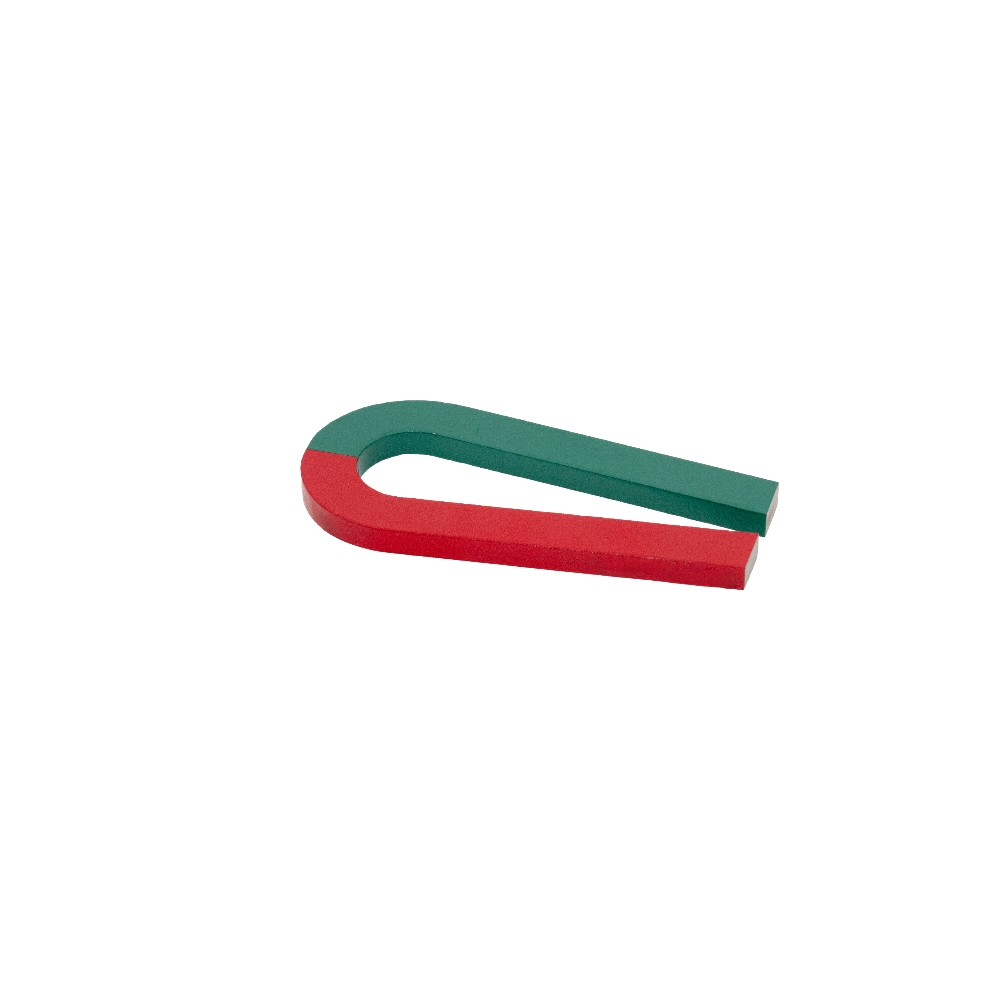
The product page states that AlNiCo permanent magnets can be classified into cast AlNiCo and sintered AlNiCo based on manufacturing process. Both types offer good corrosion resistance, so surface coating is generally not required. The page also states that AlNiCo magnets can be produced in various shapes and sizes according to customer requirements. Buyers should confirm geometry feasibility, tolerance capability, and wall thickness limits with the supplier during the design stage, as the page does not specify dimensional limits for either process.
Grade Reference: Cast and Sintered Options
The product page lists the following grades with corresponding MMPA class equivalents and magnetic properties. This table is intended for grade-level comparison during selection.
| Grade | Equivalent MMPA Class | Remanence Br (mT) | Coercive Force Hcb (kA/m) | (BH)max (kJ/m³) | Density (g/cm³) | α(Br) (%/°C) | Curie Temp. TC (°C) | Temp. Coefficient TW (°C) |
|---|---|---|---|---|---|---|---|---|
| LN10 | ALNICO3 | 600 | 40 | 10 | 6.9 | -0.03 | 810 | 450 |
| LNG13 | ALNICO2 | 700 | 48 | 12.8 | 7.2 | -0.03 | 810 | 450 |
| LNGT18 | ALNICO8 | 580 | 100 | 18 | 7.3 | -0.025 | 860 | 550 |
| LNG37 | ALNICO5 | 1200 | 48 | 37 | 7.3 | -0.02 | 850 | 525 |
| LNG40 | — | 1250 | 48 | 40 | 7.3 | — | — | — |
| LNG44 | — | 1250 | 52 | 44 | 7.3 | — | — | — |
| LNG52 | ALNICO5DG | 1300 | 56 | 52 | 7.3 | -0.02 | 850 | 525 |
| LNG60 | ALNICO5-7 | 1350 | 59 | 60 | 7.3 | -0.02 | 850 | 525 |
| LNGT28 | ALNICO6 | 1000 | 57.6 | 28 | 7.3 | -0.02 | 850 | 525 |
| LNGT36J | ALNICO8HC | 700 | 140 | 36 | 7.3 | -0.025 | 860 | 550 |
| LNGT38 | ALNICO8 | 800 | 110 | 38 | 7.3 | -0.025 | 860 | 550 |
| LNGT40 | — | 820 | 110 | 40 | 7.3 | — | — | — |
| LNGT60 | ALNICO9 | 950 | 110 | 60 | 7.3 | -0.025 | 860 | 550 |
| LNGT72 | — | 1050 | 112 | 72 | 7.3 | — | — | — |
Common Mistakes Buyers Make
Mistake 1: Assuming All AlNiCo Grades Are Interchangeable
Substituting a lower-Br, lower-Hcb grade such as LN10 for a higher-performance grade such as LNGT38 or LNGT40 may appear cost-effective but changes the flux density and demagnetization resistance available to the sensor design. The product page provides grade-specific Br and Hcb values; selection should be driven by these grade-level numbers, not by MMPA class averages.
Mistake 2: Overlooking Density in Weight-Sensitive Instrumentation
The product page lists a Density range of 6.9–7.3 g/cm³ across the grade table. In airborne, portable, or weight-sensitive instrumentation, this mass should be factored into mounting and dynamic response calculations early. The page does not provide comparative density figures for other magnet materials.
Mistake 3: Ignoring Shape and Size Feasibility During Conceptual Design
The product page states that AlNiCo magnets can be produced in various shapes and sizes according to customer requirements. However, it does not specify dimensional limits, minimum wall thickness, or aspect ratio constraints for cast or sintered grades. Buyers should confirm manufacturability with the supplier before finalizing housing or PCB layout.
Recommended Solution
For high-temperature sensor and instrumentation applications, the AlNiCo Magnet series provides grade-level data across cast and sintered options. The page lists cast grades including LN10, LNG37, LNG52, and LNG60, and sintered grades including LNGT18, LNGT28, LNGT36J, LNGT38, LNGT40, LNGT60, and LNGT72. Selection can be aligned to specific priorities: lower absolute α(Br) for calibration stability, higher (BH)max for compactness, or higher TW for extended thermal margin. The page states that both cast and sintered AlNiCo offer good corrosion resistance, so surface coating is generally not required. Applications listed on the page include industrial equipment, instruments, sensors, permanent magnet motors, and magnetic devices.
FAQ
Q: What is the difference between cast AlNiCo and sintered AlNiCo for sensor applications?
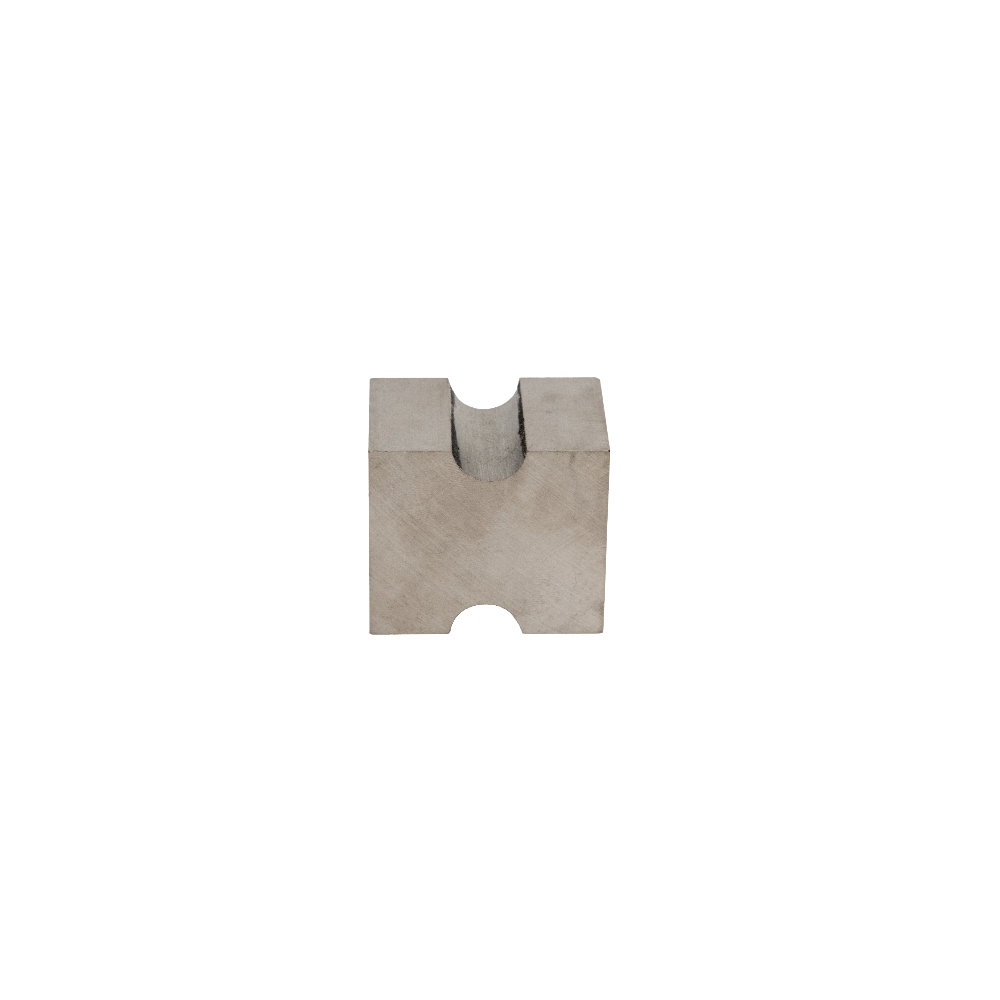
A: The product page states that AlNiCo permanent magnets can be classified into cast and sintered types based on manufacturing process. Both offer good corrosion resistance. Cast AlNiCo is typically produced in various shapes and sizes, while sintered AlNiCo is suited to smaller geometries.
Q: Which AlNiCo grades are available with Curie temperature data?
A: The technical table lists Curie temperature values from 810°C to 860°C for grades where TC data is provided, including LN10, LNG13, LNGT18, LNG37, LNG52, LNG60, LNGT28, LNGT36J, LNGT38, and LNGT60. Some listed grades have no Curie temperature value in the table.
Q: Does AlNiCo require surface coating for corrosion protection in sensor applications?
A: The product page states that both cast and sintered AlNiCo offer good corrosion resistance, so surface coating is generally not required. This simplifies integration into sensor assemblies where coating compatibility may be a concern.
Q: How do reversible temperature coefficients impact sensor accuracy?
A: The Reversible Temp. Coefficient α(Br) range of –0.03 to –0.02 %/°C means Br changes predictably with temperature, which supports software-based compensation. Designs relying on analog signal conditioning without active correction may select grades with lower absolute α(Br), such as LNGT38 at –0.025 %/°C, to reduce baseline drift across the operating range.
Conclusion
Selecting an AlNiCo magnet for sensors requires evaluating thermal coefficient behavior, grade-specific Br and Hcb values, and manufacturing-process implications rather than relying on nominal temperature ratings alone. The product page provides documented TW and α(Br) values across multiple grades, along with Curie temperature data and density figures. Buyers should validate shape and size feasibility with the supplier early, and use the page’s corrosion resistance statement to reduce coating-related qualification work. For industrial equipment, instruments, sensors, permanent magnet motors, and magnetic devices operating at high temperatures, AlNiCo remains a relevant material platform. Contact our engineering team to discuss your application requirements.