


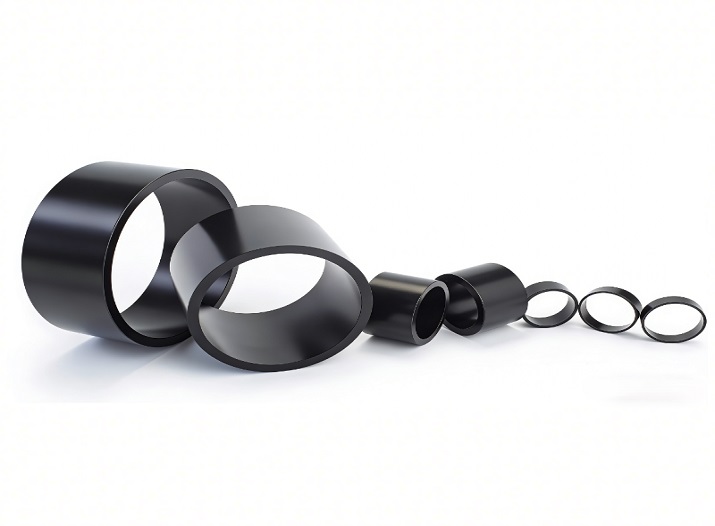
Motor design engineers and automotive procurement managers routinely face a critical reliability question: Will the bonded NdFeB magnet in our BLDC motor or magnetic encoder retain sufficient magnetic strength across 10+ years of operation? Unlike sintered NdFeB or ferrite alternatives, bonded NdFeB magnets offer unique advantages — including complex shapes and high dimensional accuracy — but their long-term magnetic performance must be evaluated not in isolation, but within system-level constraints like thermal cycling, mechanical stress, and environmental exposure. Understanding magnet degradation mechanisms is essential to ensure motor magnet reliability without over-engineering or under-specifying — especially when sourcing from a trusted bonded ndfeb manufacturer.
Magnetic Performance Over Time Is Predictable — Not Uncontrollable
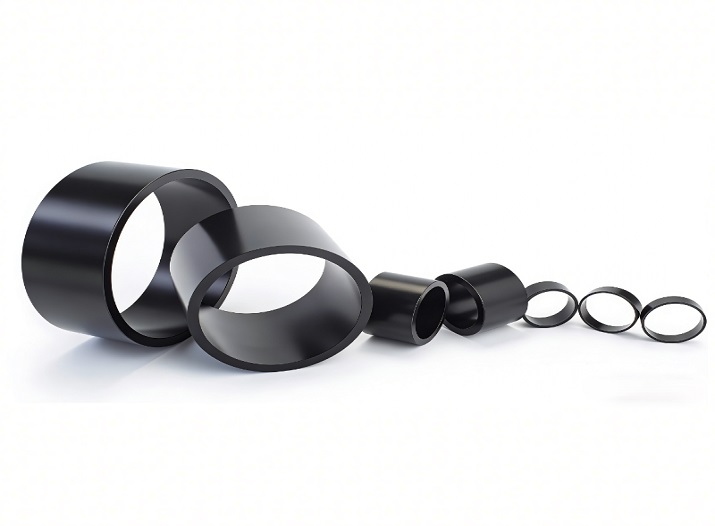
A common misconception is that permanent magnets “wear out” like mechanical parts. In reality, bonded NdFeB magnets — as Permanent Magnets — exhibit highly stable magnetic performance under normal operating conditions. Their intrinsic coercivity and microstructure, formed via Compression Molding or Injection Molding, provide inherent resistance to demagnetization. While magnet strength loss does occur, it follows well-understood physical pathways — not random failure. This makes bonded magnet aging a manageable design parameter, not a reliability risk.
Factor 1: Thermal Exposure Is the Primary Driver of Magnet Degradation
Temperature remains the most significant factor influencing magnetic performance over time. Bonded NdFeB magnets operate reliably within their specified thermal envelope — but exceeding recommended limits accelerates irreversible losses. Elevated temperatures can weaken domain alignment and promote oxidation at binder-magnet particle interfaces. Crucially, Good Corrosion Resistance — a key feature of modern bonded NdFeB formulations — mitigates this pathway. For applications like Automotive Sensors or Industrial Automation Equipment, where ambient and self-heating combine, thermal derating and protective coatings are essential engineering controls.
Factor 2: External Magnetic Fields Induce Reversible and Irreversible Losses
BLDC motors and encoders subject magnets to dynamic opposing fields during commutation or signal generation. While bonded NdFeB magnets tolerate moderate reverse fields due to their Stable Magnetic Performance, sustained exposure beyond intrinsic coercivity thresholds causes partial demagnetization. This loss may be reversible (recoverable with re-magnetization) or irreversible (permanent). Engineers designing Micro Motors or Magnetic Encoders must model peak field exposure — not just static flux — and select grades with appropriate coercivity margins.
Factor 3: Corrosion and Mechanical Integrity Directly Impact Permanent Magnet Lifespan
Unlike sintered counterparts, bonded NdFeB magnets integrate a polymer binder (e.g., nylon or epoxy), enabling Complex Shapes and High Dimensional Accuracy. However, binder integrity is critical: moisture ingress, chemical exposure, or mechanical abrasion can compromise the matrix, exposing NdFeB particles to oxidation. That’s why Good Corrosion Resistance isn’t just a marketing claim — it reflects optimized binder selection and surface protection strategies. In Consumer Electronics or under-hood Automotive Components, this feature directly extends permanent magnet lifespan.
Factor 4: Manufacturing Consistency Ensures Uniform Aging Behavior
Because bonded NdFeB magnets are produced via Compression Molding or Injection Molding, batch-to-batch consistency in density, particle distribution, and binder dispersion directly affects aging uniformity. Variability introduces scatter in long-term magnet degradation rates — unacceptable in safety-critical Automotive Sensors or precision Encoders. A qualified bonded ndfeb manufacturer maintains strict process control, ensuring repeatable magnetic output and predictable aging profiles across production runs.
Factor 5: Application Environment Determines Real-World Degradation Rate
No single number defines how much magnetic strength a bonded NdFeB magnet loses over time — because degradation is application-dependent. A magnet in a sealed, temperature-controlled Micro Motor may retain >99% of its remanence after 15 years; the same grade in an unsealed, vibration-prone Industrial Equipment housing could experience accelerated loss due to combined thermal, mechanical, and environmental stresses. Engineers must assess full-system conditions — not just magnet specs — to project magnetic performance over time accurately.
Recommended Solution: Engineered Bonded NdFeB Magnets for Long-Life Applications
For designers seeking assured motor magnet reliability, the solution lies not in generic magnets — but in purpose-engineered Bonded NdFeB Magnets. Nibboh’s offering delivers Complex Shape Capability and High Precision Manufacturing, supporting demanding applications including BLDC Motors, Automotive Sensors, and Industrial Automation Equipment. With OEM Service and Custom Magnet Design support, engineers receive magnets tailored to thermal, geometric, and magnetic requirements — not off-the-shelf compromises. Bonded NdFeB Magnet integrates Stable Magnetic Performance and Good Corrosion Resistance into a single, application-optimized solution.
FAQ
- Q: Do bonded NdFeB magnets lose magnetic strength over time?
A: Yes. Like all permanent magnets, bonded NdFeB magnets can experience gradual magnetic loss over time, but under normal operating conditions the loss is typically very small and predictable. - Q: What factors accelerate magnetic degradation?
A: High temperature, strong external magnetic fields, corrosion, mechanical damage, and improper storage conditions can accelerate magnetic performance loss. - Q: Are bonded NdFeB magnets suitable for long-life motor applications?
A: Yes. Bonded NdFeB magnets are widely used in micro motors, BLDC motors, and automotive systems because of their stable magnetic properties and dimensional precision. - Q: How can engineers maximize magnet lifespan?
A: Selecting the correct magnetic grade, maintaining proper operating temperatures, and using appropriate protective coatings can significantly improve long-term magnetic stability.
Conclusion
Magnet strength loss in bonded NdFeB magnets is neither inevitable nor unpredictable — it is a function of design choices, material selection, and operational context. Key takeaways include: (1) thermal management is the dominant lever for controlling bonded magnet aging; (2) Stable Magnetic Performance and Good Corrosion Resistance are foundational features — not optional upgrades; (3) High Dimensional Accuracy and Complex Shapes enable integration into next-generation systems without sacrificing longevity. For Motor Design Engineers, Automotive Engineers, and OEM Manufacturers, partnering with a capable bonded ndfeb manufacturer ensures magnetic performance remains aligned with product lifecycle goals. Contact our engineering team to discuss your application requirements.