


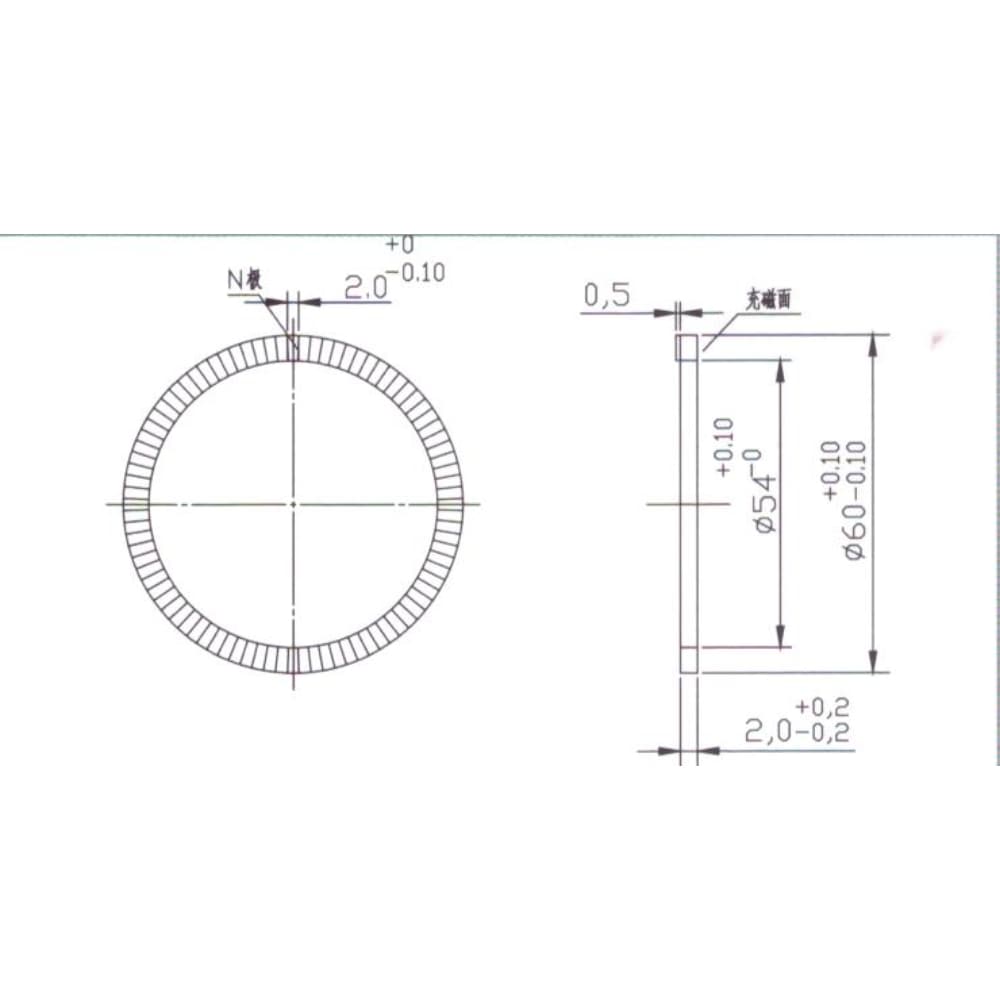

We use this checklist to help engineering and procurement teams prepare a clear first RFQ for a custom magnetic assembly. It covers the assembly’s function, interfaces, operating conditions, magnetic requirements, quantities, and acceptance criteria. Sections 4 and 5 also clarify the inputs for a raw permanent magnet used within an assembly; they do not replace system-level requirements or assume a particular grade, finish, performance, or delivery outcome. If an item is not yet defined, mark it “to be confirmed” rather than guessing.
1. Explain the assembly’s function
Describe where the assembly sits in the equipment and what it must accomplish: hold, position, sense, separate, couple, or perform another defined task. Identify the parts or materials it interacts with, the direction of movement, and the consequence of a misfit. A simple application sketch often communicates more than a material name alone.
2. Share the complete envelope and mounting details
Attach a dimensioned drawing when available. Include the overall envelope, critical dimensions, datums, hole or slot locations, mating surfaces, and installation clearances. Mark flexible dimensions as such and identify critical ones with the intended measurement method. A 3D model can clarify geometry; state which released drawing or model controls if they differ.
3. Describe the operating environment
State the conditions the part will encounter: temperature range, moisture, dust, cleaning chemicals, vibration, outdoor exposure, or contact with other materials. Do not assume a coating or enclosure is suitable because it resembles a previous design. Flag regulated applications and list any material or documentation requirements your organization must meet.
4. Define magnetic requirements in measurable terms
For the permanent magnet itself, please keep the material specification distinct from the requirements for the completed assembly. We find the following magnet-level inputs useful in an RFQ:
- Shape, dimensions, and tolerances: Identify the magnet shape, units, relevant dimensions (including thickness and any bore or hole), and the dimensions that are critical to your design. Reference the controlling drawing and revision, and call out any required tolerances. See the drawing checklist above for the broader drawing package.
- Material and grade: Name the material family and grade required by your specification, and cite the governing document where applicable. Tell us whether alternatives are acceptable. If the material or grade is still open, mark it for review instead of implying that a broad material name selects a particular grade.
- Magnetization direction and pole arrangement: State the required direction or pole pattern when known, and mark it on the drawing or a separate diagram. If it is undecided, identify it as an open question rather than relying on an assumed orientation.
- Surface condition and environment: State a required surface treatment or finish when one is part of your specification. If the choice depends on service conditions, describe the relevant exposure and any design constraints; do not assume that a generic coating name establishes suitability.
- Magnetic acceptance requirements: If your acceptance criteria include a field, flux, or force measurement, specify the test method and setup—such as measurement location, gap, mating material, and orientation—along with the acceptance criterion. State this requirement separately from the material grade; a grade name alone should not be used as the assembly’s magnetic acceptance value.
For quantities, inspection records, sample references, and revision control, use the corresponding sections below and identify which drawing, specification, or sample governs if they differ.

5. Check material and surface scope against the specific design
Our China factory page describes our manufacturing focus on sintered and bonded NdFeB, and lists custom shapes, grades, and surface treatments among our published scope. It also describes engineering review of magnet material, dimensions, magnetization direction, and application requirements. This public information provides context, not project-specific confirmation: suitability or availability for a particular material, grade, or finish must be reviewed against the submitted design. Please keep any unresolved selection open for review.
6. Show the interfaces around the component
Include mating parts, nearby fasteners, cable or sensor routing, and keep-out zones that affect installation. Clarify whether the assembly is supplied as a finished component or integrated into a larger unit by your team. Photos can help, but label them as references and mark the view direction so they do not conflict with the released drawing.
7. State expected quantities and project stage
Give prototype and pilot quantities, plus expected production demand if known. Note whether the request is for feasibility review, a replacement part, or a new design. If timing matters, provide the required date and the event it supports; ask the supplier to confirm a feasible schedule rather than treating a target date as an accepted commitment.
8. Write down inspection and acceptance criteria
Identify characteristics that must be checked before approval, such as named dimensions, material, surface condition, polarity, or a magnetic measurement under a defined method. State which records or reports you require and whether they must accompany each lot. Avoid vague terms such as “strong,” “high quality,” or “standard tolerance” unless linked to a measurable requirement.
9. Control drawings, revisions, and open questions
Put a revision and date on every drawing, model, and specification. List unresolved items separately and identify who can approve a change. If you send an older part or sample as reference, say which features are representative and which must change. This keeps a reference sample from being mistaken for the current design intent.
Build a concise RFQ package
A useful package brings together the application description, latest drawing and model, operating conditions, magnetic and mechanical requirements, expected quantities, and acceptance criteria. Mark uncertain items “to be confirmed” instead of filling gaps with assumptions. Have engineering and procurement review the same revision before release.
To discuss a specific application, contact us with the current drawing or specification and mark unresolved magnet inputs as open for review.