


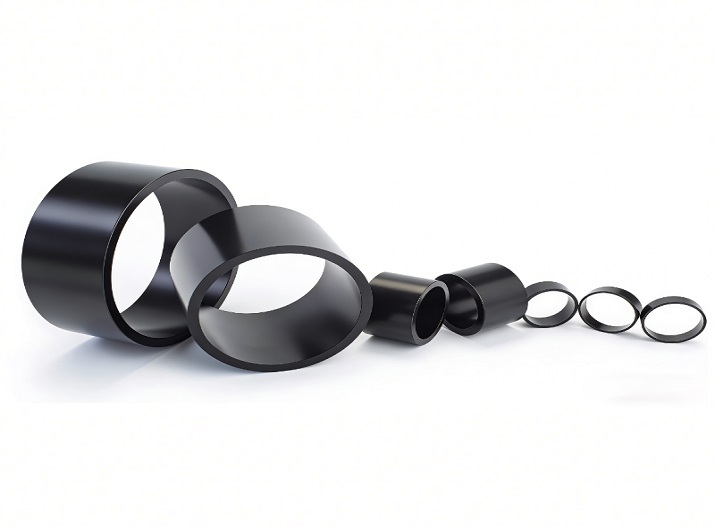
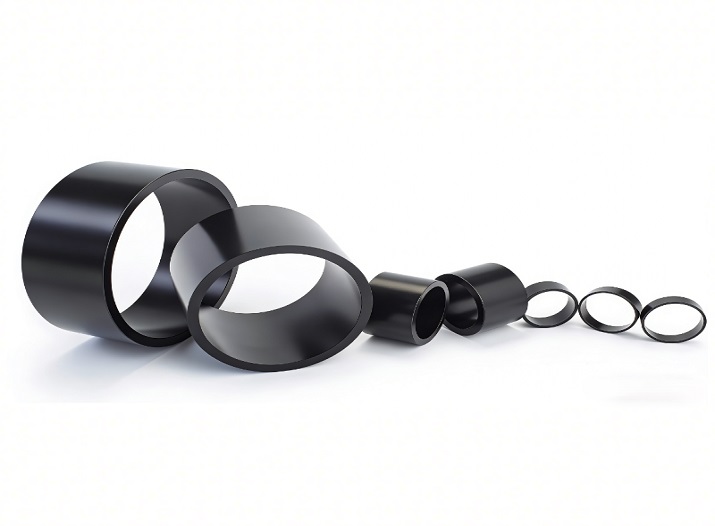
Designing high-performance robotic systems demands magnetic components that deliver precision, repeatability, and compact integration—yet many engineers face trade-offs between manufacturability, dimensional control, and magnetic functionality. When selecting robotics magnets, inconsistent tolerances, limited geometry options, or inflexible magnetization patterns can delay prototyping, increase assembly complexity, or compromise servo responsiveness. This is especially critical in applications where space-constrained actuators, multi-pole rotor assemblies, or corrosion-prone environments define system requirements. For engineers specifying permanent magnets for robotics, the bonded NdFeB magnet has emerged as a technically grounded solution—not because of exaggerated claims, but due to its inherent alignment with precision motion engineering constraints.
Factor 1: Custom Shapes and Dimensions Enable Compact Robotic Integration
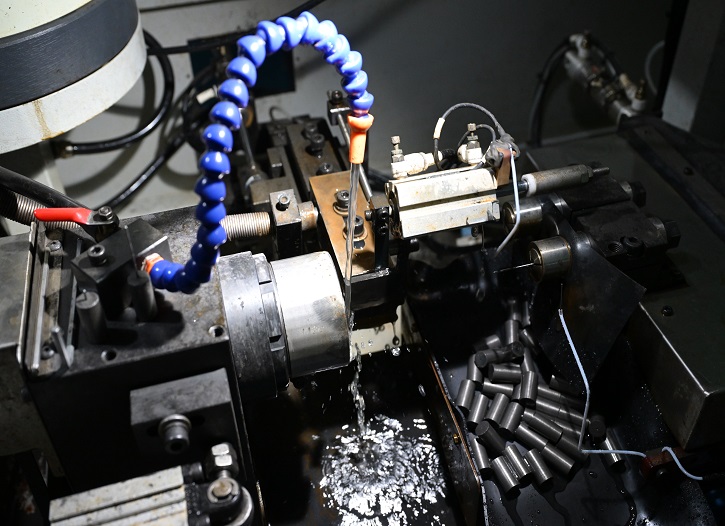
In industrial robots, collaborative robots (Cobots), and AGV/AMR drive modules, magnet geometry directly impacts motor winding layout, air-gap uniformity, and torque density. Unlike sintered magnets—which require costly secondary machining to achieve non-standard profiles—bonded NdFeB magnets are molded to net or near-net shape. This means complex arcs, segmented rings, trapezoidal rotors, or asymmetric pole geometries can be realized without sacrificing structural integrity. The result? Reduced mechanical tolerance stack-up, simplified motor assembly, and faster iteration cycles during servo motor or robotic joint development.
Factor 2: High Dimensional Accuracy Supports Repeatable Motion Control
Precision motion systems rely on consistent magnetic field distribution across rotating or linear axes. Variations in magnet thickness, width, or radial alignment introduce torque ripple, position error, and acoustic noise—especially problematic in collaborative robot joints where smooth, low-vibration actuation is mandatory. Bonded NdFeB magnets offer high dimensional accuracy, enabling tight geometric consistency across production batches. This repeatability ensures predictable flux linkage in servo motors and stable back-EMF waveforms in robotic actuators—key inputs for field-oriented control (FOC) algorithms.
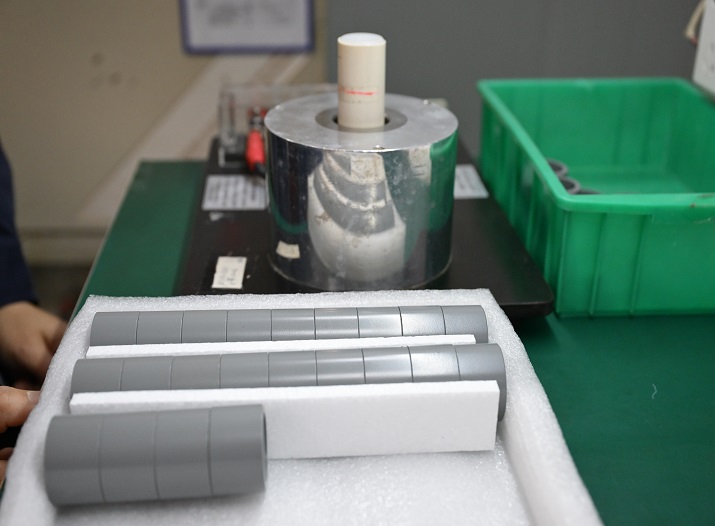
Factor 3: Multi-pole Magnetization Delivers Fine-Grained Field Resolution
Modern robotic motion systems increasingly demand high pole-count rotors for improved torque-to-volume ratio and reduced cogging. Sintered NdFeB magnets often face limitations in achieving >16 poles per rotor without segmentation or complex fixturing. In contrast, bonded NdFeB magnets support multi-pole magnetization—enabling precise, concentric pole arrays directly on complex-shaped parts. This capability is essential for compact robotic joints, miniature servo motors, and precision motion stages where spatial efficiency and field fidelity cannot be compromised.
Factor 4: Density Approximately 7.0 g/cm³ Balances Mass and Performance
While magnetic energy product isn’t specified here, the physical property of density approximately 7.0 g/cm³ informs mechanical design decisions. This value enables accurate mass modeling for dynamic simulation—critical when calculating inertia, acceleration limits, and vibration modes in robotic arms or mobile platforms. Unlike lower-density ferrite or higher-density sintered NdFeB (≈7.4–7.6 g/cm³), bonded NdFeB provides predictable mass behavior without requiring empirical correction factors in CAD-based structural analysis.
Factor 5: Epoxy / Parylene / Anti-corrosion Coatings Extend Service Life in Demanding Environments
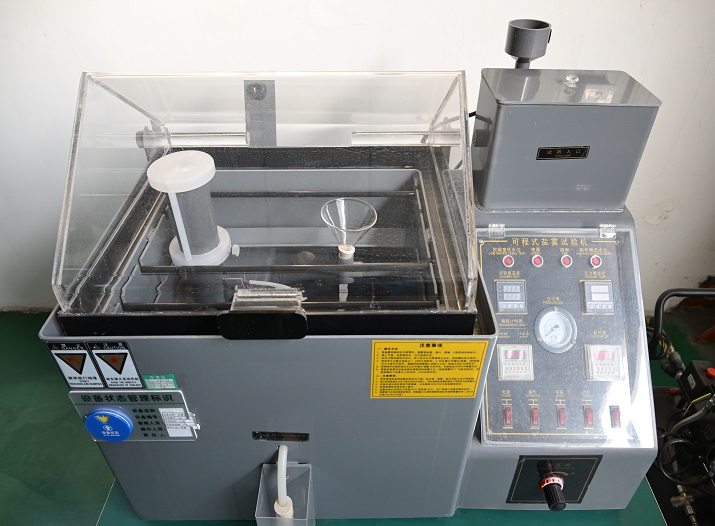
Industrial automation equipment and AMRs operate across varied ambient conditions—humidity, lubricant exposure, cleaning agents, and temperature gradients all threaten magnet longevity. Uncoated NdFeB is highly susceptible to oxidation. Bonded NdFeB magnets come with optional Epoxy / Parylene / Anti-corrosion Coatings, offering tailored protection without compromising dimensional stability. Parylene, for instance, provides conformal, pinhole-free coverage ideal for intricate geometries in robotic actuators; epoxy offers robust mechanical resistance for high-vibration servo housings. These coatings preserve magnetic performance over time—reducing field decay risk in long-life precision motion systems.
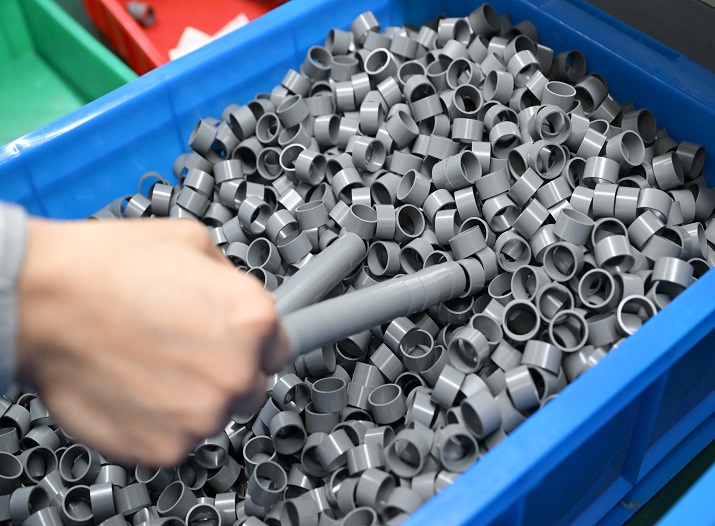
Factor 6: Excellent Design Flexibility Accelerates Prototyping and Scaling
From concept validation to high-volume production, design flexibility determines time-to-market. Bonded NdFeB magnets combine excellent design flexibility with suitability for high-volume precision manufacturing. Engineers can iterate magnet topology in parallel with motor electromagnetic design—without waiting for tooling lead times typical of sintered alternatives. Once qualified, the same formulation and process scale seamlessly from pilot batches to full production runs—maintaining consistency across thousands of units for industrial robot OEMs or AMR manufacturers.
Factor 7: Proven Fit Across Core Robotics Application Scenarios
The technical attributes of bonded NdFeB magnets map directly to real-world deployment needs: robotic actuator magnets benefit from custom shapes and multi-pole fields; servo motor magnets rely on dimensional accuracy and coating durability; industrial robot magnetic components require repeatable performance under cyclic loading; and precision motion magnets depend on stable flux density and thermal stability. Whether embedded in a cobot wrist joint, an AGV wheel hub motor, or a pick-and-place precision stage, bonded NdFeB delivers application-aligned functionality—not generic magnetism.
Recommended Solution: Nibboh Bonded NdFeB Magnet
Engineered specifically for motion-critical applications, the Nibboh Bonded NdFeB Magnet integrates all seven factors into a single, production-ready solution. Its Custom Shapes and Dimensions, High Dimensional Accuracy, Density Approximately 7.0 g/cm³, Multi-pole Magnetization, and Epoxy / Parylene / Anti-corrosion Coatings are not theoretical advantages—they’re verified capabilities supporting real designs in permanent magnets for robotics. Designed for Precision Motion Systems and Robotics, it serves as a drop-in enabler for servo motor redesigns, next-gen actuator development, and scalable automation hardware.
FAQ
Q: Why are bonded NdFeB magnets widely used in robotics?
A: Bonded NdFeB magnets provide excellent dimensional accuracy, design flexibility, and multi-pole magnetization, making them suitable for compact robotic motion systems.
Q: Can bonded NdFeB magnets be used in servo motors?
A: Yes. Bonded NdFeB magnets are commonly used in servo motors where precise positioning, stable magnetic performance, and compact designs are required.
Q: What advantages do bonded NdFeB magnets offer over sintered magnets in robotic applications?
A: Bonded NdFeB magnets support complex geometries, tighter dimensional consistency, and flexible multi-pole magnetization, making them well suited for robotic actuators and precision motion systems.
Q: Are bonded NdFeB magnets suitable for collaborative robots (Cobots)?
A: Yes. Their compact size, precision manufacturing capabilities, and reliable magnetic performance make them suitable for collaborative robots and other advanced automation equipment.
Conclusion
Selecting the right robotics magnets is not about maximizing Br or (BH)max—it’s about matching material behavior to system-level constraints. For robot motor magnets, precision motion magnets, and industrial robot magnetic components, bonded NdFeB stands apart due to its repeatable dimensional control, geometric adaptability, and manufacturability at scale. It bridges the gap between electromagnetic performance and mechanical integration—making it the preferred bonded NdFeB magnet choice for engineers building servo motors, robotic joints, AGVs, Cobots, and precision motion systems. Contact our engineering team to discuss your application requirements.