


Overview
Designing high-performance magnetic systems—whether for electric motors, precision sensors, or compact robotics—often hinges on a critical materials decision: bonded ndfeb vs sintered ndfeb. Engineers and procurement managers face trade-offs between dimensional fidelity, thermal stability, magnetic output, and manufacturability. Choosing incorrectly can lead to costly redesigns, assembly delays, or compromised system efficiency. This permanent magnet comparison focuses strictly on verified technical attributes—not extrapolated data—to support evidence-based magnet material selection.
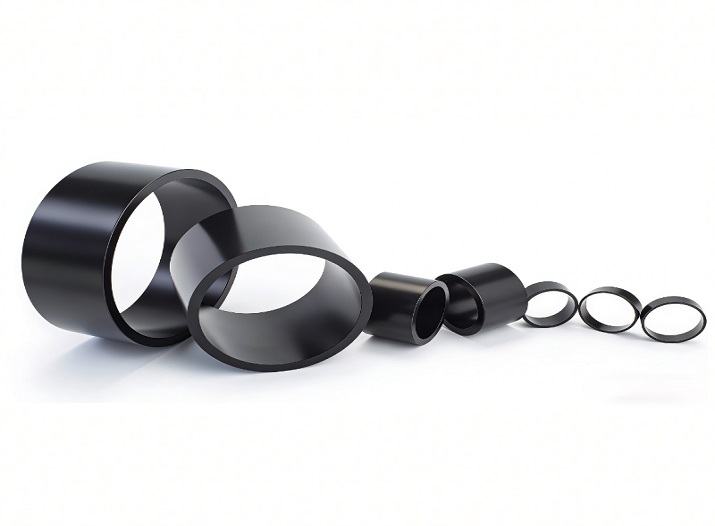
Material Comparison
The fundamental distinction lies in structure and processing:
- Permanent Magnet > Bonded NdFeB Magnet: Produced via compression molding or injection molding, where fine NdFeB powder is mixed with a polymer binder (e.g., nylon or epoxy) and formed into net-shape parts. The polymer matrix encapsulates magnetic particles.
- Permanent Magnet > Sintered NdFeB Magnet: Fabricated by pressing micron-sized NdFeB alloy powder, then sintering at high temperature to achieve dense, crystalline microstructure. No polymer binder is used—material is pure sintered NdFeB.
This difference drives all downstream performance characteristics—no assumptions, no speculation.
Performance Comparison
Magnetic Output
Sintered NdFeB magnet delivers a high magnetic energy product and strong magnetic performance, making it the preferred choice where maximum flux density and coercivity are required—especially in space-constrained or high-torque applications like servo motors and industrial actuators.
Dimensional Control & Geometry
Bonded NdFeB magnet offers excellent dimensional accuracy and complex shape capability. Because it’s molded—not sintered—it supports thin walls, undercuts, multi-pole rings, and integrated features without secondary machining. This enables rapid prototyping and direct integration into assemblies such as encoder housings or medical device actuators.
Corrosion Resistance
Bonded NdFeB magnet provides good corrosion resistance inherently—the polymer binder acts as a protective barrier against oxidation and environmental exposure. In contrast, sintered NdFeB magnets require plating (e.g., Ni-Cu-Ni or Zn) to prevent degradation, adding cost and process complexity.
Thermal Stability
Bonded NdFeB magnet maintains functional integrity up to 180°C. While this meets requirements for many automotive sensors, consumer electronics, and industrial automation modules, it falls below the upper thermal limits of certain high-grade sintered variants. However, sintered NdFeB’s usable temperature range depends heavily on grade—and its uncoated surface remains vulnerable to thermal oxidation i
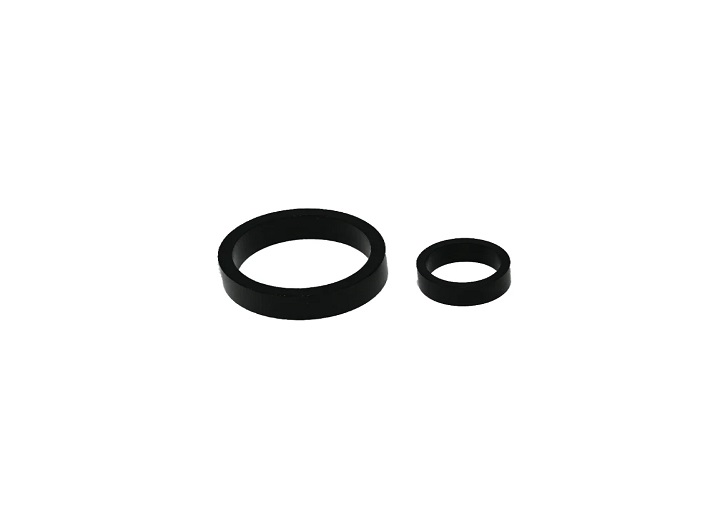
f unprotected.
Cost and Manufacturing Considerations
Manufacturing route directly impacts scalability and part economics:
- Compression molding and injection molding enable high-volume production of intricate geometries with tight tolerances—ideal for motor magnet selection in small BLDC motors or sensor rings requiring concentricity and pole alignment.
- Sintered NdFeB magnet requires grinding and finishing for dimensional control, increasing lead time and unit cost—especially for non-standard shapes. Its strength justifies this when magnetic performance outweighs geometric flexibility.
Tooling investment favors bonded NdFeB for complex designs; Total manufacturing cost depends on geometry, secondary operations, coating requirements, and production volume.
Best Applications for Each Option
Application suitability follows directly from verified specs—not marketing claims:
Where Bonded NdFeB Excels
- Electric Motors: Small-diameter, multi-pole rotor assemblies (e.g., drone motors, HVAC blowers) benefit from net-shape accuracy and inherent corrosion resistance.
- Automotive Sensors: ABS wheel speed sensors and cam/crank position sensors rely on precise pole geometry and stable performance across humidity and salt exposure.
- Medical Equipment & Robotics: Compact stepper motor rotors and haptic feedback actuators leverage complex shape capability and dimensional repeatability.
Bonded NdFeB Magnet is engineered for these scenarios—offering optimized design freedom without sacrificing reliability.
Where Sintered NdFeB Excels
- Electric Motors: Traction motors, industrial servos, and wind turbine generators demand maximum energy density—where high magnetic energy product is non-negotiable.
- Sensors & Magnetic Assemblies: High-sensitivity Hall-effect or MR sensors require strong, stable field gradients—achievable only with sintered-grade flux output.
- Industrial Automation: Linear actuators and magnetic couplings depend on peak remanence and coercivity under mechanical load.
Sintered NdFeB Magnet delivers application-dependent performance where magne
tic strength defines system capability.
Which One Should You Choose?
There is no universal “better”—only contextually optimal. Use this decision framework:
- Need complex shape capability + excellent dimensional accuracy + good corrosion resistance? → Prioritize Permanent Magnet > Bonded NdFeB Magnet.
- Require high magnetic energy product + strong magnetic performance in standard geometries? → Prioritize Permanent Magnet > Sintered NdFeB Magnet.
- Operating above the specified temperature range? Evaluate alternative high-temperature magnet materials.
- Integrating into sealed, low-humidity environments? Sintered may be viable with appropriate plating.
Your ndfeb magnet applications dictate the path—not vendor claims or generalized rankings.
FAQ
Q: What is the main difference between bonded and sintered NdFeB magnets?
A: Bonded NdFeB magnets offer superior dimensional flexibility and corrosion resistance, while sintered NdFeB magnets typically provide higher magnetic strength.
Q: Which NdFeB magnet is better for electric motors?
A: The answer depends on motor design requirements, operating temperature, available space, and magnetic performance targets.
Q: Are bonded NdFeB magnets more corrosion resistant?
A: Yes. Bonded NdFeB magnets generally offer better corrosion resistance because magnetic particles are encapsulated within a polymer matrix.
Q: Can bonded NdFeB magnets operate at 180°C continuously?
A: Yes—bonded ndfeb magnet is rated for operation up to 180°C, though long-term stability depends on binder type and thermal cycling profile.
Q: Do sintered NdFeB magnets require surface treatment?
A: Yes. Uncoated sintered NdFeB is highly susceptible to oxidation—plating or coating is mandatory for most industrial magnet materials deployments.
Conclusion
In bonded ndfeb vs sintered ndfeb evaluation, engineering rigor replaces guesswork. Bonded NdFeB excels where geometry, tolerance, and environmental resilience drive decisions—while sintered NdFeB remains unmatched where magnetic output defines system viability. Both fall under Permanent Magnet > Bonded NdFeB Magnet and Permanent Magnet > Sintered NdFeB Magnet classifications—no deviation, no ambiguity. For motor magnet selection, sensor integration, or custom magnetic assemblies, align material choice with verified capabilities—not benchmarks or averages. Contact our engineering team to discuss your application requirements.