


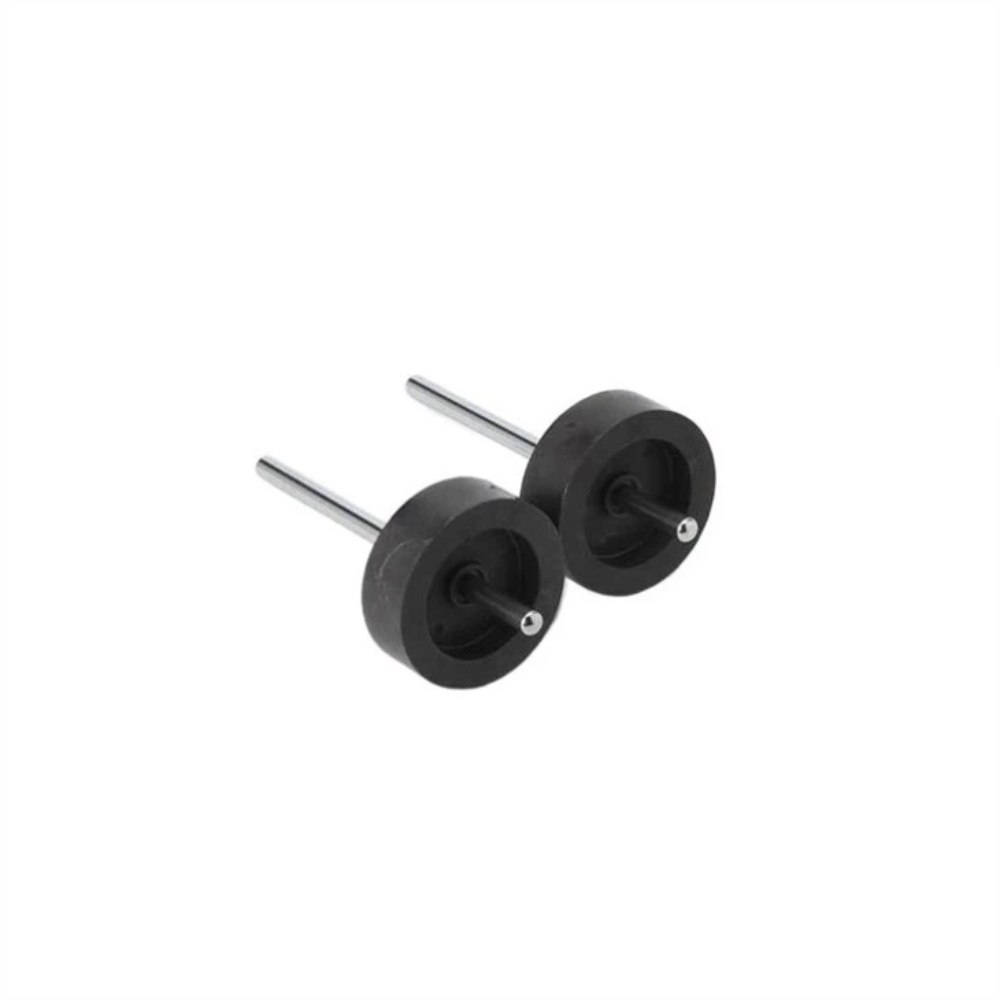
Understanding the Selection Challenge
Designing reliable automotive sensor systems—especially Hall effect sensors, ABS wheel speed sensors, and micro motor rotors—demands precise magnetic performance under harsh thermal, mechanical, and electromagnetic conditions. Engineers frequently face conflicting requirements: high signal fidelity for closed-loop control, dimensional stability at 150°C+, and cost-effective manufacturability for high-volume production.
Selecting the wrong injection molded magnet manufacturer or misapplying a TNMI grade can lead to sensor drift, premature demagnetization, or assembly failure—particularly in electric power steering (EPS) feedback rotors or brake-by-wire position sensing. This guide cuts through subjective marketing claims and focuses strictly on engineering parameters that determine real-world performance of Injection Molded Magnets / Bonded NdFeB Magnets.
Key Evaluation Criteria
Magnetic Output & Grade Selection
The TNMI series offers eight discrete grades—TNMI-0.6, TNMI-1.7, TNMI-2.0, TNMI-4.0, TNMI-5.0, TNMI-6.0, TNMI-8.0, and TNMI-8.0A—each engineered for specific signal amplitude and field gradient needs.
- Remanence (Br): Ranges from 155–170 mT (TNMI-0.6) to 580–650 mT (TNMI-8.0A).
- Coercivity (Hcb): Spans 111–119 kA/m (TNMI-0.6) to 382–430 kA/m (TNMI-8.0A).
For ABS sensors requiring consistent air-gap flux across variable rotor geometries, TNMI-2.0 or TNMI-4.0 delivers an optimal balance between output and thermal margin. In contrast, high-resolution angular encoders for EPS motors demand TNMI-6.0 or TNMI-8.0A—whose (BH)max of 56–64 kJ/m³ ensures robust signal-to-noise ratio even at 2 mm air gaps.
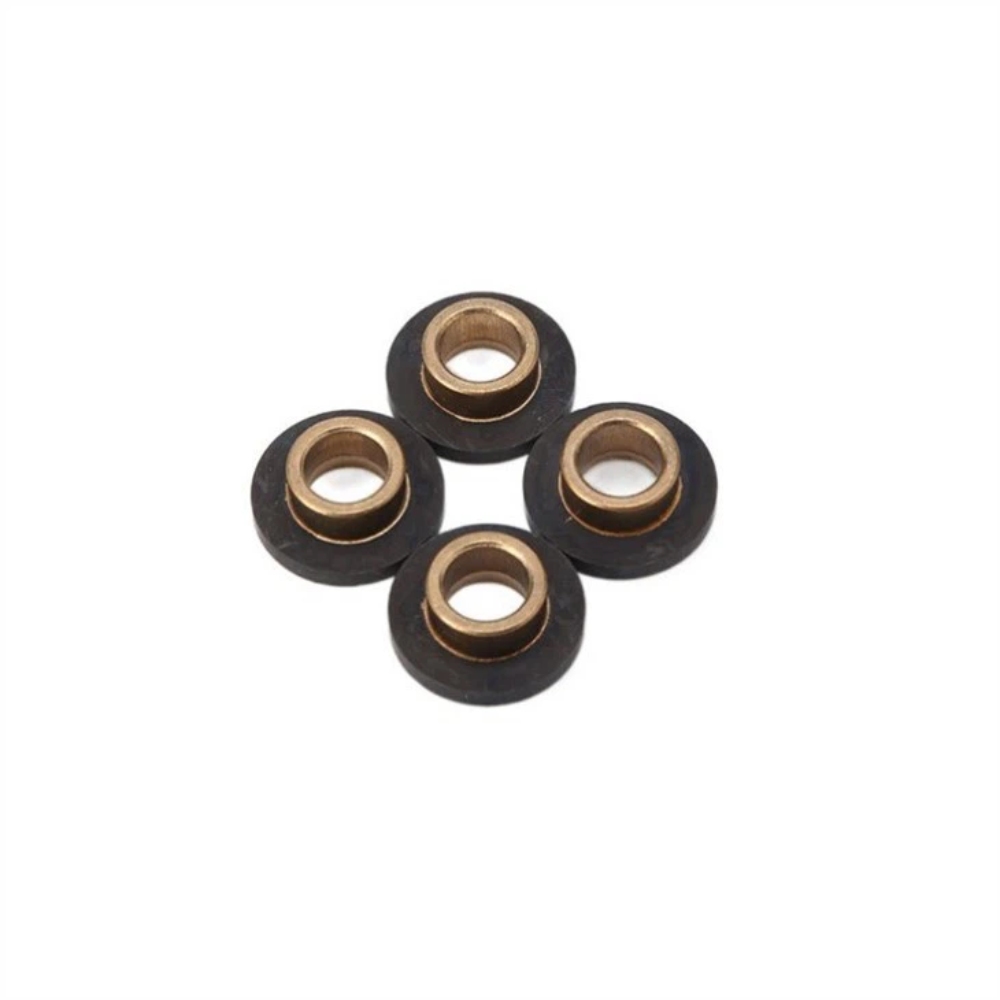
Thermal Stability & Environmental Resilience
Under-hood sensor environments routinely exceed 150°C during sustained operation. The heat deflection temperature of 130–220°C confirms the structural integrity of these bonded NdFeB magnet supplier materials across the full TNMI range.
Critically, the reversible temperature coefficient differs by grade group: −0.19 %/°C for TNMI-0.6 to TNMI-2.0, and −0.1 %/°C for TNMI-4.0 through TNMI-8.0A. This lower coefficient in higher grades directly reduces signal drift over temperature—essential for safety-critical applications like brake pedal position sensing. Combined with water absorption of only 0.01–0.05%, these TNMI grade injection magnet materials resist humidity-induced dimensional change and magnetic degradation in sealed sensor housings.
Mechanical Robustness for Precision Assembly
Automotive sensor magnets undergo injection molding into complex multi-pole geometries—including segmented rings, trapezoidal encoder strips, and asymmetrical micro motor rotors. Mechanical reliability is non-negotiable. The TNMI series exhibits:
- Tensile strength: 35–75 MPa
- Flexural strength: 70–180 MPa
- Flexural modulus: 13000–25000 MPa
These values ensure resistance to cracking during press-fit assembly, vibration fatigue in drivetrain-mounted sensors, and thermal cycling-induced stress. Density increases progressively—from 3.6 g/cm³ (TNMI-0.6) to 5.2 g/cm³ (TNMI-8.0A)—reflecting higher NdFeB loading and improved magnetic consistency without sacrificing moldability.
Common Mistakes Buyers Make
Over-Specifying Grade Without Validation
Selecting TNMI-8.0A for a low-cost cabin fan micro motor adds unnecessary material cost and may complicate molding due to higher filler density—without improving functional performance. As confirmed in the official FAQ: “TNMI-0.6 provides cost-effective magnetic output for low-resolution encoders, while TNMI-8.0A supports high-fidelity angular measurement in EPS motor feedback systems. Over-specifying grade without validating application needs adds unnecessary cost.”
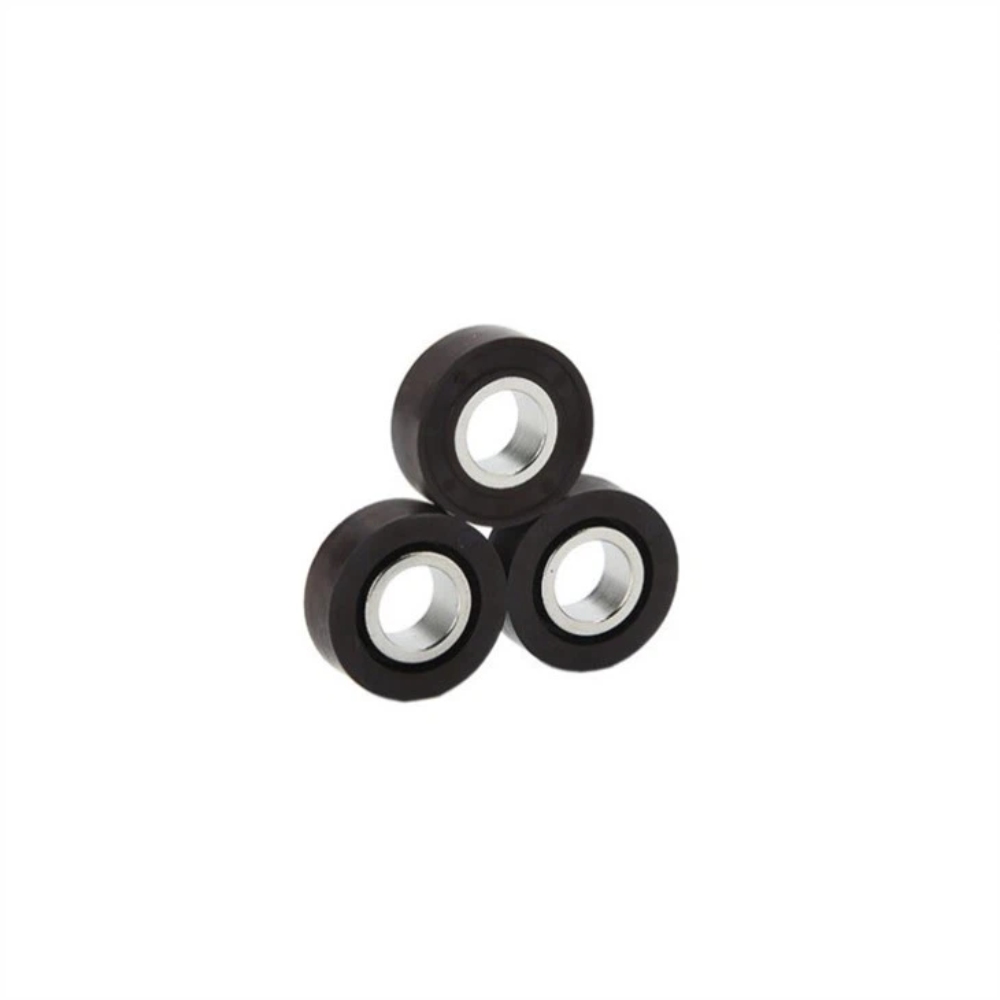
Ignoring Coercivity Hierarchy
Hcj (intrinsic coercivity) is critical for resistance to demagnetizing fields—especially in micro motor rotors operating near stator windings. While TNMI-0.6 offers only 218–238 kA/m, grades TNMI-4.0 through TNMI-8.0A deliver 640–800 kA/m. Using a low-Hcj grade in a high-current motor environment risks irreversible flux loss—a failure mode not detectable in room-temperature testing alone.
Assuming All Injection Molded Magnets Are Interchangeable
Not all injection magnet for micro motors meet automotive-grade repeatability. The TNMI series is formulated for tight batch-to-batch consistency in Br, Hcb, and (BH)max—enabling statistical process control in Tier 1 production lines. Generic bonded NdFeB compounds often lack traceable magnetic property certification or environmental compliance documentation, risking PPAP rejection.
Recommended Solution
For engineers sourcing precision automotive sensor magnet OEM solutions, Nibboh’s TNMI Series provides a rigorously graded portfolio of Injection Molded Magnets / Bonded NdFeB Magnets aligned to ISO/TS 16949-aligned manufacturing practices. Each grade is optimized for defined application envelopes—not arbitrary performance tiers.
The Injection Magnet product line supports direct integration into Hall effect sensor assemblies, ABS tone rings, and micro motor rotor hubs—leveraging OEM and customized injection molded bonded NdFeB magnets based on customer drawings, magnetic performance requirements, and application needs. This enables rapid prototyping of multi-pole ring magnets with ±0.05 mm geometric tolerance and validated magnetic pole alignment—critical for reducing EMI in high-speed CAN FD networks.
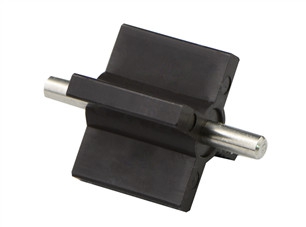
FAQ
Q: How do I select the right TNMI grade for my automotive sensor application?
A: Grade selection should align with signal amplitude, temperature stability, and sensing distance requirements. TNMI-0.6 provides cost-effective magnetic output for low-resolution encoders, while TNMI-8.0A supports high-fidelity angular measurement in EPS motor feedback systems. Over-specifying grade without validating application needs adds unnecessary cost.
Q: What thermal performance can be expected from these injection molded magnets?
A: The injection molded bonded NdFeB maintains dimensional integrity and magnetic alignment across a heat deflection temperature range of 130–220°C, critical for under-hood environments that routinely exceed 150°C during sustained operation.
Q: Does Nibboh provide customized injection magnets for specific sensor designs?
A: Yes. Nibboh provides OEM and customized injection molded bonded NdFeB magnets based on customer drawings, magnetic performance requirements, and application needs. Assemblies are also available based on specific project requirements.
Conclusion
Selecting the correct injection molded magnet manufacturer begins with matching TNMI grade properties—not just Br or (BH)max—to the sensor’s operational envelope: thermal profile, demagnetizing field exposure, mechanical mounting method, and signal resolution target.
- TNMI-0.6 to TNMI-2.0: Serve cost-sensitive, lower-precision roles.
- TNMI-4.0 to TNMI-6.0: Deliver balanced performance for mainstream ABS and encoder applications.
- TNMI-8.0A: Reserved for safety-critical, high-fidelity systems where thermal stability and coercivity margins are non-negotiable.
As a trusted bonded NdFeB magnet supplier, Nibboh enables design-to-production continuity through application-specific grade validation, repeatable molding, and technical collaboration. Contact our engineering team to discuss your application requirements.