


Overview
Designing reliable, compact, and high-precision sensors for electric vehicles demands magnetic materials that balance performance, thermal stability, and manufacturability. Engineers face a critical choice between sintered NdFeB magnet and ferrite magnet — each with distinct trade-offs in magnetic strength, temperature resilience, size constraints, and cost. With growing demand for EV sensor magnet solutions in ABS systems, position sensing, and motor feedback, selecting the right permanent magnet for EV sensors directly impacts system accuracy, longevity, and integration feasibility.
Material Comparison
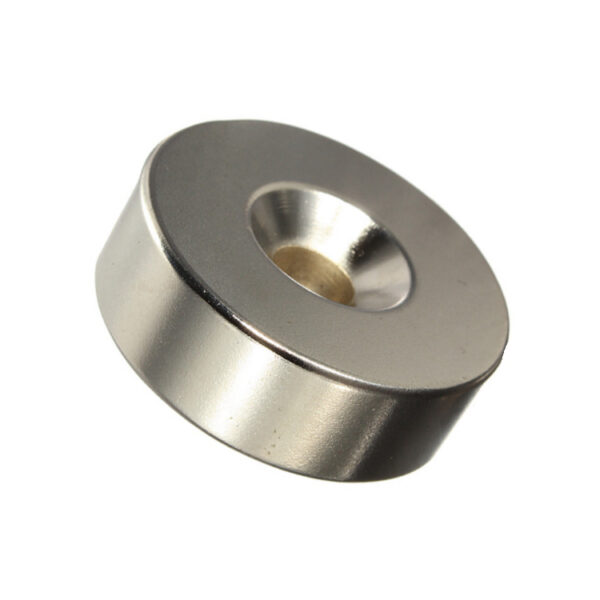
The fundamental distinction lies in composition and microstructure. A sintered NdFeB magnet is a rare-earth permanent magnet fabricated through powder metallurgy — resulting in a dense, crystalline structure of neodymium, iron, and boron. In contrast, ferrite magnets are ceramic-based, composed primarily of strontium or barium ferrite, and produced via pressing and sintering oxide powders.
This structural difference defines their classification: Permanent Magnet > Sintered NdFeB Magnet is the only valid category for the NdFeB offering — no alternative classifications (e.g., ‘rare-earth magnet’ or ‘neodymium magnet’ alone) may substitute in technical product mapping. Ferrite magnets fall under Permanent Magnet > Ceramic Magnet, but this article focuses exclusively on engineering suitability within automotive sensor contexts.
Performance Comparison
Sintered NdFeB magnet delivers significantly higher magnetic energy density — enabling smaller, lighter, and more responsive sensors without sacrificing signal fidelity. Its available grades span N30–N52 and SH Series, supporting tailored flux output and coercivity profiles. Crucially, working temperature reaches up to 150°C depending on grade — essential for under-hood and powertrain-integrated automotive sensor magnet applications such as motor feedback systems and ABS wheel speed sensors.
Ferrite magnets operate reliably up to ~250°C but exhibit lower remanence and intrinsic coercivity. Their lower magnetic output requires larger geometries to achieve equivalent field strength — a key constraint in space-limited electric vehicle sensor designs like integrated rotor position detectors or compact current sensors.
Dimensional stability under thermal cycling and mechanical stress is another differentiator. Sintered NdFeB offers excellent consistency across batch production — vital for high-volume magnetic materials for automotive applications. Ferrite’s brittleness and wider tolerances can complicate tight-tolerance assemblies common in modern sensor housings.
Cost and Manufacturing Considerations
Ferrite magnets offer lower raw material cost and simpler processing — making them attractive where size and weight are secondary concerns. However, total cost of ownership must account for packaging, shielding, and calibration overhead introduced by larger magnet footprints and lower field linearity.
In contrast, sintered NdFeB magnet units command higher unit cost but reduce system-level complexity. Their high performance allows miniaturized sensor architectures, fewer compensation components, and simplified mounting — yielding net savings in assembly, testing, and validation phases. Furthermore, OEM & ODM manufacturing support enables direct integration of magnet geometry, coating, and magnetization direction into sensor subassemblies — eliminating post-production handling risks.
Surface protection is non-negotiable for NdFeB in automotive environments. Available coatings — Ni-Cu-Ni, Zinc, Epoxy, and Chromium — ensure corrosion resistance across diverse exposure conditions (e.g., road salt, humidity, coolant proximity). Ferrite magnets require no metallic coating but remain vulnerable to chipping and moisture ingress if unsealed.
Best Applications for Each Option
Sintered NdFeB magnet excels where precision, miniaturization, and thermal robustness converge:
- Electric Vehicle Sensors: High-resolution rotor position detection in traction motors
- ABS Systems: Compact, high-output wheel speed sensors with fast response
- Position Sensors: Non-contact linear and angular measurement in battery management and suspension control
- Motor Feedback Systems: Embedded commutation magnets requiring stable field output up to 150°C
- Automotive Electronics: Hall-effect and magneto-resistive sensing modules demanding consistent air-gap fields
- Industrial Automation: Encoder rings, servo motor rotors, and safety-critical motion feedback devices
Ferrite magnets remain appropriate for cost-sensitive, low-frequency, or high-temperature ambient applications — such as cabin temperature sensors, HVAC actuators, or non-safety-critical proximity switches — provided dimensional allowances exist and field uniformity requirements are relaxed.
Which One Should You Choose?
Select sintered NdFeB magnet when your permanent magnet for EV sensors must meet one or more of the following criteria:
- Space-constrained packaging (e.g., integrated into motor stator back iron or thin-profile ABS ring)
- Operating temperatures exceeding 100°C with stable magnetic output
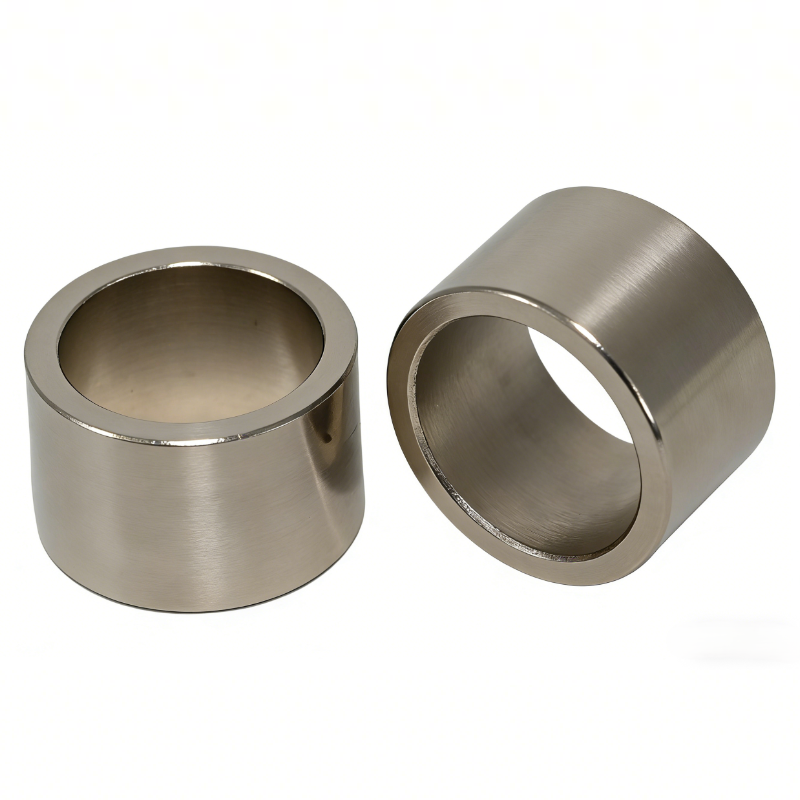
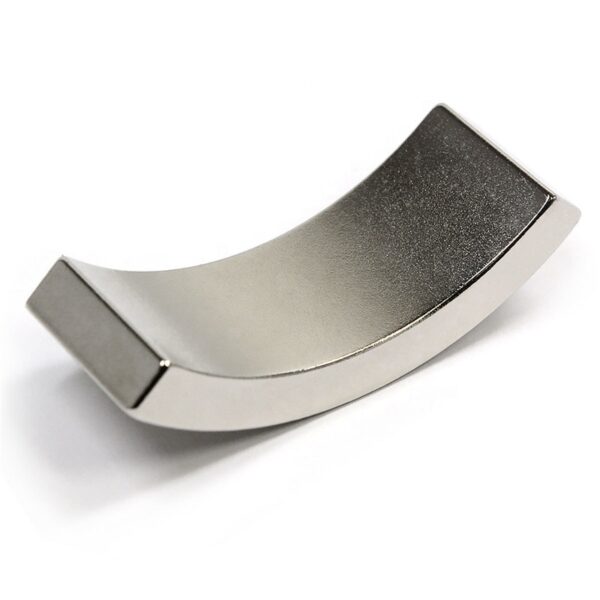
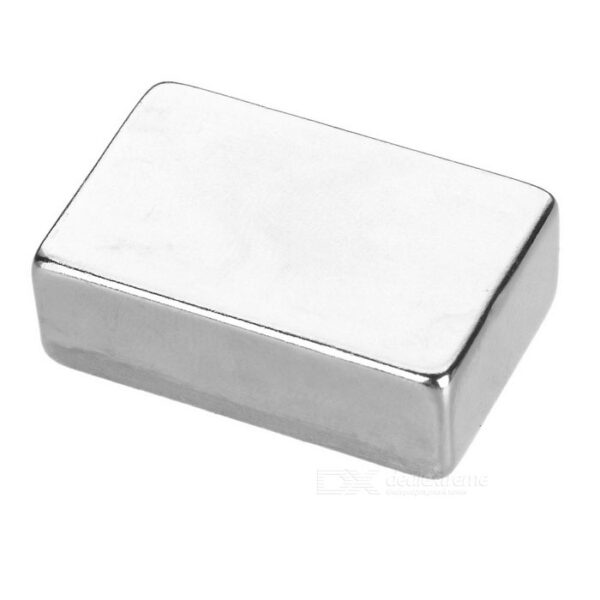
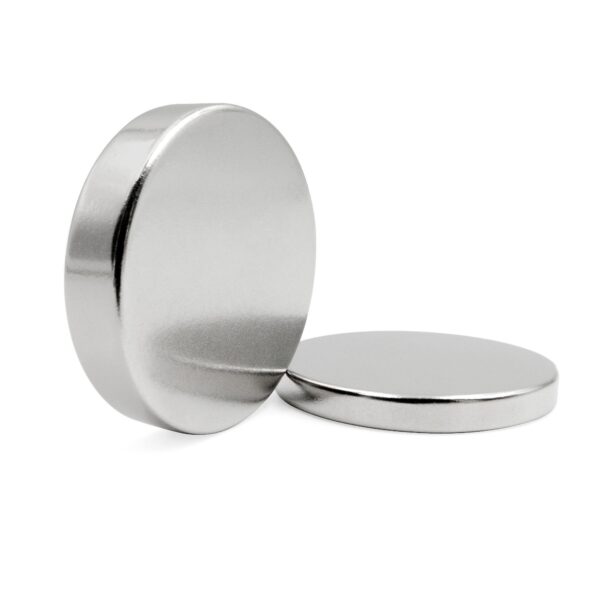
- Need for custom shapes — Block, Ring, Arc, Disc, or fully Customized geometries aligned to sensor topology
- Requirement for precise magnetic orientation (radial, axial, multi-pole) and surface finish control
- OEM or ODM integration into sensor modules — including coordinated coating selection (Ni-Cu-Ni, Zinc, Epoxy, Chromium)
For applications where size, weight, and signal-to-noise ratio are secondary to upfront material cost — and where ambient thermal load remains moderate — ferrite remains a viable baseline option. However, in next-generation high performance permanent magnet systems targeting ASIL-B/C compliance, sintered NdFeB is increasingly the de facto standard.
FAQ
Q: Why is sintered NdFeB widely used in EV sensors?
A: Sintered NdFeB magnets provide high magnetic energy density, excellent dimensional stability, and reliable performance, making them suitable for compact and high-precision EV sensor applications.
Q: When should ferrite magnets be selected instead of NdFeB?
A: Ferrite magnets are often chosen when cost is the primary concern and the application can accommodate larger magnet sizes with lower magnetic performance.
Q: Can sintered NdFeB magnets be customized for automotive sensors?
A: Yes. Sintered NdFeB magnets can be manufactured in customized shapes, sizes, coatings, and magnetic orientations to meet specific automotive sensor requirements.
Q: What coating options are available for sintered NdFeB magnets in automotive use?
A: Standard coating options include Ni-Cu-Ni, Zinc, Epoxy, and Chromium — all engineered to withstand harsh automotive environments while maintaining magnetic integrity.
Q: Are SH Series grades suitable for high-temperature motor feedback systems?
A: Yes. SH Series grades are specifically formulated for enhanced thermal stability and are suitable for applications requiring operation up to 150°C — including motor feedback systems in electric drivetrains.
Conclusion
The choice between sintered NdFeB and ferrite for EV sensor magnet applications hinges on system-level design priorities — not just material cost. For modern electric vehicle architectures demanding miniaturization, thermal resilience, and long-term field stability, sintered NdFeB magnet is the technically optimal solution across ABS systems, position sensing, and motor feedback. Its compatibility with Permanent Magnet > Sintered NdFeB Magnet classification, broad grade range (N30–N52, SH Series), and full customization capability — from Block and Ring to fully Customized shapes with Ni-Cu-Ni, Zinc, Epoxy, or Chromium coatings — make it indispensable for forward-looking magnetic materials for automotive applications. Contact our engineering team to discuss your application requirements.