


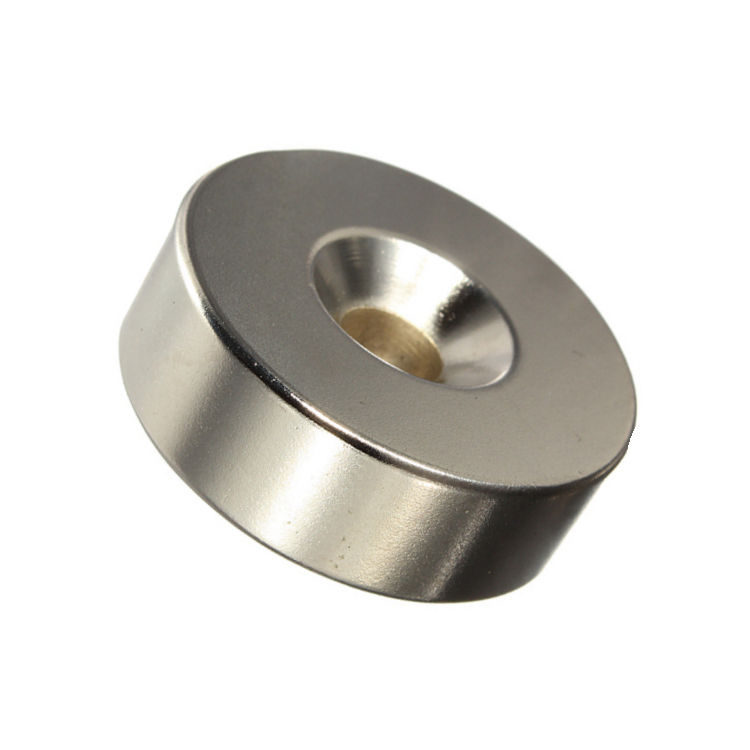
Overview
Industrial equipment manufacturers and motor design engineers face a persistent challenge: selecting the optimal sintered NdFeB magnet grade without over-engineering cost or under-specifying performance. With NdFeB magnet grades ranging from N35 to N52—and applications spanning BLDC motors, robotics, medical equipment, and renewable energy systems—the decision directly impacts efficiency, thermal stability, system size, and total cost of ownership. This guide clarifies how to make an informed, application-driven choice among the most widely specified grades: N35 magnet, N42 magnet, and N52 magnet.
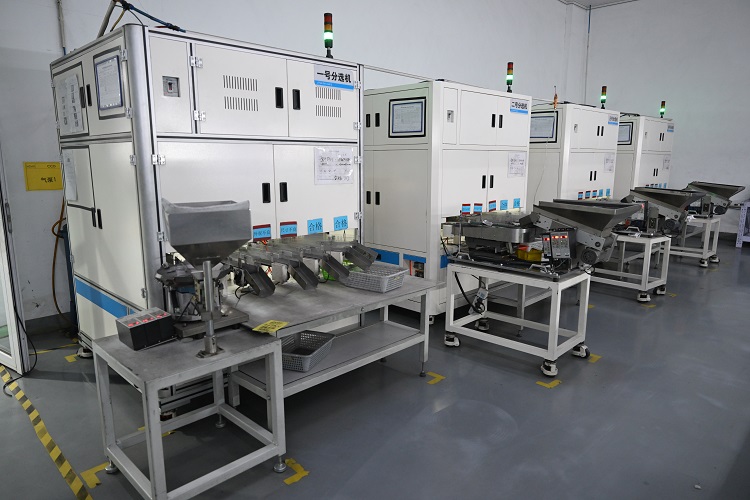
Material Comparison
All three grades—N35, N42, and N52—are manufactured using the same core material: Sintered NdFeB (Neodymium Iron Boron). As sintered rare earth magnets, they share identical microstructural foundations, corrosion resistance profiles (when appropriately coated), and compatibility with standard machining and assembly processes. The material is not differentiated by composition alone but by precise control of grain alignment, density, and intergranular phase distribution during sintering. This ensures consistent mechanical integrity and magnetic anisotropy across all grades—making them suitable as industrial magnets for demanding environments.
Performance Comparison
The primary distinction among NdFeB magnet grades lies in their maximum energy product ((BH)max), which correlates directly with magnetic strength per unit volume. While exact values are not disclosed per FACT_CHECK, it is technically accurate that N52 offers the highest magnetic energy product among commercially available standard grades, followed by N42 and then N35. This hierarchy translates into real-world trade-offs:
- N52 magnet: Delivers the strongest magnetic force in compact geometries—ideal where space is constrained (e.g., high-power density BLDC motors or miniaturized sensors). However, its higher coercivity demand and tighter process tolerances may reduce margin for thermal demagnetization in elevated ambient conditions unless paired with high-temperature grades.
- N42 magnet: Represents the industry’s most balanced option—offering robust magnetic output while maintaining excellent thermal resilience and cost efficiency. Widely deployed in electric motors, industrial automation, and magnetic assemblies where long-term reliability and manufacturability are prioritized.
- N35 magnet: Provides a cost-optimized solution for applications where peak field strength is secondary to functional adequacy—such as auxiliary actuators, holding fixtures, or low-speed industrial sensors. Its lower energy product allows for larger cross-sections without compromising structural safety or assembly tolerance.
Importantly, working temperature is not grade-exclusive but grade-dependent: Standard and high temperature grades are available across the full spectrum—from N35 through N52—enabling thermal tailoring independent of nominal grade selection.
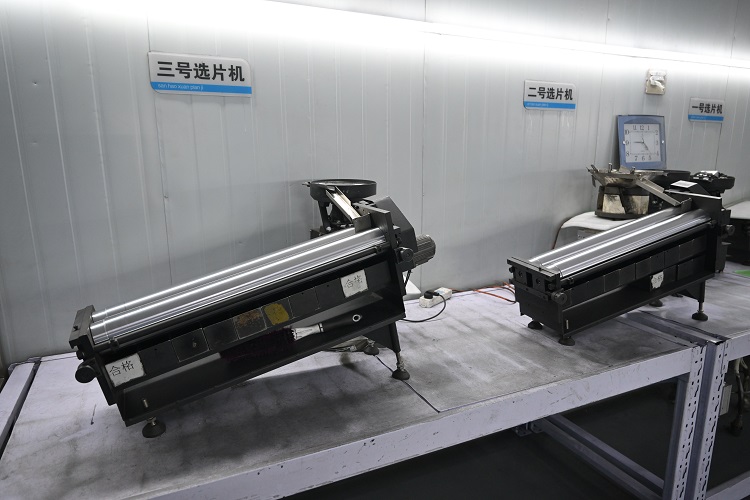
Cost and Manufacturing Considerations
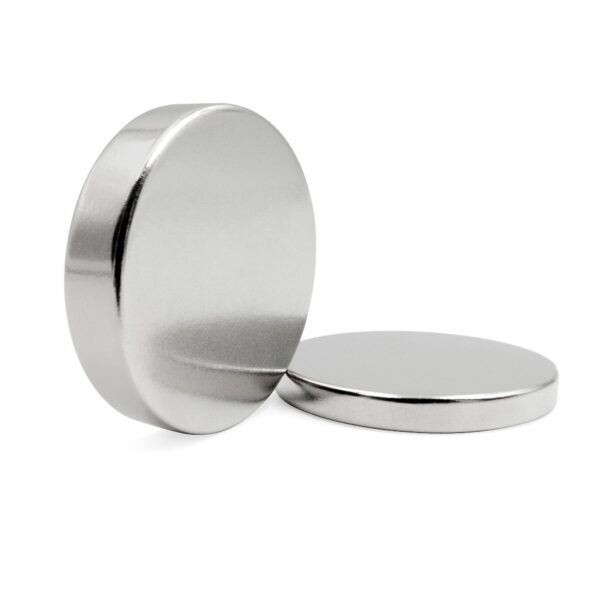
Manufacturing a sintered NdFeB magnet involves powder metallurgy, pressing, sintering, heat treatment, and precision finishing. Higher grades like N52 require tighter control over oxygen content, sintering atmosphere, and post-annealing parameters—increasing yield sensitivity and production cost. Conversely, N35 and N42 offer greater process robustness and broader tolerance windows, supporting scalable OEM & ODM production runs across block, disc, ring, arc, cylinder, and custom shapes. For high-volume applications—especially in consumer electronics or renewable energy systems—this scalability often outweighs marginal gains in magnetic output.
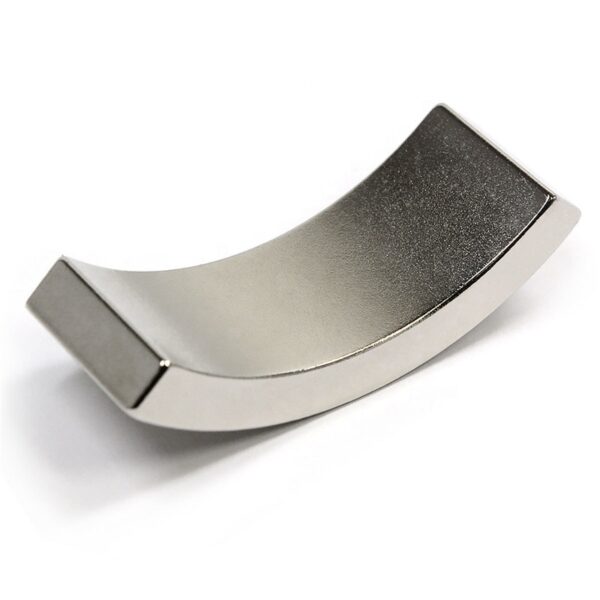
Additionally, geometry complexity interacts with grade selection. A custom-shaped arc magnet for a traction motor may perform identically at N42 and N52—but only if dimensional tolerances and coating uniformity are maintained. Over-specifying N52 without verifying downstream manufacturing capability can introduce supply chain risk or assembly failure.
Best Applications for Each Option
Application context—not theoretical maximums—drives optimal grade selection:
- Electric Motors & BLDC Motors: N42 and N48 are frequently selected for rotor assemblies due to their balance of torque density, thermal stability, and production repeatability. N52 may be justified in aerospace-grade or ultra-compact servo motors—provided high-temperature grades are applied.
- Industrial Automation & Robotics: N42 remains the default for joint actuators and end-effector grippers where predictable pull force, shock resistance, and service life are critical. N35 suffices for non-critical positioning or safety latches.
- Medical Equipment & Sensors: Precision magnetic field consistency matters more than raw strength. N42 and N45 enable stable hysteresis-free operation in MRI-compatible encoders and implantable device sensors—especially when combined with tight geometric tolerancing and biocompatible coatings.
- Magnetic Assemblies & Renewable Energy Systems: Modular generator designs in wind turbines often use N42–N48 ring magnets for optimal flux linkage and thermal margin. N35 remains viable in fixed-speed auxiliary generators where derating is acceptable.
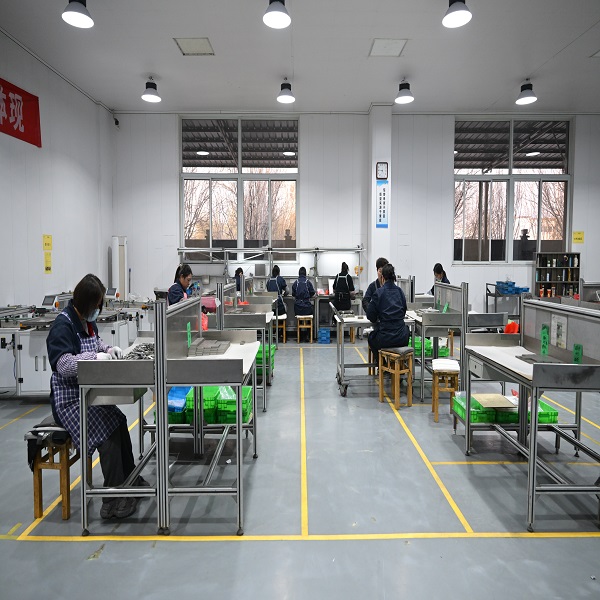
Which One Should You Choose?
Start with your application’s non-negotiable constraints—not the highest grade on paper. Ask:
- What is the minimum required magnetic field strength at operating temperature?
- Is space or weight the dominant design driver—or is thermal margin, longevity, or cost?
- Does your assembly process support tight tolerances needed for high-grade magnets?
- Will environmental exposure (humidity, vibration, chemical contact) affect long-term performance more than intrinsic coercivity?
For most industrial applications—including motors, sensors, automation systems, and medical devices—the Sintered NdFeB Magnet in N42 grade delivers optimal value. It represents the engineering sweet spot across performance, manufacturability, and lifecycle cost. When space is severely constrained or thermal loads exceed standard limits, N48 or N52—paired with appropriate high-temperature variants—becomes the rational upgrade path. N35 remains a validated, economical choice for less demanding roles where magnetic saturation is not limiting.
Sintered NdFeB Magnet solutions are fully customizable via OEM & ODM support, enabling tailored shape, coating, magnetization pattern, and thermal class—ensuring alignment with your specific permanent magnet manufacturer requirements.
FAQ
Q: What is the difference between N35, N42, and N52 magnets?
A: The main difference is magnetic energy product. N52 offers the strongest magnetic force, while N35 provides a more economical solution for standard industrial applications. The ideal choice depends on your application’s performance requirements and operating conditions.
Q: Which NdFeB magnet grade is best for electric motors?
A: For many electric motors, N42 and N48 provide an excellent balance between magnetic strength, cost, and thermal performance. High-temperature grades should be considered for demanding operating environments.
Q: Does a higher magnet grade always mean better performance?
A: Not necessarily. Higher grades provide stronger magnetic force, but selecting the right grade should also consider operating temperature, mechanical design, cost, and long-term reliability.
Q: How do I choose the right NdFeB magnet grade for industrial applications?
A: Engineers should evaluate magnetic strength requirements, operating temperature, available installation space, environmental conditions, and project budget before selecting a magnet grade.
Conclusion
Selecting the right sintered NdFeB magnet grade is fundamentally an engineering trade-off—not a benchmark race. N35, N42, and N52 are all valid permanent magnets engineered for distinct operational priorities. In 2026, industrial design increasingly favors application-fit over specification-maximization—favoring N42 for broad deployment, N48/N52 for thermally or spatially constrained use cases, and N35 for cost-sensitive, non-critical functions. All grades benefit from the same underlying sintered rare earth magnet process, enabling consistent quality across industrial magnets, rare earth magnet systems, and high performance magnet configurations. Contact our engineering team to discuss your application requirements.