


Overview
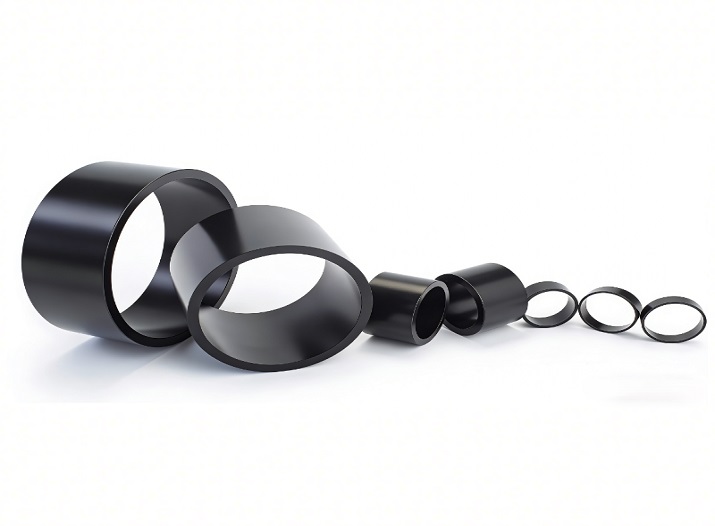
Designing or procuring a hall effect sensor magnet presents a critical engineering decision: selecting between bonded and sintered NdFeB magnets. While both deliver strong remanence and high coercivity, their structural composition, manufacturability, and dimensional behavior differ significantly — directly impacting sensor accuracy, assembly yield, and long-term reliability in demanding applications like automotive sensors, magnetic encoders, and precision positioning systems. Misalignment between magnet selection and application requirements can lead to signal drift, mechanical fit issues, or premature corrosion — especially where tight tolerances, complex geometries, or multi-pole field patterns are required.
Material Comparison
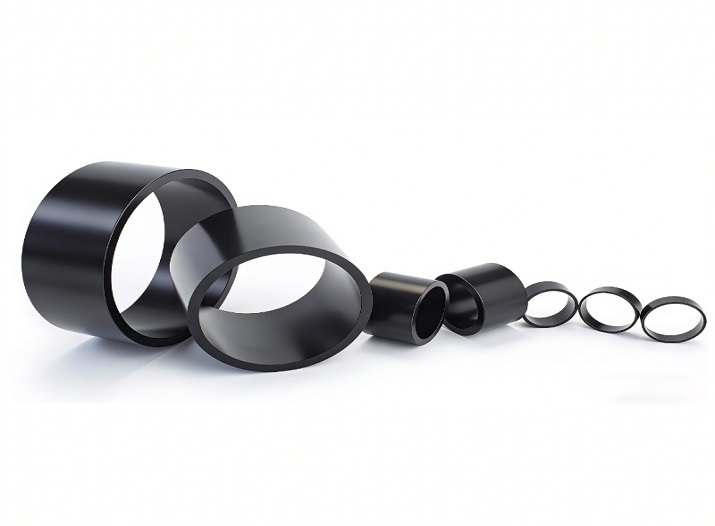
The fundamental distinction lies in manufacturing method and microstructure. Bonded NdFeB magnets are produced by mixing fine NdFeB powder with a polymer binder (typically epoxy or nylon), then compression- or injection-molding into net-shape parts. This yields a composite material classified under Permanent Magnets > Bonded NdFeB Magnet. In contrast, sintered NdFeB magnets are formed by pressing aligned powder and high-temperature sintering — resulting in a dense, fully metallic microstructure with higher intrinsic magnetic energy.
- Bonded NdFeB Magnet: Density approximately 7.0 g/cm³; retains excellent design flexibility and custom shapes and dimensions; inherently isotropic; suitable for multi-pole magnetization.
- Sintered NdFeB Magnet: Higher density (>7.4 g/cm³) and maximum energy product (BHmax); typically anisotropic; requires secondary machining for complex profiles; more brittle and less tolerant of tight geometric tolerances.
Performance Comparison
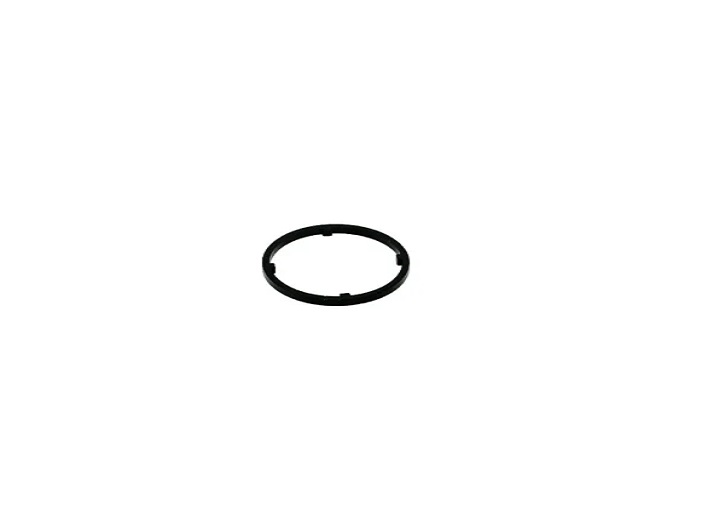
For magnet for hall sensor applications, performance must be evaluated beyond raw strength. Hall effect sensors rely on precise spatial field gradients and stable flux distribution across small air gaps. Here, bonded NdFeB magnet excels due to its high dimensional accuracy — enabling repeatable placement and consistent air-gap control. Its isotropic nature also supports uniform multi-pole magnetization patterns essential for rotary position sensing in BLDC motors and magnetic encoders.
Sintered NdFeB offers superior magnetic output per unit volume — advantageous when space is extremely constrained and maximum field strength is paramount. However, its lower dimensional repeatability (due to post-sintering grinding requirements) and limited shape complexity increase assembly risk in miniaturized sensor housings. Additionally, sintered grades often require thicker protective coatings (e.g., Ni-Cu-Ni) to prevent oxidation, whereas bonded variants support thinner, conformal options like Epoxy / Parylene / Anti-corrosion Coatings — critical for compact, sealed smart devices and automotive sensors exposed to humidity or condensation.
Cost and Manufacturing Considerations
When evaluating industrial sensor magnets, total cost includes not just material price but tooling, yield, and integration effort. Bonded NdFeB magnets are suitable for high-volume precision manufacturing: net-shape molding eliminates secondary machining, reduces scrap, and enables rapid iteration of custom geometries — ideal for robotics and industrial automation OEMs scaling production. Tooling investment is moderate, and design changes can be implemented quickly without requalifying metallurgical processes.
Sintered NdFeB demands costly diamond grinding for dimensional refinement, increasing lead time and part-to-part variation. Complex features (e.g., internal poles, asymmetric contours) necessitate extensive machining — raising per-unit cost and limiting scalability. For applications requiring precision magnetic components at volume — such as automotive wheel speed sensors or motor rotor position rings — bonded NdFeB delivers better process control and supply chain resilience.
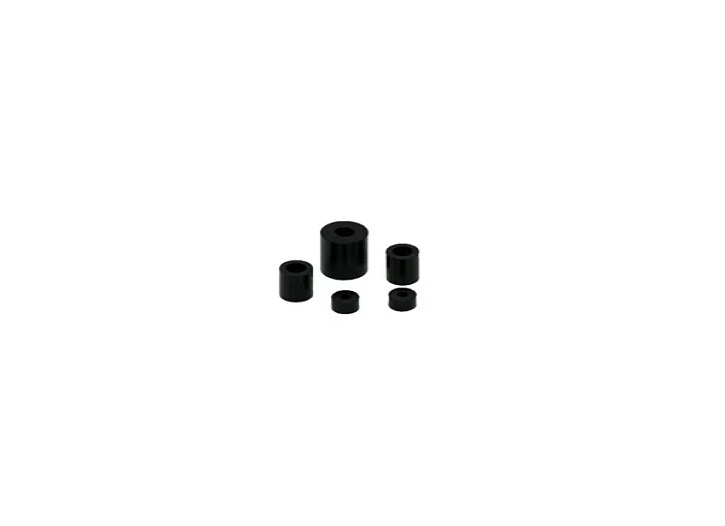
Best Applications for Each Option
Bonded NdFeB magnets are the preferred permanent magnet for sensors where:
- Compact, non-axisymmetric shapes are needed (e.g., ring segments, arc magnets with asymmetrical pole counts).
- Tight dimensional tolerances (<±0.05 mm) are required for air-gap consistency in Hall IC assemblies.
- Multi-pole magnetization (e.g., 16–64 poles) must be precisely aligned with encoder tracks or stator slots.
- Corrosion resistance in humid or chemically active environments is achieved via conformal Epoxy / Parylene / Anti-corrosion Coatings.
These criteria align directly with use cases in hall effect sensors, magnetic encoders, BLDC motors, automotive sensors, industrial automation, robotics, smart devices, and precision positioning systems.
Sintered NdFeB remains optimal where ultimate field strength drives design — e.g., ultra-thin axial-flux motor rotors or high-resolution linear position sensors operating at extreme temperatures (beyond bonded magnet limits — though exact thermal specs are unspecified and thus omitted per FACT CHECK).
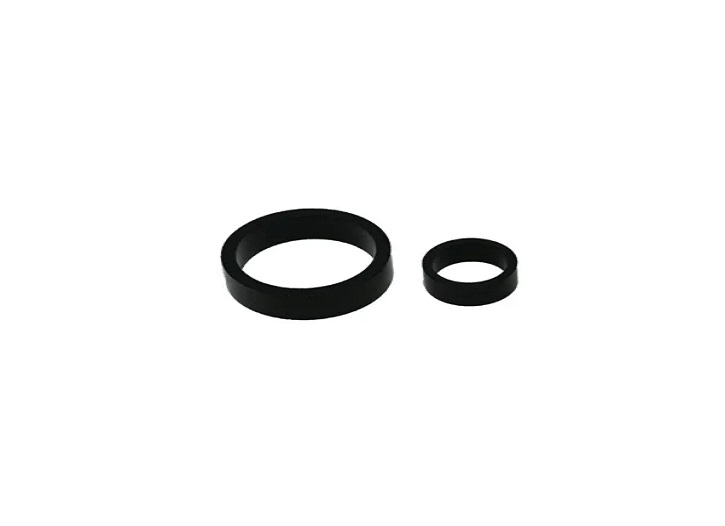
Which One Should You Choose?
For most Hall effect sensor designs — especially those integrating into mass-produced systems — the bonded NdFeB magnet offers the optimal balance of magnetic stability, geometric fidelity, and manufacturability. Its excellent design flexibility, custom shapes and dimensions, and suitability for multi-pole magnetization make it the de facto standard for next-generation magnetic encoder magnet and precision magnetic components. When dimensional accuracy, coating versatility, and high-volume repeatability are non-negotiable, bonded NdFeB is not just viable — it’s engineered for purpose.
The Nibboh Bonded NdFeB Magnet exemplifies this capability: designed specifically as a hall effect sensor magnet, it delivers custom shapes, high dimensional accuracy, density approximately 7.0 g/cm³, multi-pole magnetization, and optional Epoxy / Parylene / Anti-corrosion Coatings — all within the Permanent Magnets > Bonded NdFeB Magnet category. It is engineered for precision sensors and motors used across automotive, robotics, and industrial automation.
FAQ
Q: Why are bonded NdFeB magnets commonly used in Hall effect sensors?
A: Bonded NdFeB magnets offer excellent dimensional accuracy, flexible shapes, and stable magnetic performance, making them well suited for compact Hall effect sensor assemblies.
Q: Can sintered NdFeB magnets be used in Hall effect sensors?
A: Yes. Sintered NdFeB magnets are suitable where maximum magnetic strength is required, but bonded NdFeB magnets are often preferred when complex geometries and tight dimensional tolerances are more important.
Q: What is the difference between bonded and sintered NdFeB magnets for sensor applications?
A: Bonded NdFeB magnets provide greater design flexibility and dimensional precision, while sintered NdFeB magnets deliver higher magnetic energy for applications requiring maximum magnetic output.
Conclusion
Selecting the right magnet for hall sensor hinges on matching material capabilities to system-level constraints — not just magnetic strength. For applications demanding precision magnetic components in high-volume production — including Hall effect sensors, magnetic encoders, and BLDC motor position feedback — bonded NdFeB magnets provide superior dimensional control, multi-pole compatibility, and coating adaptability. Their classification under Permanent Magnets > Bonded NdFeB Magnet reflects a mature, application-optimized solution rather than a compromise. Sintered alternatives remain valuable where peak flux density is decisive — but require careful trade-off analysis. Contact our engineering team to discuss your application requirements.