


Executive Summary
In precision sensors, miniature motors, high-torque propulsion, HDD voice coil motors, and automotive encoders, choosing between sintered and bonded NdFeB magnets is a core engineering decision — not just a procurement choice. The selection directly affects performance density, dimensional accuracy, thermal stability, and overall integration cost. This guide summarizes the technical principles for Sintered vs. Bonded NdFeB: A Technical Guide to Selecting the Right Permanent Magnet, based strictly on verified material properties and application constraints.
Technical Challenge
Different applications impose unique physical requirements. Precision sensors need micron-level dimensional repeatability and multi-pole magnetic fields with sub-degree angular alignment accuracy. Miniature motors and HDD voice coil motors demand high flux density in limited space while retaining mechanical strength under dynamic loads. High-torque propulsion and automotive encoders operate over wide temperature ranges and must maintain coercivity without irreversible demagnetization. Notably, sintered NdFeB’s brittleness and machining limitations conflict with complex net-shape requirements, while bonded NdFeB’s isotropic characteristics and lower (BH)max restrict torque density and field strength in high-power systems.
Nibboh Solution
Nibboh offers clearly differentiated solutions in the PERMANENT MAGNET > Sintered NdFeB & Bonded Magnets category — designed as purpose-specific enablers rather than interchangeable alternatives. Our Sintered NdFeB magnets achieve Br = 1.42–1.48 T and (BH)max = 49.5–52 MGOe, with precision post-machining tolerance of ±0.01 mm. This delivers maximum magnetic flux in thermally demanding environments, especially for N52SH-grade variants stable above 150°C. In contrast, our Bonded NdFeB products are fully isotropic, supporting true net-shape molding of complex geometries (including multi-pole rings and thin-wall sensor components) without secondary machining. With PPS, PA12, or PA6 binders, they provide excellent corrosion resistance and consistent dimensional quality across batches. Backed by U.S. engineering support and China manufacturing, we guarantee reliable design validation and scalable production.
Product Spotlight
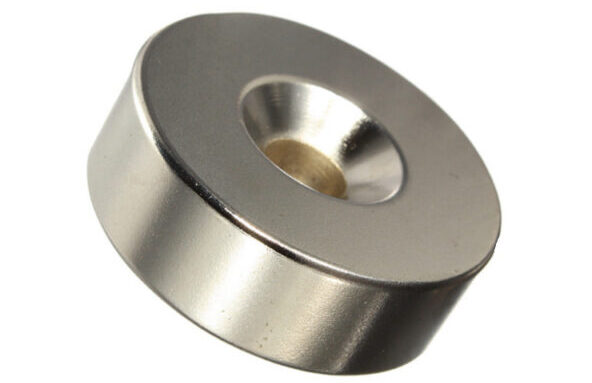
For applications where magnetic energy density and thermal margin are non-negotiable, the High-Performance Sintered NdFeB Magnet delivers 52 MGOe at N52SH grade—paired with precision machining for tight-tolerance assemblies in propulsion and encoder systems. Where geometry complexity, pole count, and process efficiency drive design, the Precision Injection Molded Magnets (Bonded) offer isotropic magnetization, robust binder systems (PPS/PA12), and inherent corrosion resistance—ideal for miniature motor rotors and high-resolution automotive encoders.
Industry Trends
Emerging domains—including robotics, eVTOL actuation, and next-generation industrial automation—are accelerating demand for magnets that balance field strength, shape flexibility, and reliability. These systems increasingly rely on co-optimized magnet-and-sensor architectures, where bonded NdFeB’s net-shape capability reduces assembly steps and sintered NdFeB’s high Br ensures minimal air-gap losses. There is no universal solution—but there is a precise one, determined by physics-first selection.
FAQ
Q: Why choose Bonded over Sintered NdFeB for precision sensors?
A: Bonded magnets support complex multi-pole magnetization and net-shape manufacturing, avoiding costly and high-risk machining of brittle sintered materials.