


Introduction
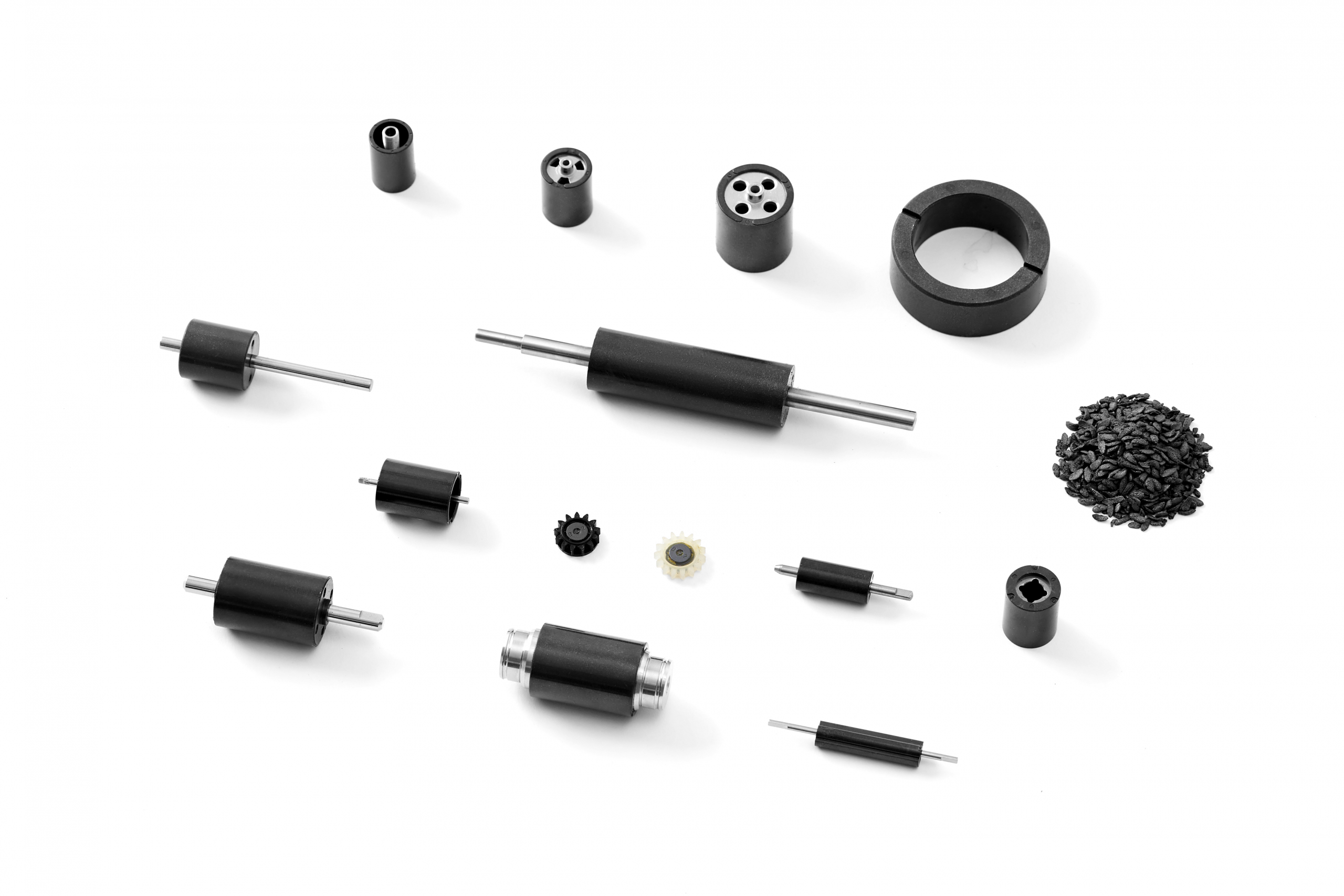
When engineers and product designers set out to select a permanent magnet for a new application, they face a critical decision: choosing the right manufacturing process. The advantages and disadvantages of injection molding for magnets play a pivotal role in this decision-making process. While traditional sintered magnets offer the highest magnetic strength, the demand for complex geometries, tight tolerances, and integrated assemblies has driven the rapid adoption of bonded magnets, particularly those produced via injection molding.
Injection molded magnets are composite materials created by mixing magnetic powders—such as neodymium-iron-boron (NdFeB), samarium cobalt (SmCo), or hard ferrite—with a thermoplastic binder like polyamide (Nylon) or polyphenylene sulfide (PPS). This unique combination bridges the gap between high-performance magnetics and the incredible design flexibility of plastic injection molding.
In this comprehensive guide, we will explore the pros and cons of injection molded magnets, compare them to alternative manufacturing methods like sintering and compression bonding, and provide actionable insights for procurement managers and engineering teams to determine when this technology is the optimal choice for their projects.
What Is Injection Molding for Magnets?
Injection molding for magnets is a specialized manufacturing process that produces what are known in the industry as “bonded magnets.” Unlike sintered magnets, which are fully dense, solid metallic structures formed under high heat and pressure, bonded magnets consist of magnetic particles suspended within a polymer matrix.
The injection molding process leverages the same fundamental technology used to produce everyday plastic parts, but with a highly engineered feedstock. The resulting composite material typically contains about 60% to 80% magnetic powder by weight, with the remainder being the non-magnetic thermoplastic binder.
This process is particularly well-suited for high-volume production runs where consistency, complex shapes, and minimal post-processing are essential. The isotropic nature of the base material means the final magnetic pattern is determined by the magnetizing fixture during or after the molding process, allowing for intricate multi-pole magnetization configurations.
How Injection Molding Works for Magnets
Understanding the advantages and disadvantages of injection molding for magnets requires a brief look at how the manufacturing process actually works. The production of an injection molded magnet involves several precise steps:
- Compounding (Mixing):The process begins by thoroughly mixing the selected magnetic powder (e.g., isotropic NdFeB or ferrite) with a thermoplastic binder and various additives. This mixture forms a homogeneous, pelletized compound known as feedstock.
- Injection Molding:The pelletized feedstock is fed into an injection molding machine, where it is heated until the polymer binder melts. The molten compound is then injected under low thermal stress into a precision-machined mold cavity that defines the final shape of the magnet.
- Alignment (Optional):If an anisotropic magnet is required (for higher magnetic performance in a specific direction), an external magnetic field is applied to the mold cavity while the material is still in a molten state. This aligns the magnetic particles before the binder solidifies. If no field is applied, the resulting magnet is isotropic and can be magnetized in any direction later.
- Cooling and Solidification:The mold is cooled, causing the thermoplastic binder to solidify and lock the magnetic particles in place.
- Magnetization:The molded part is exposed to a strong, precisely designed magnetic field in a magnetizing fixture to impart the final magnetic properties and pole configuration.
Major Advantages of Injection Molding for Magnets
The injection molding magnets advantages are numerous, making this process highly attractive for a wide range of modern engineering applications. Here are the primary benefits:
Unmatched Design Flexibility
The most significant advantage of injection molded magnets is the ability to produce highly complex geometries that are impossible or cost-prohibitive to achieve with sintered magnets. Engineers can design magnets with thin walls, intricate internal features, sharp radii, and asymmetrical shapes. This flexibility allows the magnet to be tailored precisely to the available space within a device, optimizing the overall system design.
Insert and Over-Molding Capabilities
Injection molding allows for insert molding (molding the magnet directly around a shaft, hub, or other component) and over-molding (molding a polymer layer over the magnet). This eliminates the need for secondary assembly steps, such as gluing or mechanical fastening, reducing labor costs and improving the structural integrity of the final assembly.
Tight Dimensional Tolerances
Because the parts shrink predictably as they cool in the precision mold, injection molded magnets can achieve extremely tight dimensional tolerances straight out of the press. This typically eliminates the need for costly secondary machining operations, such as grinding or slicing, which are almost always required for sintered magnets.
High Mechanical Toughness
Sintered magnets are notoriously brittle and prone to chipping or cracking during assembly or in high-vibration environments. The polymer binder in injection molded magnets acts as a shock absorber, providing excellent mechanical toughness, impact resistance, and flexibility. This makes them much easier to handle and less likely to fail under mechanical stress.
Excellent Corrosion Resistance
Rare-earth magnets, particularly NdFeB, are highly susceptible to corrosion and usually require protective coatings (like nickel or epoxy) when sintered. In an injection molded magnet, each magnetic particle is encapsulated by the polymer binder, providing inherent corrosion resistance. In many applications, this eliminates the need for additional plating or coating, saving both time and money.
Complex Magnetization Patterns
The isotropic nature of most injection molded compounds allows for complex, multi-pole magnetization patterns on a single part. This is particularly advantageous for applications like rotary sensors, stepper motors, and magnetic encoders, where precise, multi-pole fields are required.
Major Disadvantages of Injection Molding for Magnets
Despite the impressive benefits, there are notable disadvantages of injection molding magnets that must be carefully considered during the design phase
Lower Magnetic Strength
The primary drawback of injection molded magnets is their significantly lower magnetic performance compared to sintered magnets. Because the magnetic powder is diluted by the non-magnetic polymer binder, the Maximum Energy Product (BHmax) is proportionally reduced. For example, while a sintered NdFeB magnet might achieve a BHmax of 50+ MGOe, an injection molded NdFeB magnet typically maxes out around 5-10 MGOe depending on loading.
High Initial Tooling Costs
The injection molding process requires custom, precision-machined steel molds. The design and fabrication of these molds require a significant upfront capital investment. While the piece-part price is low, the high tooling cost means that injection molding is generally only cost-effective for high-volume production runs (typically tens of thousands to millions of parts).
Temperature Limitations
The operating temperature of an injection molded magnet is limited by the thermal properties of the polymer binder, not just the magnetic powder. Common binders like Nylon (PA) or PPS can soften or degrade at high temperatures. While some high-performance binders can withstand continuous operating temperatures, they are typically limited to < 150°C, which is lower than the temperature capabilities of many sintered magnets.
Size Constraints
Injection molding is best suited for relatively small, thin-walled parts. Producing very large or thick magnets via injection molding can be challenging due to issues with uniform cooling, shrinkage, and the difficulty of applying a strong enough aligning magnetic field across a large volume of molten material.
Side-by-Side Comparison: Injection Molded Magnets vs Other Methods
To fully understand the injection molded vs sintered magnets dynamic, as well as how injection molding compares to compression bonding, it is helpful to look at a direct comparison of key engineering metrics.
Technical Parameter | Sintered NdFeB Magnets | Compression Bonded NdFeB | Injection Molded NdFeB Magnets |
Microstructure | Fully dense, polycrystalline, grain-oriented | Polymer-bonded composite, isotropic | Polymer-bonded composite, isotropic or mildly anisotropic |
Magnetic Strength (BHmax) | Very high (up to 50+ MGOe) | Moderate (up to 10+ MGOe) | Low to Moderate (5–10 MGOe depending on loading) |
Coercivity | High; various grades for high-temperature environments | Moderate | Moderate; limited by polymer thermal properties |
Temperature Stability | Up to 200–230°C (grade-dependent) | Moderate (typically 150-175°C) | Typically < 150°C depending on binder |
Mechanical Strength | Brittle, low tensile strength | Moderate | Tough, impact-resistant |
Dimensional Tolerance | Requires machining; tighter tolerances possible | Equivalent to injection molded | Very high precision from mold; consistent repeatability |
Complex Geometry Capability | Limited; post-machining needed | Limited to simpler shapes (rectangles, rings, cylinders) | Excellent; complex shapes, thin walls, over-molding |
Corrosion Resistance | Requires coating (Ni-Cu-Ni, epoxy, etc.) | Moderate | Natural resistance due to polymer matrix |
Cost Efficiency | Higher for complex parts due to machining | Cost effective for high volumes | Highly cost-effective for high-volume complex shapes |
Typical Applications | Motors, generators, couplings, industrial actuators | Spindle motors, BLDC motors | Sensors, small motors, automotive components, mechatronics |
Real-World Applications Where Injection Molding Excels
Given the unique balance of properties, when to use injection molded magnets becomes clear when examining specific industry applications. Injection molding excels in scenarios where complex shapes, tight tolerances, and integrated assemblies are more critical than raw magnetic strength.
- Automotive Sensors:Injection molded magnets are heavily used in modern vehicles for rotary position sensors, ABS wheel speed sensors, and throttle position sensors. The ability to mold complex, multi-pole ring magnets with tight tolerances is ideal for these precise measurement applications.
- Intelligent Mechatronic Components:Brushless DC (BLDC) motors, stepper motors, and small actuator motors often utilize injection molded rotors. The magnet can be insert-molded directly onto the motor shaft, ensuring perfect concentricity and eliminating assembly steps.
- Precision Consumer Electronics:Devices like smartphone cameras, laptop hard drives, and wearable electronics require tiny, precisely shaped magnets that fit into incredibly tight spaces. Injection molding provides the necessary miniaturization and dimensional accuracy.
- Medical Devices:The inherent corrosion resistance and ability to form complex, smooth shapes make injection molded magnets suitable for various medical instruments and diagnostic equipment where cleanliness and reliability are paramount.
When Injection Molding Is NOT the Best Choice
While highly versatile, injection molding is not the universal solution for every magnetic application. Engineers should look to alternative methods (like sintering) under the following conditions:
- Maximum Magnetic Strength is Required:If the application demands the absolute highest magnetic force in the smallest possible volume (e.g., high-torque industrial servo motors, wind turbine generators, or MRI machines), sintered NdFeB or SmCo is the only viable choice.
- Low Production Volumes:If you only need a few hundred or a few thousand parts, the high upfront cost of the injection mold tooling will make the per-part cost prohibitively expensive. In these cases, machining standard sintered magnet blocks is usually more economical.
- Extreme High-Temperature Environments:If the magnet will be exposed to continuous operating temperatures exceeding 150°C to 200°C, the thermoplastic binder in an injection molded magnet will likely fail. High-temperature grades of sintered SmCo or NdFeB are required here.
- Simple Geometries:If the required shape is a simple block, disc, or standard ring, the design flexibility of injection molding is wasted, and the higher magnetic strength of a sintered or compression bonded magnet can be utilized without penalty.
Cost Analysis: Is Injection Molding Worth It?
The cost of injection molded magnets must be evaluated on a Total Cost of Ownership (TCO) basis, rather than just comparing the raw material cost per pound.
Upfront Costs: As mentioned, the initial capital expenditure for the injection mold is high. A complex, multi-cavity mold can cost tens of thousands of dollars.
Piece-Part Costs: Once the mold is paid for, the piece-part cost is generally very low. The injection molding process is highly automated, cycle times are fast, and material waste is minimal (runners and sprues can often be reground and recycled).
Assembly and Processing Savings: The true cost advantage of injection molding often lies in the elimination of secondary operations. By utilizing insert molding to combine the magnet with a shaft or housing, manufacturers can eliminate the labor, adhesives, and quality control checks associated with manual assembly. Furthermore, the net-shape molding process eliminates the need for expensive diamond grinding, and the inherent corrosion resistance often eliminates the need for plating.
The Verdict: Injection molding is highly cost-effective for high-volume production runs (typically >50,000 units) where the savings in assembly and secondary machining offset the initial tooling investment. For low-volume or simple-shape applications, it is rarely the most economical choice.
Future Trends and Innovations in Injection Molded Magnets
The field of bonded magnetics is continuously evolving. Several key trends are shaping the future of injection molded magnets:
- Higher Performance Binders:Researchers are developing new thermoplastic polymers that can withstand higher operating temperatures and harsh chemical environments, expanding the potential applications for molded magnets in the automotive and aerospace sectors.
- Anisotropic Molding Advancements:Improving the techniques for applying aligning magnetic fields during the injection molding process is allowing for the production of anisotropic molded magnets with significantly higher BHmax values, closing the performance gap with compression bonded magnets.
- Hybrid Magnetic Powders:Compounding different types of magnetic powders (e.g., mixing NdFeB with hard ferrite) allows engineers to fine-tune the cost-to-performance ratio and temperature stability of the final magnet [1].
- Additive Manufacturing:While still in its infancy, additive manufacturing (3D printing) of polymer-bonded magnetic materials is emerging as a way to produce complex magnetic shapes without the high tooling costs of injection molding, ideal for rapid prototyping and low-volume production.
Conclusion
Understanding the advantages and disadvantages of injection molding for magnets is essential for making informed engineering and procurement decisions. Injection molded magnets offer unparalleled design flexibility, the ability to consolidate assemblies through insert molding, tight dimensional tolerances, and excellent mechanical durability. However, these benefits come at the cost of lower overall magnetic strength, high initial tooling investments, and temperature limitations dictated by the polymer binder.
When deciding between injection molded vs sintered magnets, the choice ultimately comes down to the specific requirements of the application. For high-volume, complex-geometry applications where assembly consolidation and precision are paramount—such as automotive sensors and small precision motors—injection molding is often the superior choice. Conversely, for applications demanding maximum magnetic force or operating in extreme environments, traditional sintered magnets remain the standard.
By carefully weighing factors such as part complexity, production volume, tooling cost, and required magnetic performance, engineering teams can select the optimal magnet manufacturing process to ensure the success and cost-effectiveness of their products.