


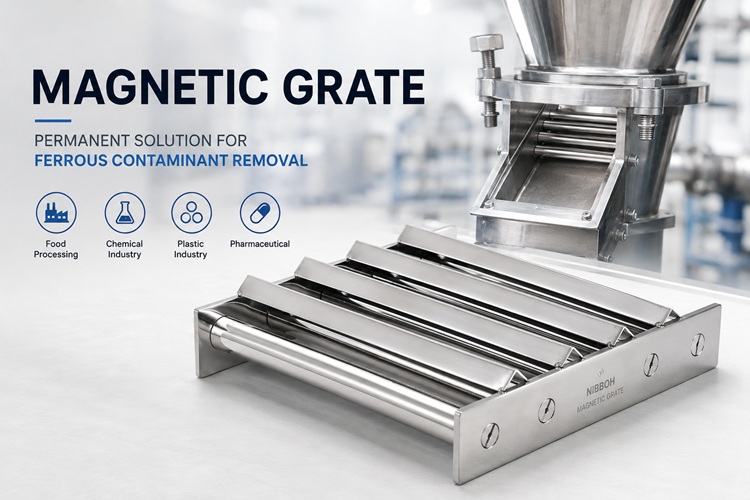
Understanding the Magnetic Grate Selection Challenge
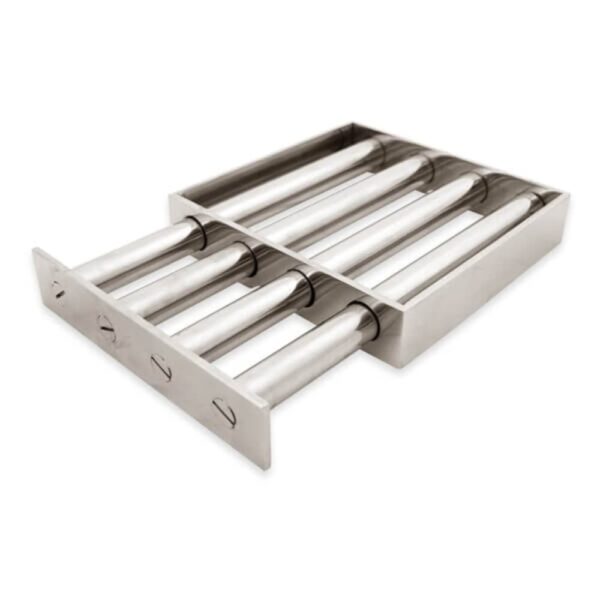
Selecting the right magnetic grate is not simply a matter of choosing the largest unit or the highest number of magnetic bars. For process engineers, equipment manufacturers, and procurement teams, the more important question is whether the grate matches the material being processed, the available installation space, and the operating requirements of the production line.
A magnetic grate is designed to capture ferromagnetic impurities as process material passes through or around an arrangement of magnetic bars. This makes it useful where unwanted iron contamination needs to be separated from fluids or particulate materials. In industrial applications, effective selection begins with understanding the process opening, material characteristics, installation conditions, and cleaning requirements before choosing a standard or customized configuration.
Key Factors When Choosing a Magnetic Grate
1. Start with the Material Being Processed
The first selection question should be simple: what material will pass through the magnetic grate?
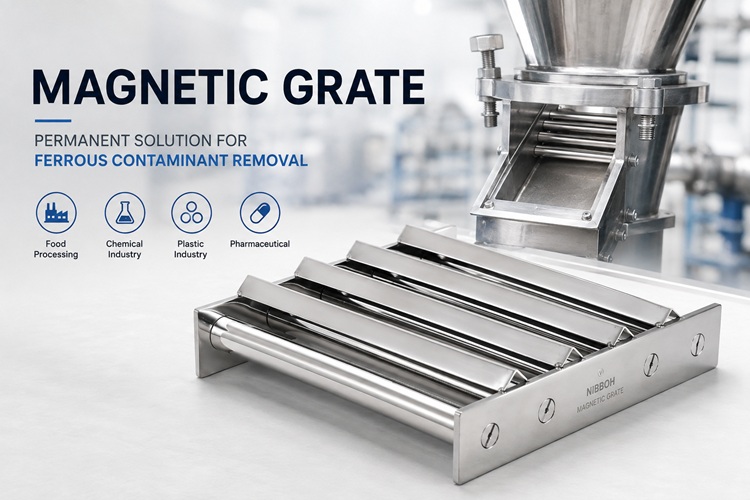
The NIBBOH Magnetic Grate is designed to capture ferromagnetic impurities from fluids or particulate materials. This gives the product potential applications across different industrial processing environments, including food, chemical, plastics, and pharmaceutical production.
For powders and granular materials, buyers should consider characteristics such as particle size, flow behavior, tendency to bridge or accumulate, and the dimensions of the material passage. For fluid applications, operating conditions and the way the material passes through the separation area should also be evaluated.
Rather than assuming that one magnetic grate configuration is suitable for every material, provide the manufacturer with information about the process medium and installation environment so that the appropriate configuration can be evaluated.
2. Match the Grate Dimensions to the Process Opening
Physical dimensions are one of the most important and verifiable selection factors. A magnetic grate should be selected according to the available opening and the geometry of the equipment into which it will be integrated.
NIBBOH lists both round and rectangular Magnetic Grate configurations:
- Round: Dia. 100 x 40 mm to Dia. 500 x 40 mm
- Rectangular: 100 x 100 x 40 mm to 500 x 500 x 40 mm
The listed configurations range from 2 magnetic bars for the smallest standard sizes to 10 magnetic bars for the largest sizes.
Instead of selecting by bar count alone, buyers should first measure the actual process opening and confirm the space available for installation and servicing. The shape and dimensions of the grate can then be match
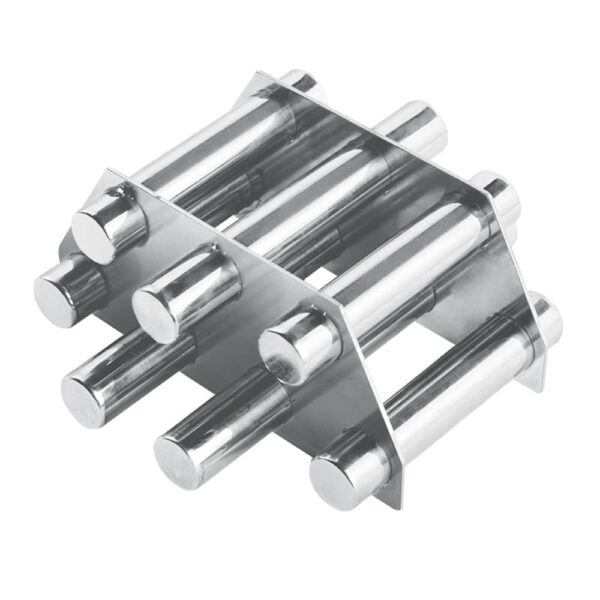
ed to the equipment layout.
3. Understand the Relationship Between Size and Magnetic Bar Count
NIBBOH’s published specifications provide progressively larger grate sizes with additional magnetic bars. For example, the standard round range begins with Dia. 100 x 40 mm and 2 bars and extends to Dia. 500 x 40 mm and 10 bars. The rectangular range follows a similar progression from 100 x 100 x 40 mm with 2 bars to 500 x 500 x 40 mm with 10 bars.
This makes bar count useful as part of the configuration specification, but it should not be treated as a standalone indicator of separation performance. Actual magnetic separation requirements may depend on factors that are not defined by physical dimensions alone.
If magnetic field strength, magnetic material grade, capture performance, or other magnetic parameters are critical to your application, these requirements should be confirmed with the manufacturer rather tha
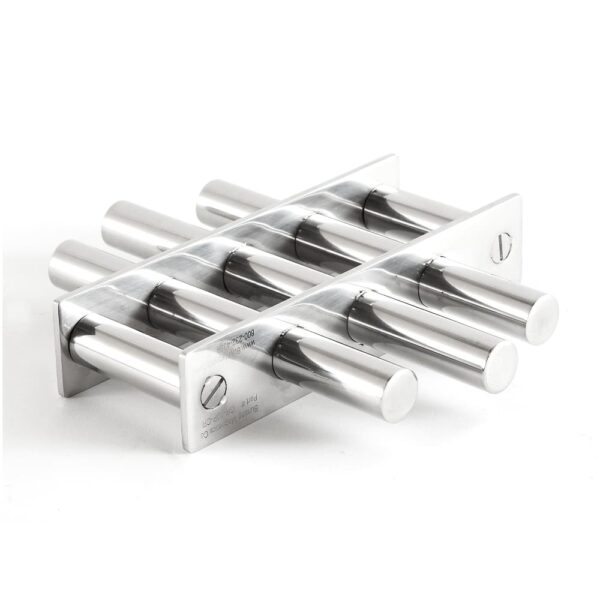
n estimated from the number of bars.
4. Consider Housing Material and Operating Environment
NIBBOH describes the Magnetic Grate as typically using stainless steel housing, supporting corrosion resistance and suitability for a range of industrial processing environments.
However, buyers should avoid assuming a specific stainless steel grade when it has not been specified. Requirements can differ significantly between ordinary industrial processing and applications involving corrosive materials, frequent washdown, food contact, or regulated production environments.
Before ordering, consider confirming:
- Required housing material or stainless steel grade
- Operating temperature
- Characteristics of the process material
- Exposure to moisture or corrosive media
- Cleaning method and cleaning frequency
- Any industry-specific material or certification requirements
These details are particularly important where material compatibility or regulatory documentation is part of the purchasing specification.
5. Plan for Cleaning and Maintenance Access
Ferromagnetic particles captured by a magnetic grate need to be removed periodically, so cleaning accessibility should be considered during equipment design rather than after installation.
NIBBOH identifies easy cleaning as one of the Magnetic Grate’s product characteristics. The actual cleaning procedure, service clearance, and any disassembly requirements should nevertheless be confirmed according to the selected configuration and installation method.
When evaluating an installation position, make sure operators can safely access the grate for inspection and cleaning without creating unnecessary maintenance difficulty.
6. Consider the Magnetic Grate as Part of the Processing System
Ferromagnetic contamination can affect both product quality and downstream processing equipment. A magnetic grate can therefore serve as one stage in a broader contamination-control strategy by capturing magnetic impurities before they continue through the production process.
The appropriate installation point depends on the specific processing system. Engineers should evaluate where contamination is most likely to enter the process, where material can effectively pass through the magnetic separation area, and where inspection and cleaning can be performed conveniently.
For critical applications, magnetic separation requirements should be evaluated together with the overall process design rather than treating the grate as an isolated component.
Round vs. Rectangular Magnetic Grate: Which Should You Choose?
NIBBOH provides both round and rectangular standard configurations. The appropriate choice should primarily be based on the geometry and dimensions of the available installation space.
| Selection Factor | Round Magnetic Grate | Rectangular Magnetic Grate |
|---|---|---|
| Published Size Range | Dia. 100 x 40 mm to Dia. 500 x 40 mm | 100 x 100 x 40 mm to 500 x 500 x 40 mm |
| Published Bar Count | 2–10 bars | 2–10 bars |
| Primary Selection Basis | Round process opening or compatible equipment geometry | Rectangular process opening or compatible equipment geometry |
| Custom Configuration | Discuss project requirements with NIBBOH | Discuss project requirements with NIBBOH |
These are dimensional selection guidelines rather than performance claims. Final configuration should be confirmed according to the actual processing equipment and application requirements.
Common Magnetic Grate Selection Mistakes
Mistake 1: Choosing by Magnetic Bar Count Alone
A higher number of magnetic bars does not automatically mean that a particular grate is the correct choice. Bar count is linked to the published physical configuration, while actual selection also depends on the dimensions of the process opening, material characteristics, installation conditions, and required separation performance.
Start with the process geometry and application requirements, then evaluate the appropriate grate configuration.
Mistake 2: Assuming Unpublished Magnetic Performance
Specifications such as Gauss value, Tesla value, magnetic material grade, operating temperature, or capture efficiency should not be assumed when they are not provided in the published product information.
If your application requires a specific magnetic field strength or performance target, include it in your technical inquiry and request confirmation before finalizing the product specification.
Mistake 3: Assuming a Specific Stainless Steel Grade
The NIBBOH product information describes the housing as typically stainless steel, but does not specify a stainless steel grade in the available product specifications.
For food processing, pharmaceutical production, corrosive chemical environments, or other applications with defined material requirements, confirm the required housing material and relevant documentation before ordering.
Mistake 4: Ignoring Cleaning Access
A grate that physically fits the process opening may still be inconvenient to maintain if there is insufficient space for inspection or cleaning. Consider accessibility, maintenance procedures, and operator safety when deciding where the magnetic grate will be installed.
Mistake 5: Selecting a Standard Size Before Measuring the Equipment
Choosing a product from a size table before confirming the actual installation dimensions can create unnecessary redesign work. Measure the process opening, surrounding clearance, and relevant equipment dimensions first.
If the published standard sizes do not match the application, NIBBOH states that customized magnetic assemblies are available according to project requirements.
How to Specify a Magnetic Grate Before Requesting a Quote
A clear technical inquiry helps the manufacturer evaluate the application more efficiently. Before requesting a quotation for a magnetic grate separator, prepare as much of the following information as possible:
- Process material: powder, granules, fluid, or another medium
- Material characteristics: particle size, flow behavior, moisture, or other relevant properties
- Process opening: actual dimensions of the installation area
- Preferred configuration: round, rectangular, or custom
- Operating environment: temperature, moisture, corrosion exposure, and cleaning conditions
- Contamination concern: type and approximate characteristics of the ferromagnetic material to be removed
- Material requirements: required housing material or stainless steel grade, if applicable
- Magnetic requirements: required field strength or other magnetic specifications, if your project defines them
- Compliance requirements: food-contact, pharmaceutical, or other industry-specific documentation, where applicable
- Installation information: drawings, photos, or equipment dimensions that may help evaluate fit
If some of these specifications are not yet defined, provide the available process information rather than estimating t
echnical values. This allows the manufacturer to evaluate whether a standard configuration is appropriate or whether a customized magnetic assembly should be considered.
NIBBOH Magnetic Grate Size Options
The NIBBOH Magnetic Grate is available in a range of published round and rectangular configurations:
| Configuration | Smallest Published Size | Largest Published Size | Magnetic Bars |
|---|---|---|---|
| Round | Dia. 100 x 40 mm | Dia. 500 x 40 mm | 2–10 |
| Rectangular | 100 x 100 x 40 mm | 500 x 500 x 40 mm | 2–10 |
These standard options provide a practical starting point for product selection. When the available dimensions do not match the equipment or the application has additional technical requirements, customized magnetic assemblies can be discussed according to project requirements.
Where Magnetic Grates Are Used
NIBBOH identifies several industrial sectors where Magnetic Grates can be used for ferromagnetic contaminant removal, including:
- Food processing
- Chemical processing
- Plastics production
- Pharmaceutical processing
They can also be considered in other processing environments where fluids or particulate materials need to pass through a magnetic separation stage. Application suitability should always be evaluated according to the actual material, process conditions, and technical requirements.
Recommended Magnetic Grate Solution
For buyers evaluating a standard or customized magnetic grate for ferrous contaminant removal, the NIBBOH Magnetic Grate provides both round and rectangular configurations within the Magnetic Component > Magnetic Grate product category.
Key published product characteristics include:
- Designed to capture ferromagnetic impurities from fluids or particulate materials
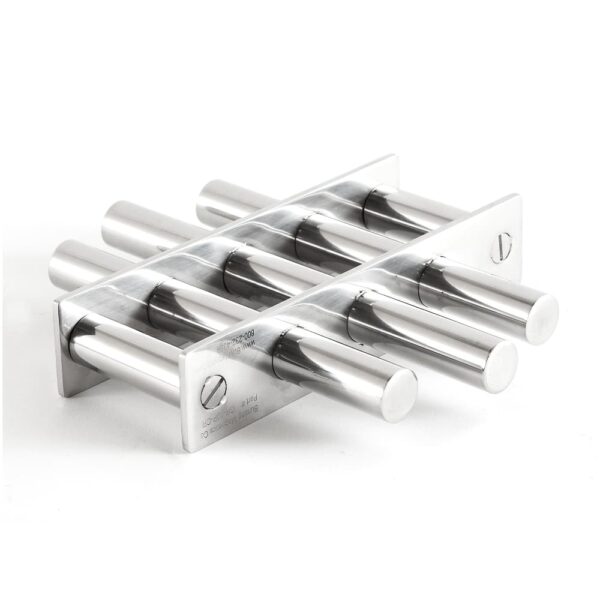
- Constructed from multiple strong magnetic rods arranged as a grate
- Housing is typically stainless steel
- Designed with corrosion resistance, compact structure, easy installation, and easy cleaning in mind
- Round configurations from Dia. 100 x 40 mm to Dia. 500 x 40 mm
- Rectangular configurations from 100 x 100 x 40 mm to 500 x 500 x 40 mm
- Published configurations with 2 to 10 magnetic bars
- Customized magnetic assemblies available according to project requirements
For applicati
ons requiring specific magnetic field strength, stainless steel grade, operating temperature, certification, or other technical parameters not listed in the standard product information, confirm those requirements with NIBBOH before ordering.
FAQ
What is a magnetic grate used for?
A magnetic grate is used to capture ferromagnetic impurities from material passing through a processing system. NIBBOH’s Magnetic Grate is designed for use with fluids or particulate materials and can be integrated into industrial processes where ferrous contaminant removal is required.
Can a magnetic grate be used for powders and granular materials?
Yes. Particulate materials are included within the stated application scope of the NIBBOH Magnetic Grate. The appropriate dimensions and configuration should be selected according to the material characteristics, process opening, and installation conditions.
What sizes are available for NIBBOH Magnetic Grates?
NIBBOH lists both round and rectangular configurations. Standard round sizes range from Dia. 100 x 40 mm with 2 bars to Dia. 500 x 40 mm with 10 bars. Rectangular configurations range from 100 x 100 x 40 mm with 2 bars to 500 x 500 x 40 mm with 10 bars.
How do I choose between a round and rectangular magnetic grate?
Start with the geometry and dimensions of the available process opening. Compare those measurements with the published round and rectangular configurations, while also considering installation clearance and cleaning access. If no standard configuration matches the equipment, discuss a customized magnetic assembly with NIBBOH.
Is the NIBBOH Magnetic Grate suitable for food processing?
NIBBOH identifies food processing as one of the application areas for its Magnetic Grate. However, specific food-contact certification and stainless steel grade are not defined in the available product information. If these are mandatory for your project, request confirmation and the required documentation before ordering.
What magnetic strength does the NIBBOH Magnetic Grate provide?
The available product information does not specify a Gauss or Tesla value for the Magnetic Grate. If your application requires a defined magnetic field strength, include that requirement in your inquiry and ask NIBBOH to confirm the appropriate configuration.
Can NIBBOH provide a customized Magnetic Grate?
>
Yes. NIBBOH states that customized magnetic assemblies are available according to project requirements. Provide your process material, installation dimensions, operating conditions, and relevant technical requirements so the appropriate solution can be evaluated.
Conclusion
Choosing the right magnetic grate starts with the application rather than a single specification. Process material, opening dimensions, configuration, operating environment, cleaning access, and project-specific technical requirements should all be evaluated before selecting a standard size.
The NIBBOH Magnetic Grate offers standard round and rectangular configurations for removing ferromagnetic impurities from fluids and particulate materials, with published sizes ranging from 100 mm to 500 mm and configurations using 2 to 10 magnetic bars. Customized magnetic assemblies are also available according to project requirements.
Before requesting a quote, prepare your process opening dimensions, material type, operating conditions, and contaminant-removal requirements. If magnetic strength, stainless steel grade, temperature resistance, certification, or other technical specifications are critical to your project, include them in your inquiry so they can be confirmed before ordering.