


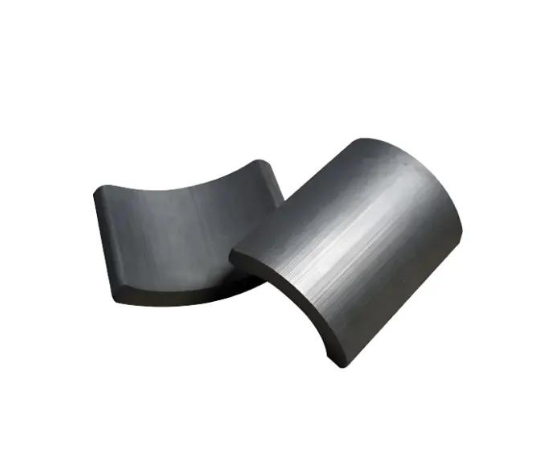
Motor engineers and OEM procurement teams face a persistent challenge: selecting a hard ferrite magnet that delivers consistent magnetic performance across variable thermal, mechanical, and environmental conditions — without inflating BOM costs or compromising supply chain resilience. In high-volume applications like DC motors and industrial magnetic assemblies, material choice directly impacts efficiency, lifetime, and total cost of ownership. With rising demand for corrosion-resistant, thermally stable, and economically scalable solutions, the ferrite magnet for DC motor remains a cornerstone — especially when sourced from a technically disciplined hard ferrite magnet manufacturer.
Understanding the Selection Challenge
Selecting the right ceramic magnet is not merely about matching nominal grades or dimensions. It’s an integrated engineering decision involving magnetic circuit design, thermal derating, mechanical integration, and long-term reliability under real-world operating stresses. Unlike rare-earth magnets, hard ferrite magnets do not offer ultra-high energy density — but they excel where cost, stability, and robustness are non-negotiable. For applications such as automotive sensors, magnetic separation systems, and industrial motors, the optimal industrial ferrite magnet must be evaluated holistically: not just on magnetic output, but on how it behaves within the full system context.
Key Evaluation Criteria
Engineers should evaluate magnetic performance, operating temperature, magnet shape, magnetization direction, dimensional requirements, environmental conditions and the magnetic circuit of the final application — as confirmed in verified application guidance. When specifying a ferrite motor magnet, prioritize alignment with these five criteria:
- Material type consistency: Ensure the magnet is explicitly identified as a ceramic-based permanent magnetic material — not a sintered NdFeB or AlNiCo variant. Only Hard Ferrite Magnets and Ceramic Magnets meet the thermal and corrosion resistance profile required for unsealed or high-humidity environments.
- Thermal stability: High temperature resistance is critical in DC motors and automotive sensors where ambient and self-heating can exceed standard operational thresholds. A qualified permanent ferrite magnet must retain structural integrity and magnetic function without coating or supplemental protection.
- Corrosion resistance: Unlike metallic magnets, hard ferrite magnets inherently resist oxidation and chemical degradation — eliminating the need for plating, encapsulation, or environmental sealing in most industrial settings.
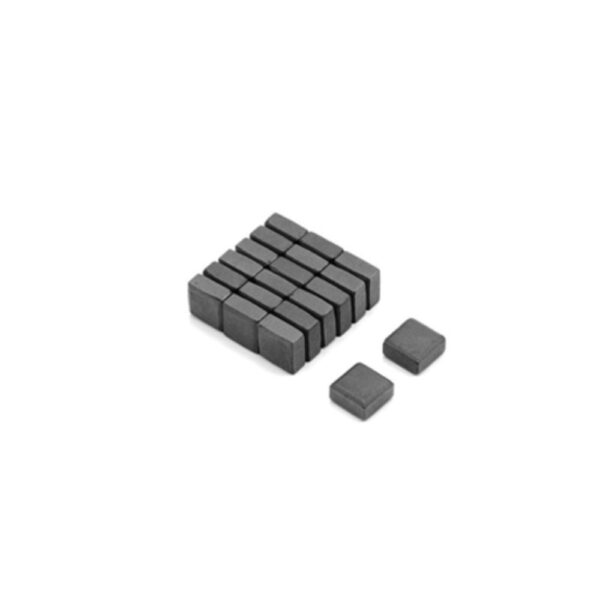
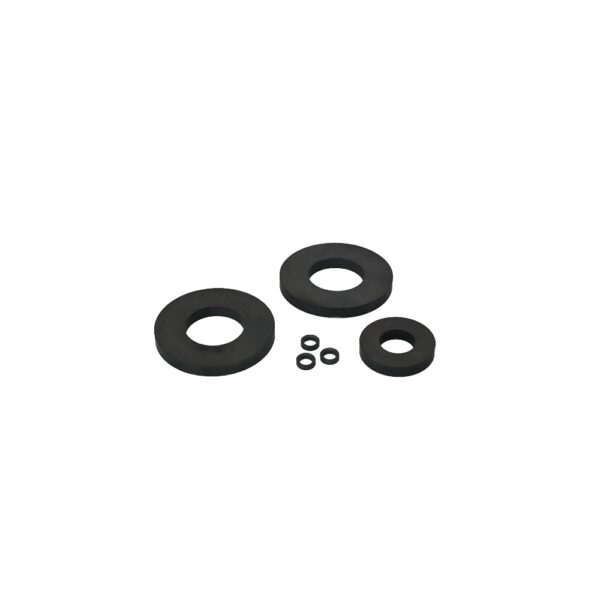
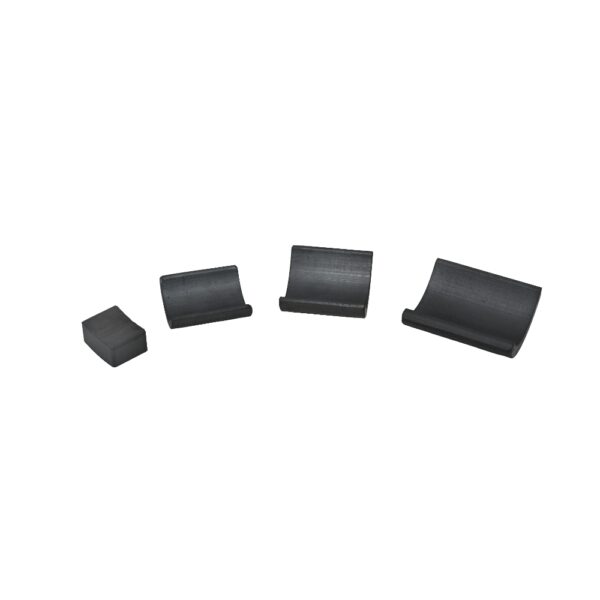
- Form factor flexibility: The ability to deliver ring, E-shape, rod, and fully customized geometries supports optimized magnetic circuit design in compact motor housings or complex sensor layouts.
- Manufacturing traceability: A rigorous production sequence — including raw material inspection, fine grinding, forming, sintering, grinding, cleaning, inspection and packaging — ensures dimensional repeatability and magnetic uniformity across batches.

Common Mistakes Buyers Make
Procurement teams often misprioritize isolated metrics — such as theoretical Br values or catalog-grade labels — while overlooking application-specific constraints. Three frequent oversights include:
- Assuming all ceramic magnets are interchangeable: Not all Hard Ferrite Magnets undergo identical sintering profiles or quality controls. Variability in grain structure and density affects flux consistency — especially under cyclic thermal loads.
- Overlooking assembly-level integration: A magnet may meet spec in isolation but fail during automated insertion due to inconsistent edge geometry or surface finish. Customized magnetic assemblies — rather than discrete magnets — often reduce assembly risk and improve field uniformity.
- Underestimating environmental interaction: While excellent corrosion resistance is intrinsic to ceramic-based permanent magnetic material, improper handling or storage near aggressive solvents or condensing humidity can still impact bonding interfaces or sensor calibration — particularly in automotive sensor housings.
Recommended Solution
The NIBBOH Hard Ferrite Magnet is engineered to address these selection challenges head-on. As a ceramic magnet built exclusively from ceramic-based permanent magnetic material, it delivers verified low cost, high temperature resistance, and excellent corrosion resistance — without trade-offs in manufacturability or scalability.
Its production process — encompassing fine grinding, forming, sintering, grinding, cleaning, inspection and packaging — ensures repeatable magnetic behavior and dimensional fidelity. Available in standard forms (ring, E-shape, rod) and fully customized geometries, it supports direct integration into DC motors, magnetic separation systems, automotive sensors, loudspeakers, and other industrial magnetic assemblies. Crucially, NIBBOH offers customized magnetic assemblies aligned to project-specific magnetic circuit requirements — transforming component sourcing into a collaborative engineering engagement.
For engineers seeking a proven ferrite magnet for DC motor solution that balances performance, durability, and procurement efficiency, the NIBBOH Hard Ferrite Magnet represents a purpose-built option — not a compromise.
FAQ
Q: Why are hard ferrite magnets widely used in DC motors?
A: Hard ferrite magnets combine cost efficiency, corrosion resistance, temperature stability and reliable permanent magnetic performance, making them suitable for many high-volume DC motor applications.
Q: What should engineers consider when selecting a hard ferrite magnet?
A: Engineers should evaluate magnetic performance, operating temperature, magnet shape, magnetization direction, dimensional requirements, environmental conditions and the magnetic circuit of the final application.
Q: Can hard ferrite magnets be customized for OEM applications?
A: Yes. Shapes and magnetic assemblies can be developed according to specific project and application requirements.
Conclusion
Selecting the right hard ferrite magnet demands more than catalog browsing — it requires understanding how ceramic-based permanent magnetic material performs within the thermal, mechanical, and electromagnetic context of your application. For DC motors, industrial motors, automotive sensors, and magnetic separation systems, the combination of low cost, high temperature resistance, and excellent corrosion resistance makes Hard Ferrite Magnets, Ceramic Magnets, and Permanent Magnets uniquely fit for purpose. When paired with application-aligned customization and rigorous manufacturing discipline, solutions like the NIBBOH Hard Ferrite Magnet enable robust, scalable, and future-ready designs. Contact our engineering team to discuss your application requirements.