



Overview
Design engineers and procurement managers face a critical decision when specifying permanent magnets for mission-critical applications: selecting between SmCo Magnet and AlNiCo Magnet. Whether designing aerospace actuators, medical imaging sensors, or industrial motors, the choice directly impacts thermal reliability, corrosion resilience, magnetic output stability, and long-term system integrity. With both materials classified as industrial-grade permanent magnets, yet differing fundamentally in behavior under stress, environment, and duty cycle, a technical, application-driven selection process—not intuition—is essential.
Material Comparison
The foundational distinction lies in composition and intrinsic material behavior:
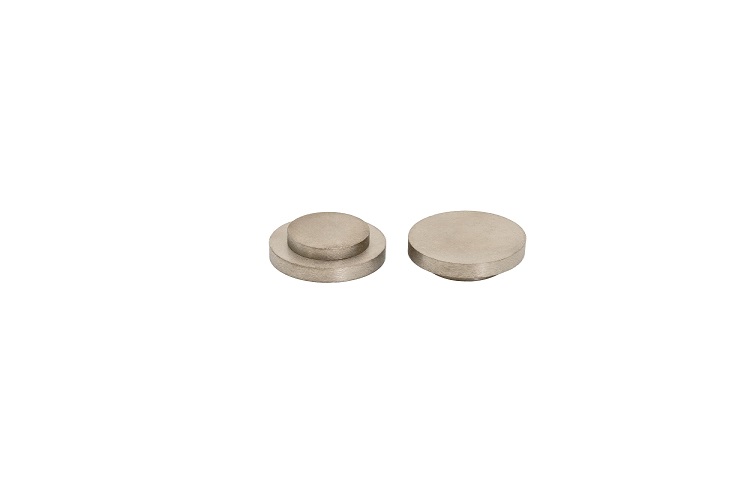
- SmCo Magnet (Samarium Cobalt): A rare-earth magnet offering strong corrosion resistance and excellent temperature stability. It requires no protective coating in most industrial environments and retains magnetic performance across wide thermal excursions.
- AlNiCo Magnet (Aluminum Nickel Cobalt): A classic alloy magnet characterized by high remanence and excellent temperature stability. While inherently less corrosion-resistant than SmCo, it delivers superior magnetic field consistency under stable thermal conditions and is highly tolerant of demagnetizing fields when properly oriented.
Neither material is universally superior—each excels where its inherent properties align with application constraints. Importantly, both are available as custom shapes and support precision machining, enabling integration into complex assemblies without compromising design intent.

Performance Comparison
Performance must be evaluated across three interdependent axes: thermal response, environmental durability, and magnetic output profile.
Temperature Stability
Both SmCo Magnet and AlNiCo Magnet exhibit excellent temperature stability, but their mechanisms differ. SmCo maintains coercivity and remanence over extended high-temperature operation—making it a preferred high temperature magnet for continuous-duty environments such as turbine-mounted sensors or aerospace power electronics. AlNiCo also performs well thermally, particularly in applications where temperature fluctuations are moderate and predictable; its reversible losses are minimal, supporting precision instruments requiring field consistency over time.
Corrosion Resistance
This is a decisive differentiator. SmCo Magnet provides strong corrosion resistance out-of-the-box—ideal for harsh industrial environments, offshore equipment, or sterilizable medical devices where plating or encapsulation adds cost or risk. In contrast, AlNiCo magnets typically require surface protection in humid, saline, or chemically aggressive settings unless used within sealed assemblies.
Magnetic Output & Stability
AlNiCo Magnet delivers high remanence, producing strong magnetic flux densities in open-circuit configurations—valuable in analog sensors, legacy motor designs, and magnetic couplings. However, its lower coercivity makes it more susceptible to partial demagnetization from external fields or mechanical shock. SmCo Magnet, while slightly lower in remanence than AlNiCo in some grades, offers significantly higher coercivity and intrinsic resistance to demagnetization—critical for dynamic automation systems or high-vibration aerospace equipment.
Cost and Manufacturing Considerations
Procurement strategy must account for total lifecycle value—not just unit cost. AlNiCo magnets generally have lower raw-material costs and are easier to cast and machine at scale, supporting high-volume OEM manufacturing. SmCo magnets involve rare-earth content and tighter sintering controls, resulting in higher base cost—but this is often offset by eliminating secondary operations (e.g., plating, sealing) and reducing field failure risk in demanding applications.
Both materials fully support customization across five key dimensions:
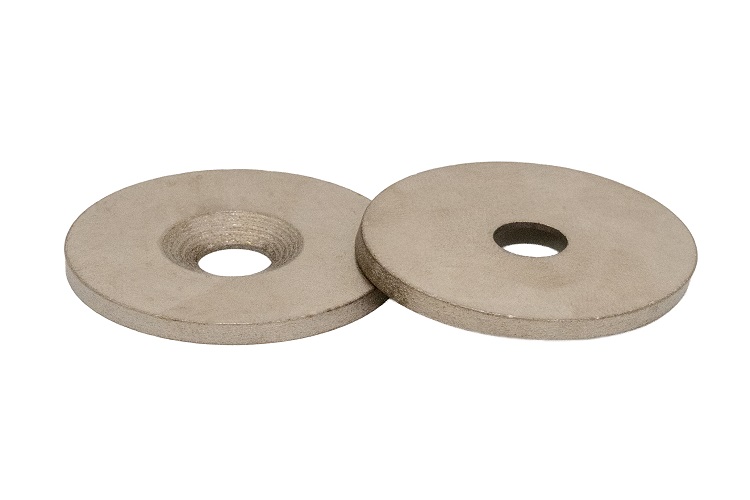
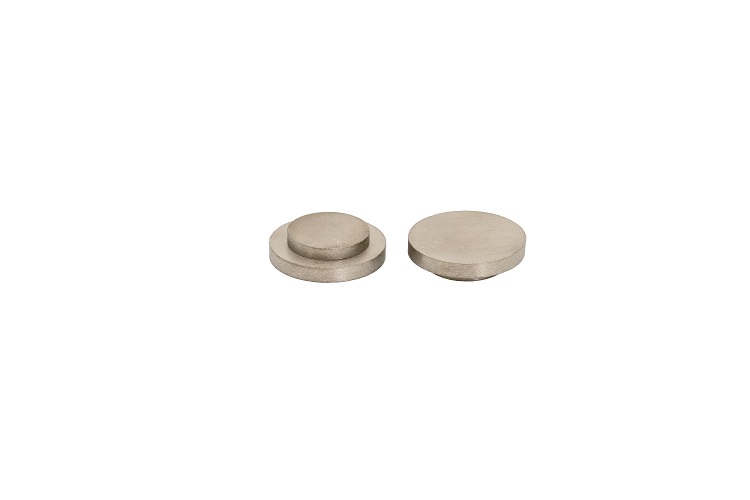
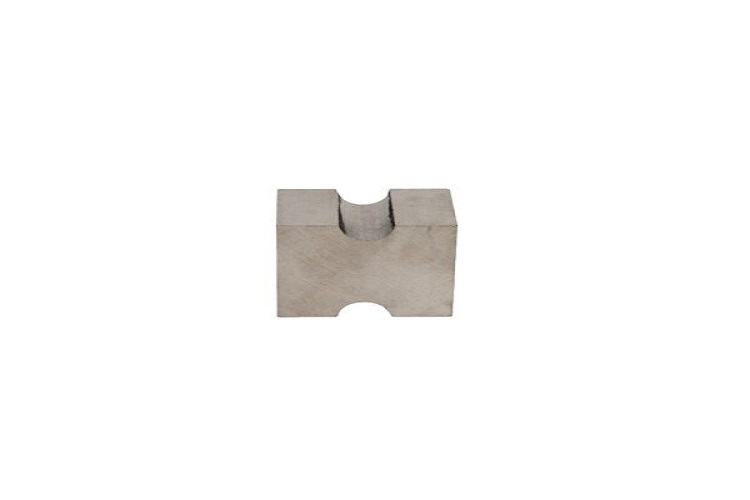
- Shape: From discs and rings to trapezoids, arcs, and multi-pole geometries
- Size: Scalable from sub-millimeter sensor elements to >100 mm rotor segments
- Tolerance: Achievable via precision machining for tight-fit assemblies
- Magnetization Direction: Axial, radial, multi-pole, or custom vector alignment
- Surface Finish: As-sintered, ground, coated, or passivated per application need
This flexibility ensures both SmCo Magnet and AlNiCo Magnet can be engineered for industrial permanent magnet roles in Industrial Motors, Aerospace Equipment, Medical Devices, Sensors, Automation Systems, Precision Instruments, Industrial Equipment, and Magnetic Assemblies.
Best Applications for Each Option
Selection should follow functional requirements—not legacy preference.
Where SmCo Magnet Excels
- Aerospace Equipment: Actuators, gyros, and fuel metering systems exposed to wide thermal ranges and vacuum-compatible environments
- Industrial Motors: High-speed, high-efficiency servo motors operating above 150°C ambient
- Medical Devices: MRI ancillary sensors and implantable device components requiring biocompatible, corrosion-stable materials
- Sensors: High-accuracy position and current sensors deployed in oil & gas, marine, or chemical processing
SmCo Magnet is engineered as a high-temperature permanent magnet with excellent corrosion resistance, custom sizes, and full OEM manufacturing support—making it the optimal industrial permanent magnet for thermally aggressive or environmentally challenging use cases.
Where AlNiCo Magnet Excels
- Precision Instruments: Analog meters, galvanometers, and calibration standards requiring stable, linear B-H response
- Industrial Equipment: Large-diameter holding magnets, lifting systems, and magnetic separators where high remanence maximizes pull force
- Magnetic Assemblies: Multi-magnet arrays requiring precise field shaping and thermal reversibility
- Automation Systems: Feedback sensors and proximity switches benefiting from consistent output across repeated thermal cycles
AlNiCo Magnet serves as a high remanence permanent magnet with excellent temperature stability and custom shapes, delivering reliable industrial magnetic solutions where field strength and repeatability outweigh coercivity demands.
Which One Should You Choose?
Follow this engineering decision tree:
- Is continuous operation above 250°C expected? → Prioritize SmCo Magnet
- Is exposure to moisture, salt spray, or chemicals unavoidable? → Prioritize SmCo Magnet
- Does the application require maximum open-circuit flux density and tolerance to thermal cycling—not extreme heat? → AlNiCo Magnet may be optimal
- Is the design sensitive to demagnetizing fields (e.g., stator back-EMF, adjacent coils)? → SmCo Magnet offers greater margin
When uncertainty remains, leverage custom magnetic properties—both materials allow tailored grades optimized for specific flux density, coercivity, and knee-point characteristics. This capability transforms magnet material selection from a compromise into a precision engineering step.
FAQ
Q: What is the main difference between SmCo and AlNiCo magnets?
A: SmCo magnets provide better corrosion resistance and high-temperature stability, while AlNiCo magnets offer excellent magnetic stability and high remanence but lower coercivity.
Q: Which magnet performs better in high-temperature environments?
A: SmCo magnets are generally preferred for continuous high-temperature applications because they maintain magnetic performance under extreme operating conditions.
Q: Can SmCo and AlNiCo magnets be customized?
A: Yes. Both materials can be manufactured in custom shapes, dimensions, tolerances, and magnetization directions for OEM applications.
Q: How do I choose between SmCo and AlNiCo magnets?
A: Selection depends on operating temperature, magnetic performance, corrosion environment, cost, and application requirements. An engineering evaluation is recommended before material selection.
Conclusion
Selecting between SmCo Magnet and AlNiCo Magnet is not a trade-off—it’s an opportunity to align material physics with system-level requirements. SmCo vs AlNiCo hinges on whether corrosion resilience and coercivity dominate (SmCo) or remanence and thermal reversibility are paramount (AlNiCo). Both qualify as industrial-grade permanent magnets, support full customization, and enable robust solutions across Industrial Motors, Aerospace Equipment, Medical Devices, and beyond. For engineers seeking an engineering magnet guide grounded in real-world constraints—not marketing claims—the answer lies in matching intrinsic properties to operational reality. Contact our engineering team to discuss your application requirements.