


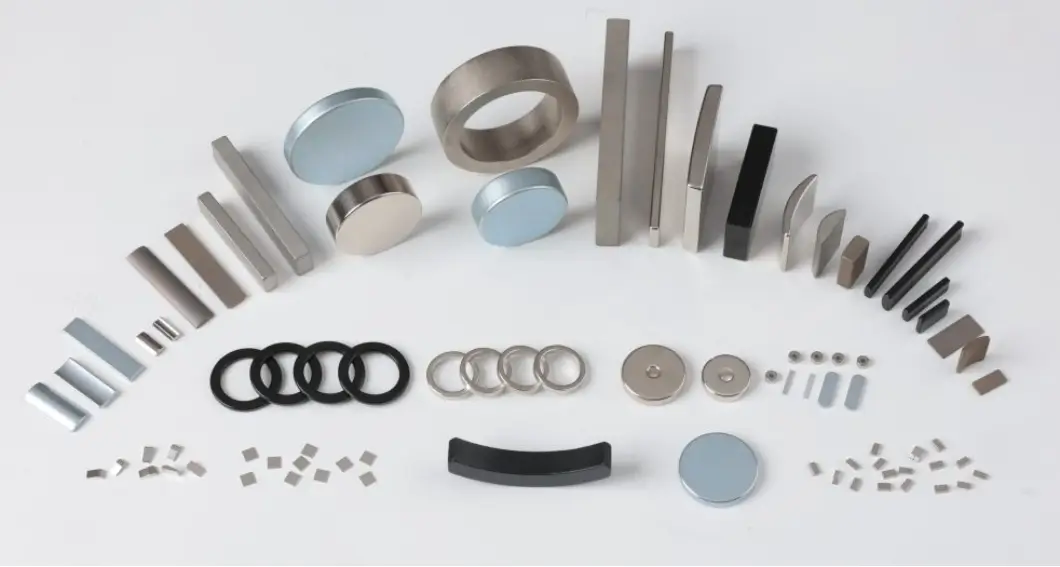
Engineers ask a big question when they design new motors. They want to know the list of magnets by strength. This list helps them pick the right parts. Builders need strong magnets for modern electronics. They study magnet strength charts to make good choices. You must pick the best magnet for your project. A weak magnet ruins a good design. A strong magnet makes a machine work better.
We will explore different magnets in this guide. You will learn about the strongest permanent magnets and the weakest ones. We explain complex ideas like BHmax and pull force. You will compare neodymium vs ferrite vs samarium cobalt magnets. We give you a clear map to pick the best magnet in 2026.
What Does Magnet Strength Mean?
People often think about lifting power when they talk about magnet strength. They want to know how much weight a magnet holds. Scientists look at magnet strength in a different way. They measure the total energy inside the material.
The most important number is the Maximum Energy Product. Engineers call this number BHmax. They measure BHmax in Mega-Gauss Oersteds (MGOe). A higher number means a stronger magnet. A strong magnet packs more power into a smaller space
Two other numbers also define a magnet’s power.
- Remanence (Br):This number shows the magnetic field strength. It tells us how much magnetic power stays in the material.
- Coercivity (Hc):This number shows resistance to heat and other magnets. It tells us how hard it is to erase the magnet’s power.
You must understand these three numbers. A magnet might lift a heavy car today. That same magnet might fail in a hot oven tomorrow.
How Do Scientists Measure Magnet Strength?
Scientists use special machines to test magnets. They use a machine called a Permeameter. This machine draws a graph for each magnet sample.
The tester puts the magnet inside a metal ring. The machine shoots a strong magnetic field at the sample. The machine then reverses the field to erase the magnet’s power. The computer draws a curved line during this test. The highest point on this curve gives the BHmax number. This single number helps buyers compare different materials.
Factory workers also measure pull force. They stick the magnet to a thick steel plate. They pull the magnet straight off the steel. A digital scale records the pulling force. Pull force gives a useful real-world number. However, the magnet’s shape changes the pull force. The BHmax number gives a truer picture of raw power.
The List of Magnets by Strength
We ranked the main permanent magnets from strongest to weakest. We used the BHmax number to make this list.
1.Neodymium Magnets
Neodymium magnets hold the top spot. They are the strongest permanent magnets in the world. Factories mix rare earth metals to make them. They reach a BHmax between 35 and 55 MGOe. A tiny neodymium piece lifts heavy metal blocks. They power our modern phones and computers.
2.Samarium Cobalt Magnets
Samarium cobalt magnets take second place. They are also rare earth magnets. They have a lower BHmax between 16 and 32 MGOe. However, they handle extreme heat very well. They keep their power in hot engines up to 350°C. Jet planes need these special magnets.
3.Alnico Magnets
Scientists invented alnico magnets a long time ago. Factories mix aluminum, nickel, and cobalt to make them. They have a low BHmax between 5 and 10 MGOe. But they survive in very hot places. They work fine at 540°C. Guitars use alnico magnets to make music.
4.Ferrite Magnets
Ferrite magnets sit near the bottom of the list. People also call them ceramic magnets. They have a very low BHmax between 1 and 4 MGOe. But they cost very little money to make. They never rust in wet weather. You find them in cheap speakers and fridge toys.
5.Flexible Magnets
Flexible magnets are the weakest permanent magnets. Factories mix magnetic dust with soft rubber. They have a BHmax under 2 MGOe. You can bend and cut them easily. Stores use them for large signs and displays.
Magnet Strength Comparison Chart
This table shows the numbers for each magnet type. You can compare their power and heat limits.
Magnet Name | Energy (BHmax) | Field (Br) | Max Heat | Strength Level | Cost | Where People Use Them |
Neodymium | 35 – 55 MGOe | 11,000 – 14,500 G | 80°C – 230°C | Very High | High | Car motors, phones |
Samarium Cobalt | 16 – 32 MGOe | 9,000 – 11,500 G | 250°C – 350°C | High | Very High | Airplanes, sensors |
Alnico | 5 – 10 MGOe | 11,000 – 13,500 G | 450°C – 540°C | Medium | Medium | Guitars, hot tools |
Ferrite | 1 – 4.3 MGOe | 2,000 – 4,000 G | 250°C | Low | Very Low | Speakers, fridge toys |
Flexible | 0.6 – 1.6 MGOe | 1,500 – 2,500 G | 80°C – 100°C | Very Low | Low | Store signs, flat strips |
A Deep Look at Each Magnet Type
Neodymium
- Good Points:They offer huge power in a small size. They hold their power well in normal rooms.
- Bad Points:They rust very fast without a shiny coating. They lose power in hot rooms above 80°C. They break easily if you drop them.
- Best Uses:Engineers use them when they need extreme power. Windmills and electric cars rely on them.
Samarium Cobalt
- Good Points:They ignore extreme heat. They never rust in wet places. They push a strong magnetic field.
- Bad Points:They cost a lot of money. They break into pieces very easily.
- Best Uses:Military teams use them in hot jet engines. Deep oil drills need their heat resistance.
Alnico
- Good Points:They survive the hottest fires. They fight off rust well. Factories cast them into strange shapes.
- Bad Points:Other magnets can erase their power easily. They lack strong pulling power for their size.
- Best Uses:Musicians love their sound in electric guitars. Old measuring tools still use them today.
Ferrite
- Good Points:They cost almost nothing. They never rust in water. They keep their power around other magnets.
- Bad Points:They push a very weak magnetic field. They weigh a lot for the power they give.
- Best Uses:Toy makers put them in cheap plastic games. Car makers use them in simple wiper motors.
Understanding Neodymium Magnet Grades
Buyers see strange codes when they shop for neodymium magnets. You might see N35, N42, or N52. These codes tell you the magnet’s power level.
The letter “N” stands for Neodymium. The number shows the maximum energy product (BHmax). An N52 magnet beats an N35 magnet easily. The N52 magnet pulls 48% harder than the N35 magnet.
Heat hurts standard neodymium magnets. Factories add special metals to fix this problem. They add letters to the end of the grade code.
- No Letter (N42):This magnet works up to 80°C.
- M (N42M):This magnet works up to 100°C.
- H (N42H):This magnet works up to 120°C.
- SH (N42SH):This magnet works up to 150°C.
- UH (N35UH):This magnet works up to 180°C.
- EH (N35EH):This magnet works up to 200°C.
Engineers face a tough choice here. High heat resistance lowers the maximum power. You can buy a super strong N52 magnet. But you cannot buy an N52EH magnet. Hot jobs require weaker magnets like N35EH.
Real Examples of Magnet Pull Force
We can look at real tests to understand magnet strength. These tests measure how much steel a magnet holds.
- A tiny N52 discweighs only two grams. It holds almost 2.5 kilograms of steel.
- A large N52 blockgenerates scary amounts of power. It pulls over 100 kilograms of steel. You must wear heavy gloves around these blocks. They crush fingers if they snap together.
- A large ferrite blocklooks the same size. It only pulls 10 to 15 kilograms of steel.
This big difference explains modern technology. Neodymium lets engineers build smaller, better machines.
Things That Change Magnet Strength
A strong magnet might act weak in real life. Several things change how a magnet works.
- Empty Space:Distance kills magnetic power fast. A thick layer of paint weakens the pull force.
- Thin Metal:A strong magnet needs thick steel. A huge magnet slides down a thin fridge door. The thin steel cannot hold all the magnetic energy.
- Hot Rooms:Heat shakes the atoms inside the magnet. A standard neodymium magnet loses power above 80°C.
- Magnet Shape:Tall magnets push their power farther away. Flat magnets keep their power close to the surface.
- Sliding Force:Magnets hold tight when you pull straight. They slide easily if you push them sideways. A wall magnet needs a rough surface to stay up.
How People Use Different Magnets
Engineers pick magnets based on the job requirements.
Super Strong Jobs (Neodymium)
- Electric Cars:Motors need massive power in a small space.
- Medical Scanners:MRI machines need huge magnetic fields.
- Smartphones:Tiny motors shake the phone in your hand.
Hot and Strong Jobs (Samarium Cobalt)
- Airplanes:Wing motors work in freezing air and hot engine heat.
- Factory Robots:Machines run all day and get very hot.
- Oil Drills:Tools dig deep into the hot earth.
Medium Strength Jobs (Alnico)
- Music Gear:Electric guitars need special magnetic fields for good sound.
- Car Sensors:Engine parts measure speed in hot areas.
- School Labs:Teachers show magnetic fields with old horseshoe magnets.
Low Strength Jobs (Ferrite)
- Home Speakers:Big black rings push sound waves in cheap stereos.
- Microwaves:Special tubes make waves to cook your food.
- Cleaning Tools:Long brooms pick up sharp nails on the floor.
Common Myths About Magnets
Myth 1: Magnets run out of power like batteries. Fact: A permanent magnet keeps its power forever. It only loses power if you burn it or smash it
Myth 2: Big magnets always beat small magnets. Fact: The material matters more than the size. A tiny neodymium dot beats a huge ferrite block.
Myth 3: You can recharge a dead magnet at home. Fact: You need a huge factory machine to recharge a magnet. You cannot fix a dead magnet with another magnet.
Frequently Asked Questions
1.What is the strongest magnet in the world? Neodymium magnets win the top prize. Grade N52 is the strongest magnet you can buy today.
2.How do neodymium and ferrite magnets differ? Neodymium magnets cost more and pull harder. Ferrite magnets cost less and resist water better.
3.What does N52 mean? The letter N stands for Neodymium. The number 52 shows the energy score (BHmax).
4. Do magnets die? Yes. Extreme heat kills magnetic power. Hard hits and opposing magnets also ruin them.