
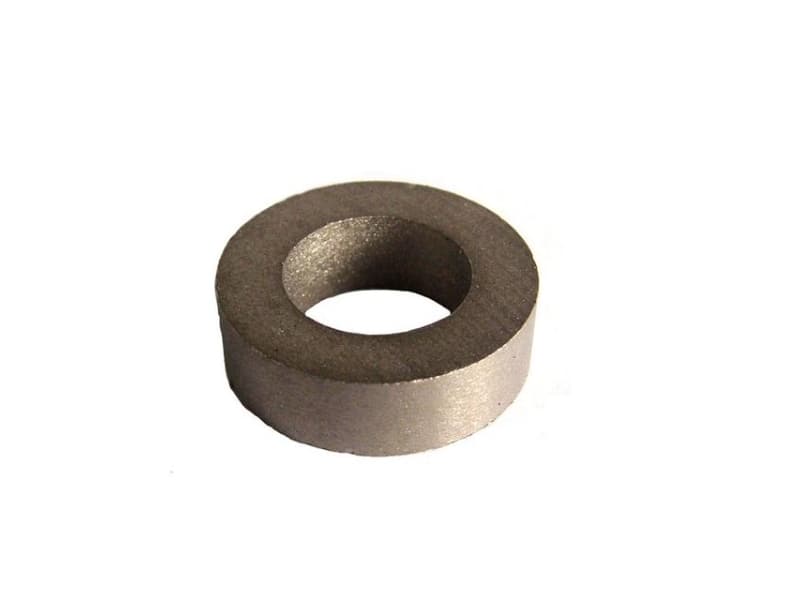
Selecting samarium cobalt magnets for a high-temperature system requires more than choosing the highest available energy product. SmCo20, SmCo24, SmCo26, and SmCo30 are commonly referenced grade designations, but their actual magnetic performance and temperature capabilities depend on the material series, intrinsic coercivity level, magnet geometry, and magnetic circuit load.
For equipment exposed to operating temperatures around 300°C or higher, the distinction between SmCo 1:5 and SmCo 2:17 becomes especially critical. A grade with a higher nominal energy product does not automatically provide better resistance to irreversible demagnetization at elevated temperatures.
This engineering guide compares the key characteristics of SmCo20, SmCo24, SmCo26, and SmCo30, explains how 1:5 and 2:17 materials differ, and outlines the technical details OEM buyers should confirm before ordering custom samarium cobalt magnets.
Understanding SmCo Magnet Grade Designations
Samarium cobalt magnets are rare-earth permanent magnets known for exceptional thermal stability, high intrinsic coercivity, and natural corrosion resistance in harsh operating environments—often eliminating the need for protective plating.
Commercial samarium cobalt magnets are divided into two distinct material families:
- SmCo 1:5 (SmCo₅): An earlier samarium-cobalt alloy family commonly available in energy-product grades around 16–24 MGOe. Standard 1:5 grades are typically rated for maximum operating temperatures up to approximately 250°C.
- SmCo 2:17 (Sm₂Co₁₇): A higher-energy-product alloy family commonly available in grades around 20–32 MGOe. Depending on the specific coercivity variant and magnetic circuit, 2:17 magnets are specified for continuous operation from 300°C to 350°C.
The numbers in grade names—such as 20, 24, 26, and 30—indicate the approximate maximum energy product class in MGOe. They do not indicate the maximum operating temperature.
Because the same nominal number can appear in different alloy series, buyers must verify the full material specification. For example, SmCo24 may refer to either a 1:5 or a 2:17 material depending on the supplier’s designation system, and these versions are not interchangeable. For applications operating below 200°C where higher flux density is prioritized, engineers may also evaluate high-temperature NdFeB magnets as an alternative.
SmCo20 vs. SmCo24 vs. SmCo26 vs. SmCo30: Key Differences
The table below provides an industry-level reference comparing standard SmCo grade designations. These values are indicative only and do not represent NIBBOH’s certified production specifications, which should be confirmed against official datasheets for your target geometry.
| Grade | Common Material Series | Typical BHmax Class | Indicative Max Operating Temperature | Primary Selection Consideration |
| SmCo20 | 1:5 | 20 MGOe | Around 250°C | Moderate energy product and operating temperatures below 300°C |
| SmCo24 | 1:5 or 2:17 | 24 MGOe | Around 250–300°C (series-dependent) | Confirm whether the alloy is 1:5 or 2:17 before comparing quotes |
| SmCo26 | 2:17 | 26 MGOe | Around 300°C | Review minimum intrinsic coercivity and load line stability |
| SmCo30 | 2:17 | 30 MGOe | Around 300–350°C (variant-dependent) | Verify high-coercivity variant data for 350°C duty |
SmCo20: When a 1:5 Grade Is Sufficient
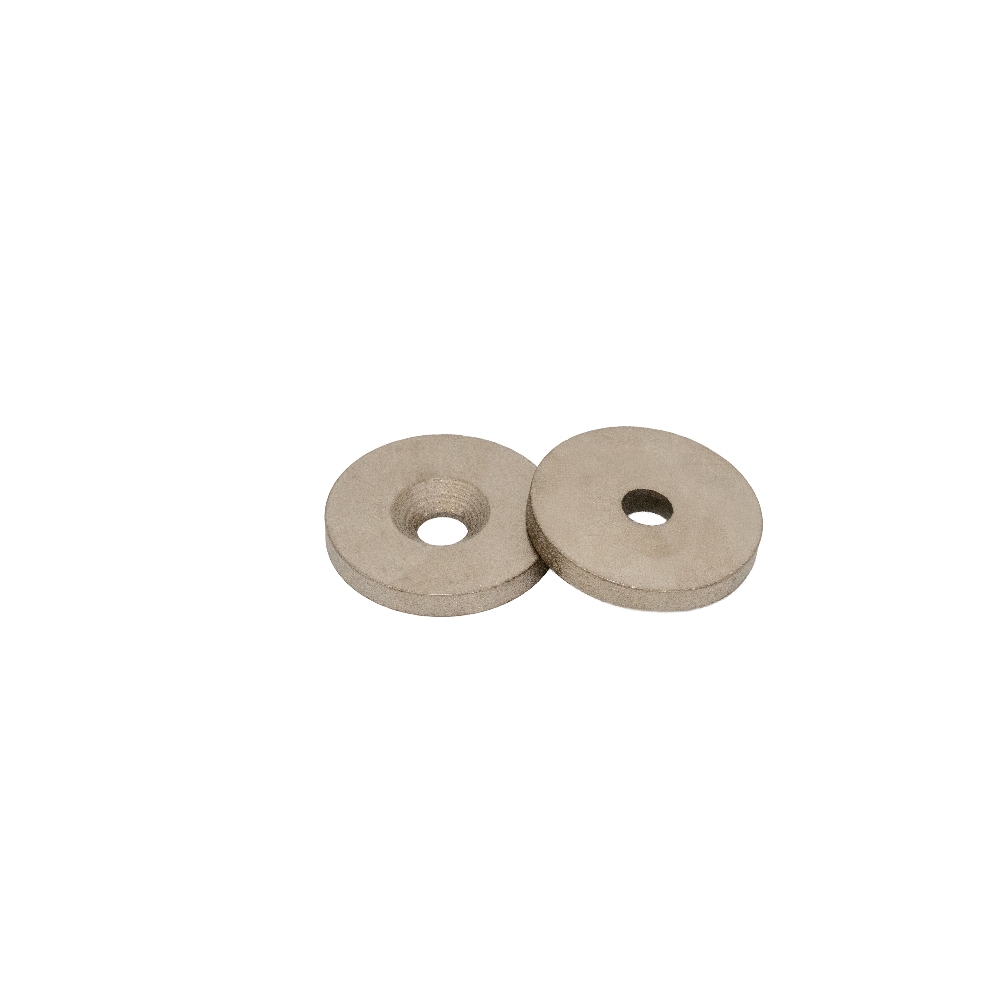
SmCo20 is typically a 1:5 material with an energy product class of approximately 20 MGOe. It is suitable when:
- Continuous operating temperatures remain within the 1:5 rating (typically ≤ 250°C)
- The magnetic circuit achieves required output without needing peak energy density
- Legacy equipment designs specify 1:5 material for drop-in replacement compatibility
A standard SmCo20 1:5 grade should not be specified for systems operating continuously at or above 300°C.
SmCo24: Why Confirming the Material Series Matters
SmCo24 requires extra verification during procurement because the same grade number exists in both series:
- A 1:5 SmCo24 grade is typically limited to around 250°C.
- A 2:17 SmCo24 grade is generally rated up to around 300°C.
A quotation stating only “SmCo24” is incomplete. Always confirm the exact alloy series (1:5 vs. 2:17), minimum intrinsic coercivity (Hcj), and temperature-dependent demagnetization curves.
SmCo26: A Reliable 2:17 Option for Around 300°C Systems
SmCo26 belongs to the 2:17 alloy family (approx. 26 MGOe) and is widely used in aerospace sensors, downhole tools, and high-temperature motors operating near 300°C. Engineers should verify minimum Hcj and evaluate performance under peak opposing magnetic fields and thermal cycling.
SmCo30: Higher Energy Product Does Not Mean Automatic 350°C Capability
SmCo30 delivers high magnetic energy density (~30 MGOe) within the 2:17 family. However, not every SmCo30 specification is rated for 350°C. High-energy grades often trade off some coercivity unless a specialized high-coercivity variant is selected. Always verify a 350°C requirement against the manufacturer’s second-quadrant demagnetization curve at 350°C.
SmCo 1:5 vs. SmCo 2:17: Which Series Is Better for High Temperatures?
Choosing between the 1:5 and 2:17 series is often more important than comparing individual grade numbers:
- SmCo 1:5 Series: Generally covers 16–24 MGOe with typical operating limits around 250°C. It is easier to magnetize to saturation than 2:17 grades and offers slightly higher mechanical toughness, making it practical for moderate-temperature industrial sensors and legacy designs.
- SmCo 2:17 Series: Covers 20–32 MGOe with operating limits extending from 300°C to 350°C. It offers superior magnetic energy density and lower reversible temperature coefficients, making it the standard choice for new high-temperature motors, magnetic couplings, and aerospace actuators—though it requires higher magnetizing fields to reach full saturation.
What Magnetic Properties Matter Above 300°C?
When evaluating custom samarium cobalt magnets for 300°C+ systems, review four core parameters rather than room-temperature BHmax alone:
- Remanence (Br): Residual flux density after saturation magnetization. While SmCo exhibits much smaller Br loss with heat than NdFeB, room-temperature values still decline at 300°C+.
- Intrinsic Coercivity (Hcj or iHc): Measures resistance to irreversible demagnetization. This is the single most critical property for preventing permanent flux loss under combined heat and reverse fields.
- Maximum Energy Product (BHmax): Indicates maximum magnetic energy density per unit volume, helping engineers minimize magnet size and weight.
- Reversible Temperature Coefficients (αBr and βHcj):
- αBr describes reversible flux change as temperature rises (typically around -0.03% to -0.045%/°C for SmCo).
- βHcj describes how rapidly intrinsic coercivity drops with temperature.
Why Maximum Operating Temperature Is Not a Universal Grade Limit
A maximum operating temperature listed on a grade chart is not an unconditional guarantee across all designs. The real operating limit depends on:
- Permeance Coefficient (Pc) and Magnet Geometry: Thin discs or high-aspect-ratio magnets experience stronger self-demagnetizing fields and have lower thermal limits than thick blocks.
- External Demagnetizing Fields: Peak stator currents in motors can push the magnet’s operating point closer to the demagnetization knee.
- Actual Magnet Temperature vs. Ambient Temperature: Eddy-current heating inside high-speed rotors can raise internal magnet temperatures well above surrounding ambient readings.
- Exposure Duration and Thermal Cycling: Repeated cycling between cryogenic or room temperatures and 300°C+ requires validated thermal stability data.
Custom SmCo Magnet Design for OEM Applications
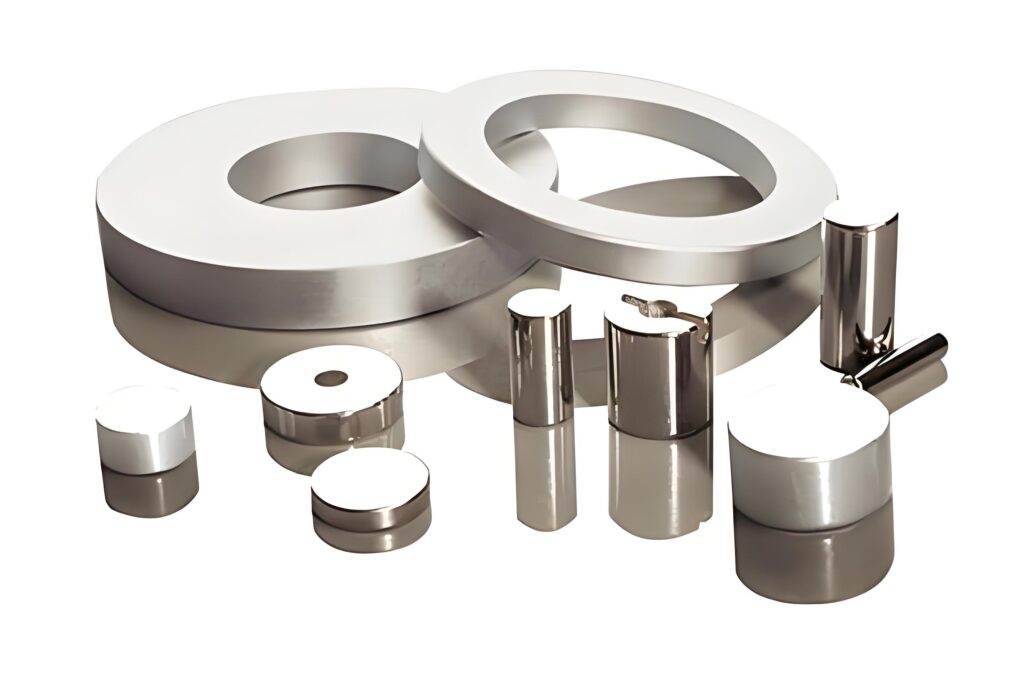
Samarium cobalt magnets can be precision-machined into blocks, discs, rings, thin-walled cylinders, arc segments, and custom multi-pole rotor assemblies. Keep three mechanical factors in mind during OEM design:
- Machining and Tolerances: SmCo alloys are significantly harder and more brittle than sintered NdFeB. Achievable dimensional tolerances depend on part geometry, wall thickness, and grinding processes. Define critical-to-function dimensions, edge chamfers, and assembly clearances clearly on your engineering drawing.
- Magnetization Direction: Specify axial, diametric, radial, or custom multipole orientation clearly relative to mechanical datums—especially for high-coercivity 2:17 grades that require high-energy magnetizing fixtures.
- Assembly and Handling: Because SmCo is prone to chipping under sharp mechanical impact, use controlled press-fit or high-temperature structural adhesive bonding procedures, and account for thermal expansion differences between the magnet and steel or titanium housings.
Custom SmCo Magnet RFQ Checklist
To help our engineering team evaluate your project accurately and provide a fast quotation, include these technical details in your RFQ:
| Specification | Information to Provide |
| Material Series | SmCo 1:5 or SmCo 2:17 (or open to engineering recommendation) |
| Preferred Grade | SmCo20, SmCo24, SmCo26, SmCo30, or target Br / Hcj values |
| Operating Temperature | Continuous operating temperature, peak temperature, and exposure duration |
| Magnetic Circuit | Permeance coefficient (Pc), air gap, or assembly drawing if available |
| Magnet Geometry | Block, disc, ring, arc segment, or custom machined profile |
| Dimensions & Tolerances | Overall dimensions, critical tolerances, and chamfer requirements |
| Magnetization | Axial, diametric, radial, or custom pole configuration |
| Operating Environment | Humidity, corrosive fluids, vacuum, vibration, and thermal cycles |
| Order Quantity | Prototype quantity, pilot batch, and estimated annual volume |
| Quality Documentation | Material datasheet, demagnetization curve, and inspection report requirements |
Explore NIBBOH Custom SmCo Magnet Solutions
NIBBOH manufactures custom samarium cobalt magnets across both SmCo 1:5 and SmCo 2:17 material series—engineered for extreme temperature stability, high coercivity, and reliable performance in aerospace, downhole oil & gas, and high-temperature industrial systems.
Have a 300°C+ application or custom drawing? Contact NIBBOH‘s engineering team today to review grade suitability, verify high-temperature demagnetization data for your magnetic circuit, and request a tailored OEM quotation.
Frequently Asked Questions (FAQs)
What is the difference between SmCo20, SmCo24, SmCo26, and SmCo30?
The numbers indicate the approximate maximum energy product class in MGOe (20 to 30 MGOe). However, actual magnetic properties and maximum temperature ratings depend on whether the material belongs to the SmCo 1:5 or SmCo 2:17 series and its specific coercivity variant.
Can SmCo20 operate at 300°C?
A standard SmCo20 1:5 grade is typically rated up to approximately 250°C. It should not be used for continuous 300°C operation without specific supplier verification and circuit validation.
Is SmCo24 suitable for 300°C applications?
It depends on the alloy series. A 1:5 SmCo24 grade is generally rated around 250°C, whereas a 2:17 SmCo24 grade is typically rated up to 300°C. Always confirm the exact material series and demagnetization curve before ordering.
Can SmCo26 and SmCo30 operate at 350°C?
Certain high-coercivity 2:17 variants of SmCo26 and SmCo30 are rated for temperatures up to 350°C, but this is not universal across all standard grades. Confirm exact temperature-dependent demagnetization data at 350°C against your magnetic circuit load line.
Is SmCo 2:17 always better than SmCo 1:5?
No. While SmCo 2:17 offers higher energy density and higher temperature ratings (300°C–350°C), SmCo 1:5 is easier to magnetize to saturation, offers slightly better mechanical durability, and remains a practical choice for systems operating at or below 250°C.
What information is needed to order custom samarium cobalt magnets?
Provide your preferred material series or grade, continuous and peak operating temperatures, 2D/3D engineering drawing with critical tolerances, magnetization direction, environmental conditions, and prototype or production quantities.