


Overview
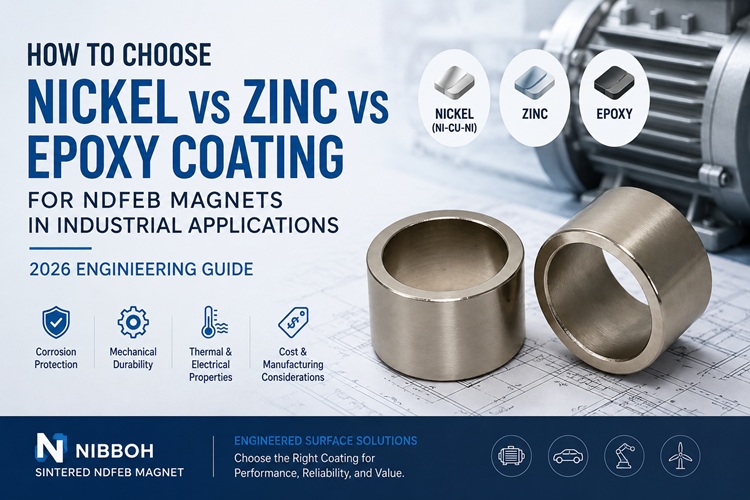
Engineers designing industrial motors, automotive components, robotics systems, sensors, and other precision equipment often face an important material-selection question: choosing the right NdFeB magnet coating. Sintered NdFeB magnets offer strong magnetic performance, with available grades including N35–N52, 33M–48M, 30H–45H, 30SH–42SH, 28UH–38UH, and 28EH–35EH. However, because sintered NdFeB materials are susceptible to oxidation and corrosion, an appropriate surface treatment is commonly required for reliable use in industrial environments.
>
This guide compares three commonly considered options—Nickel-Copper-Nickel, zinc, and epoxy—to help engineers and procurement teams evaluate NdFeB corrosion protection according to operating environment, geometry, mechanical exposure, manufacturing requirements, and cost targets.
Nickel vs Zinc vs Epoxy: What Is the Basic Difference?
Each coating system protects the underlying sintered NdFeB magnet in a different way. Rather than selecting a coating only by price or appearance, buyers should consider how the coating interacts with the magnet geometry, assembly process, and final operating environment.
- Nickel-Copper-Nickel (Ni-Cu-Ni): A multilayer metallic coating system commonly considered when a durable metallic surface, clean appearance, and compatibility with industrial handling are important. The exact coating construction and performance requirements should be confirmed with the manufacturer for the specific project.
- Zinc: A metallic surface treatment that can be considered for applications where cost, general surface protection, and manufacturing simplicity are important. Its suitability depends on the actual corrosion exposure and lifecycle requirements of the application.
- Epoxy: A polymer-based protective coating that may be selected where additional surface isolation, corrosion protection, or coverage of complex geometries is important. Mechanical handling, dimensional fit, and environmental exposure should be evaluated before final selection.
NIBBOH also lists chromium as an available surface treatment for its Sintered NdFeB Magnet. This guide focuses on Nickel-Copper-Nickel, zinc, and epoxy because these three options represent distinct metallic and polymer-based coating approaches that buyers commonly need to compare.
Compare Coatings by Application Requirements
The performance of an NdFeB surface treatment should always be evaluated in relation to the real operating environment. A coating that performs well in one application may not be the most appropriate choice in another.
Corrosion Protection
The primary function of a coating is to protect the sintered NdFeB substrate from oxidation and environmental exposure. The required level of protection depends on factors such as humidity, condensation, chemical exposure, storage conditions, sealing design, and the expected service environment.
Nickel-Copper-Nickel, zinc, and epoxy use different protection mechanisms, so buyers should avoid assuming that one coating is universally superior. If the application requires specific salt-spray, humidity, chemical-resistance, or environmental testing, the required test method and acceptance criteria should be confirmed with the magnet manufacturer before production.
Mechanical Durability
Mechanical handling can also influence coating selection. Magnets may experience contact during machining, assembly, insertion, bonding, packaging, transportation, or final equipment installation. Metallic coatings and polymer-based coatings can respond differently to scratching, impact, edge contact, and repeated handling.
For applications involving tight assembly fits or automated handling, engineers should confirm coating adhesion, surface condition, and dimensional impact using actual samples rather than relying only on general coating descriptions.
Electrical and Surface Properties
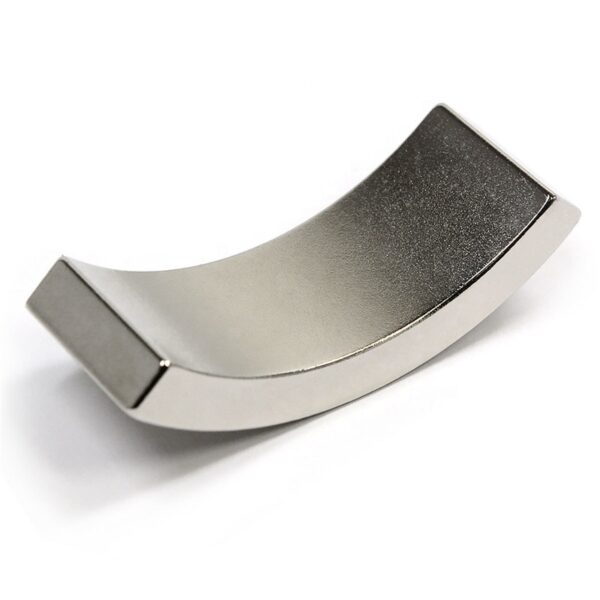
Metallic coatings such as Nickel-Copper-Nickel and zinc are electrically conductive, while polymer-based epoxy systems may provide different electrical surface characteristics depending on the coating formulation and process.
This distinction can be relevant in certain sensor, motor, electronics, and assembly designs. However, electrical requirements should be evaluated as part of the complete component design rather than inferred solely from the coating name.
Do Coatings Affect Magnetic Performance?
Magnetic grade and surface coating should be treated as separate specification decisions. The magnetic performance of a sintered NdFeB magnet is primarily determined by the selected magnetic grade, magnet geometry, magnetization direction, temperature requirements, and operating conditions.
The purpose of the coating is mainly to protect the magnet surface and support application-specific environmental or mechanical requirements. Buyers should therefore specify the required magnetic grade and coating independently, then confirm that the final combination is suitable for the intended application.
Cost and Manufacturing Considerations
Coating cost can vary depending on magnet dimensions, geometry, order quantity, surface-treatment specification, processing complexity, quality requirements, inspection criteria, and production volume. For this reason, buyers should avoid assuming a fixed cost ranking without considering the complete project.
Procurement teams should evaluate total application value rather than coating price alone. A lower initial coating cost may not provide the best result if the selected surface treatment does not meet the required environmental, assembly, or durability conditions.
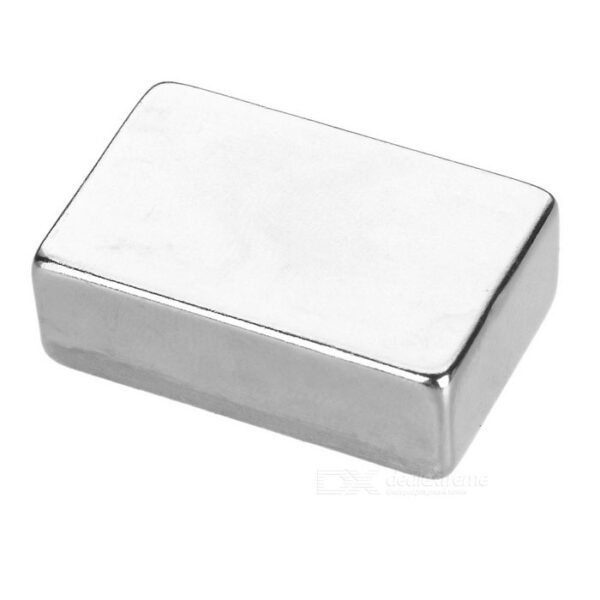
Manufacturing feasibility also matters. Non-standard shapes, thin sections, arcs, rings, tight tolerances, and complex magnet geometries may influence coating selection and process control. When dimensional tolerance is important, the coating should be included in the final finished-dimension discussion with the manufacturer.
Which Coating Is Better for Different Industrial Conditions?
There is no single coating that is automatically best for every industrial magnet application. Instead, the selection should be based on the dominant design constraints.
- Nickel-Copper-Nickel: Consider when a metallic surface, mechanical robustness, consistent appearance, and compatibility with industrial assembly processes are important.
- Zinc: Consider when a metallic coating is required and the project prioritizes practical surface protection and cost control under defined environmental conditions.
- Epoxy: Consider when polymer-based surface protection, additional isolation, corrosion-sensitive environments, or complex geometry are important design factors.
These are general selection directions rather than fixed rules. Final suitability should be confirmed according to the actual operating environment, magnet geometry, assembly method, expected lifecycle, and customer-specific requirements.
How to Choose the Right NdFeB Magnet Coating
A practical coating-selection process should begin with the application rather than the coating name. Engineers and sourcing teams can evaluate the following factors before requesting a quotation:
- Operating environment and expected humidity exposure
- Potential contact with moisture, chemicals, oils, coolants, or cleaning agents
- Indoor, outdoor, enclosed, or partially exposed installation
- Magnet shape, size, and edge geometry
- Finished dimensional tolerance
- Assembly method and expected handling conditions
- Electrical surface requirements
- Required corrosion or environmental testing
- Target product lifecycle
- Cost and production-volume targets
Once these conditions are defined, the magnet manufacturer can evaluate which available coating system is more appropriate and whether additional testing or sample validation is required.
NIBBOH Sintered NdFeB Magnet Surface Treatment Options
NIBBOH’s Sintered NdFeB Magnet is available in multiple magnetic grade ranges, including N35–N52, 33M–48M, 30H–45H, 30SH–42SH, 28UH–38UH, and 28EH–35EH.
Available surface-treatment options listed for the product include:
- Zinc
- Nickel-Copper-Nickel
- Chromium
- Epoxy
Shape, size, magnetic grade, magnetization direction, tolerance, and surface treatment can be discussed according to project requirements. Final coating selection should be confirmed based on operating conditions, product geometry, mechanical requirements, target market, and any required validation or test criteria.
Practical Selection Checklist for Engineers and Buyers
Before confirming an NdFeB magnet coating, engineering and procurement teams should clarify the following information with the supplier:
- What environmental conditions will the magnet experience?
- Is moisture or condensation expected during service?
- Will the magnet contact chemicals, oils, coolants, or cleaning agents?
- Does the assembly process involve friction, insertion, or repeated handling?
- Are there tight finished-dimension requirements after coating?
- Does the application require an electrically conductive or isolated surface?
- Are specific corrosion or environmental tests required?
- What magnetic grade and temperature class are required?
- Does the magnet geometry create coating or edge-coverage challenges?
- Should samples be tested before bulk production approval?
This approach helps avoid choosing a surface treatment based only on a general statement such as “nickel is stronger” or “epoxy is better for corrosion.” The correct decision depends on the complete application specification.
FAQ
What is the best coating for NdFeB magnets?
There is no single best coating for every application. The appropriate choice depends on operating environment, corrosion exposure, mechanical requirements, magnet geometry, dimensional tolerance, cost targets, and the coating systems available from the manufacturer.
What is the difference between nickel, zinc, and epoxy coatings for NdFeB magnets?
Nickel-based, zinc, and epoxy coatings use different protective systems and can differ in surface characteristics, corrosion protection, mechanical behavior, electrical properties, processing requirements, and cost. The final choice should be matched to the actual operating and manufacturing conditions.
Why do sintered NdFeB magnets need surface coating?
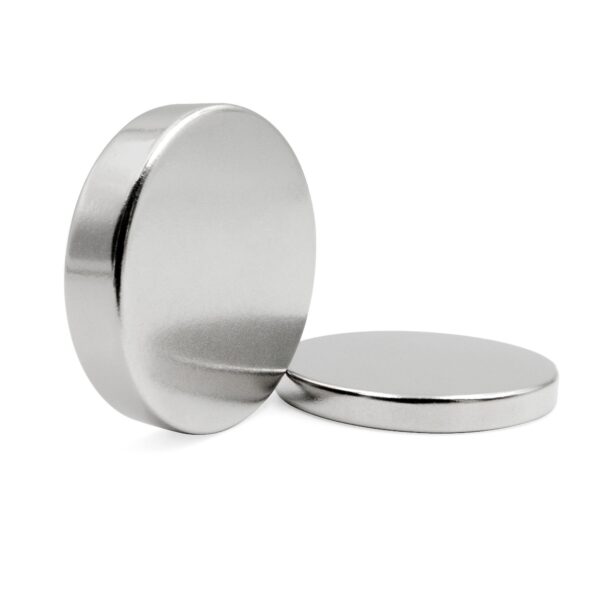
Sintered NdFeB magnets are susceptible to oxidation and corrosion. An appropriate surface treatment is therefore commonly used to protect the magnet and improve suitability for the intended operating environment.
Can the coating of a sintered NdFeB magnet be customized?
Surface treatment can be selected according to application requirements and manufacturing feasibility. NIBBOH lists zinc, Nickel-Copper-Nickel, chromium, and epoxy among the available surface treatments for its sintered NdFeB magnets. Final specifications should be confirmed before ordering.
Should coating performance be tested before mass production?
For applications with defined corrosion, humidity, chemical, dimensional, or mechanical requirements, sample validation is recommended before bulk production. Buyers should provide the required operating conditions and test criteria so the supplier can confirm the appropriate coating specification.
Conclusion
Selecting between Nickel-Copper-Nickel, zinc, and epoxy is an engineering decision that should be based on the complete application rather than a simple ranking of coating types. Each option offers a different balance of surface protection, mechanical characteristics, electrical behavior, manufacturability, and cost.
For reliable NdFeB corrosion protection, engineers should first define the operating environment, geometry, assembly method, dimensional requirements, lifecycle expectations, and any required validation criteria. Only then should the final neodymium magnet coating be selected.
NIBBOH offers zinc, Nickel-Copper-Nickel, chromium, and epoxy surface-treatment options for its Sintered NdFeB Magnets, together with multiple magnetic grades and customizable dimensions, magnetization directions, tolerances, and other project requirements. Final specifications should be confirmed according to the intended industrial application before ordering.