


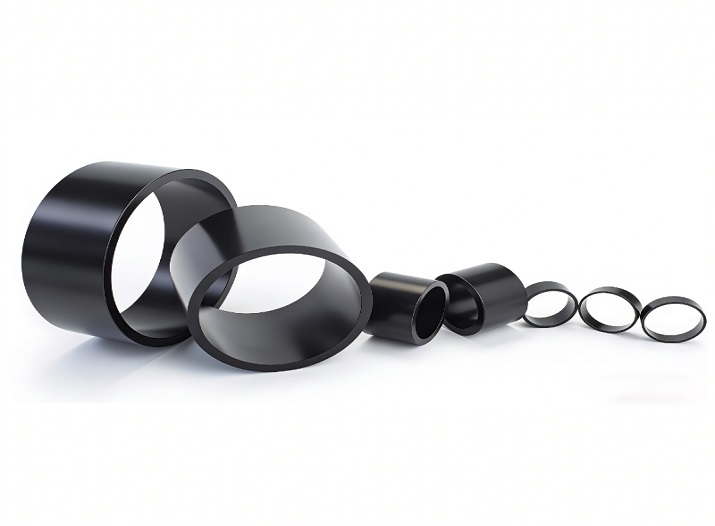
Designing reliable electric motors, precision sensors, or mission-critical automotive components often hinges on maintaining consistent magnetic performance over time. Yet engineers frequently encounter unexpected permanent magnet degradation — not from material failure per se, but from subtle, cumulative environmental and operational stresses. When magnet strength loss compromises torque linearity in an EV traction motor or drifts signal fidelity in a medical position sensor, root-cause analysis must go beyond demagnetization curves alone. This article identifies seven field-validated factors driving ndfeb demagnetization and outlines how material selection — specifically bonded ndfeb magnet architecture — mitigates several key risks without sacrificing design flexibility.
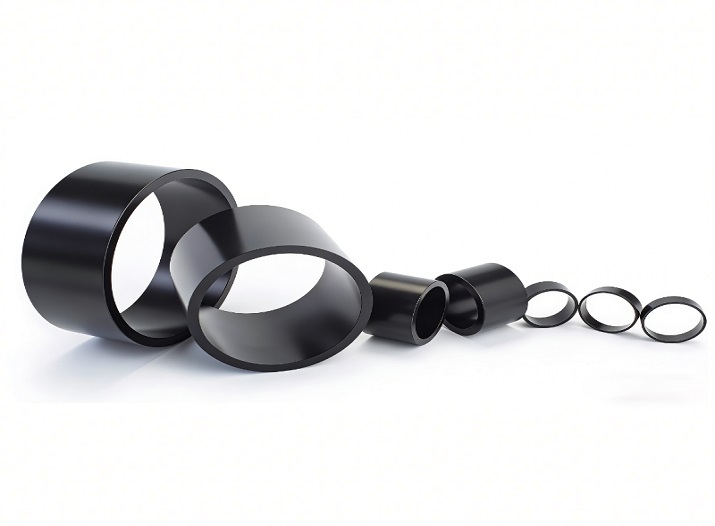
Factor 1: Excessive Operating Temperature
Thermal exposure is the most common cause of irreversible permanent magnet lifespan reduction. Bonded NdFeB magnets exhibit strong temperature dependence: while their maximum operating temperature is rated up to 180°C, sustained operation near this limit accelerates intrinsic thermal demagnetization. Unlike sintered NdFeB, bonded variants retain structural integrity at elevated temperatures due to polymer matrix stabilization — but exceeding the 180°C threshold still triggers irreversible flux loss. In electric motors with poor thermal management or industrial equipment experiencing cyclic duty loads, localized hot spots can exceed ambient ratings, causing partial demagnetization even if average winding temperature remains within spec.
Factor 2: Corrosive Environments
Magnet corrosion remains a persistent threat — especially in automotive sensors exposed to road salts, industrial automation systems in humid factory environments, or medical equipment requiring repeated sterilization. Unprotected NdFeB grades oxidize rapidly, forming non-magnetic iron oxides that erode magnetic volume and disrupt flux paths. While surface coatings (e.g., Ni-Cu-Ni, epoxy) help, they introduce risk of pinholes or edge delamination. The bonded ndfeb magnet solution offers inherent good corrosion resistance because the polymer binder fully encapsulates magnetic particles, eliminating galvanic pathways and reducing reliance on external plating.
Factor 3: External Demagnetizing Fields
Opposing magnetic fields — whether from adjacent windings, fault currents, or improper handling during assembly — can partially or fully demagnetize permanent magnets. This is particularly acute in compact motor designs where stator back-EMF or short-circuit transients generate strong counter-fields. Bonded NdFeB magnets possess lower coercivity than sintered equivalents, making them more susceptible — yet their excellent dimensional accuracy enables tighter air-gap control and optimized magnetic circuit geometry, minimizing stray field exposure and improving overall system-level immunity.
Factor 4: Mechanical Shock and Vibration
Repeated mechanical stress does not directly alter magnetic domains but can induce micro-fractures in brittle magnet materials, exposing fresh surfaces to oxidation or disrupting particle alignment in anisotropic grades. In automotive components (e.g., EPS actuators) or industrial equipment subject to high-G vibration, sintered magnets may chip or crack under impact. By contrast, the polymer matrix in bonded ndfeb magnet formulations provides damping and toughness. Both compression molded and injection molded variants absorb energy more effectively — preserving structural continuity and sustaining long-term magnetic performance.
Factor 5: Improper Material Selection for Application
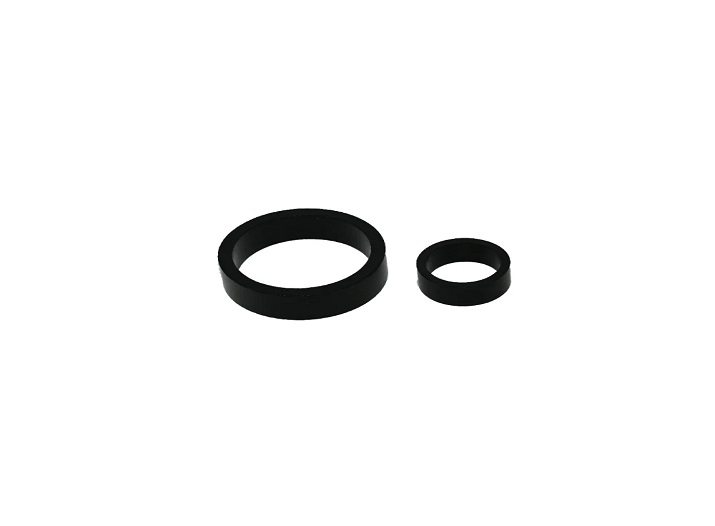
Selecting a magnet based solely on Br or (BH)max — without matching intrinsic properties to operational constraints — is a leading cause of premature magnet strength loss. For instance, using a high-remanence sintered grade in a thin-walled, complex-shaped sensor housing may be mechanically unfeasible or thermally unstable. Here, bonded ndfeb magnet excels: its complex shape capability allows integration of features like mounting bosses, internal cooling channels, or multi-pole geometries — all while maintaining tight tolerances required for high-precision motors and sensors. This eliminates secondary machining and associated risk of dimensional drift or surface damage.
Factor 6: Radiation and Chemical Exposure
While less common, radiation (e.g., in certain aerospace or medical imaging subsystems) and aggressive chemical agents (e.g., solvents in consumer electronics assembly lines) can degrade organic binders or oxidize NdFeB particles. Standard epoxy-based bonded magnets show robust resistance to typical industrial cleaning agents and moderate gamma exposure — though qualification testing is application-dependent. For medical equipment or consumer electronics applications requiring biocompatibility or solvent resistance, custom binder formulations are available and remain within the defined bonded ndfeb magnet material class.
Factor 7: Time-Dependent Aging Effects
Long-term aging — distinct from thermal or corrosion-driven losses — refers to very slow relaxation of magnetic domains under constant stress and temperature. Though minimal in modern NdFeB grades, it becomes measurable over decades in safety-critical industrial equipment or infrastructure systems. Bonded magnets demonstrate stable aging behavior when stored or operated within specification: their polymer matrix restricts particle mobility, and good corrosion resistance prevents progressive surface degradation that could accelerate aging kinetics. Real-world data confirms predictable, linear flux decay rates below 0.1% per decade under controlled conditions — supporting extended permanent magnet lifespan projections.
Why Bonded NdFeB Magnets Are Engineered for Resilience
When evaluating solutions for high temperature magnet applications — especially in electric motors, automotive sensors, or industrial automation — Permanent Magnet > Bonded NdFeB Magnet delivers a balanced profile unmatched by alternatives. Its dual manufacturing routes (compression molding for highest density and magnetic output; injection molding for fastest cycle times and finest features) support both prototyping agility and high-volume production. Crucially, it satisfies three interdependent engineering requirements simultaneously: excellent dimensional accuracy for zero-clearance assemblies, good corrosion resistance without secondary coating, and complex shape capability to integrate functionality directly into the magnet component.
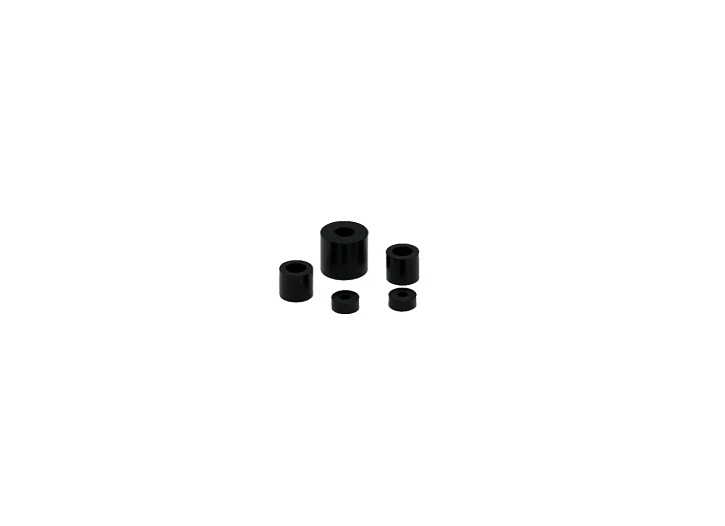
For designers specifying magnets in automotive components or magnetic assemblies, the Bonded NdFeB Magnet offers a proven path to mitigate multiple degradation vectors — especially thermal overload, corrosion, and mechanical fragility — while enabling next-generation miniaturization and functional integration.
FAQ
- Q: Why do permanent magnets lose strength over time?
A: Permanent magnets may lose strength due to excessive heat, corrosion, strong external magnetic fields, mechanical damage, or improper material selection. - Q: Can high temperatures permanently damage a magnet?
A: Yes. Operating above the recommended temperature range can cause irreversible demagnetization and reduced magnetic performance. - Q: How does corrosion affect bonded NdFeB magnets?
A: Bonded NdFeB magnets feature good corrosion resistance due to full particle encapsulation by polymer binder — eliminating the need for additional plating in many industrial equipment and automotive components applications. - Q: Are bonded NdFeB magnets suitable for high-precision sensors?
A: Yes. Their excellent dimensional accuracy and complex shape capability make them ideal for motors and sensors requiring tight geometric tolerances and integrated features.
Conclusion
Permanent magnet degradation is rarely due to a single factor — it emerges from interactions between temperature, environment, mechanical load, and design intent. Understanding these seven drivers empowers R&D engineers and procurement managers to specify magnets not just by grade, but by system-level resilience. For applications demanding reliability across electric motors, automotive sensors, and industrial automation, Permanent Magnet > Bonded NdFeB Magnet delivers verified performance within its defined limits: up to 180°C, inherent corrosion protection, and precision geometry — all without compromising manufacturability. Contact our engineering team to discuss your application requirements.