


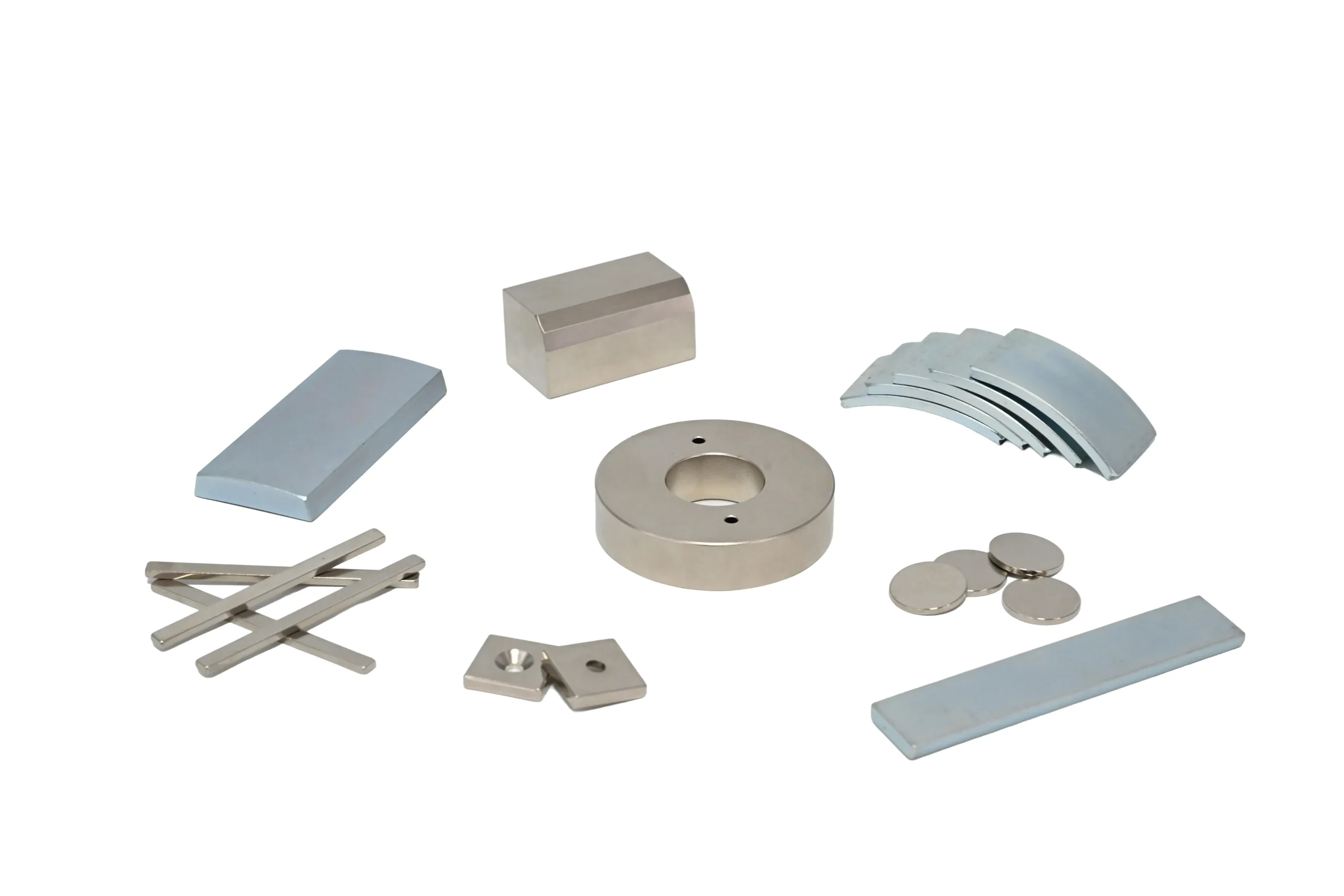
The global permanent magnet industry is very important in modern engineering. Engineers use Neodymium Iron Boron (NdFeB) magnets because they provide extremely strong magnetic power for many high-performance products. These magnets go into electric car motors, MRI machines in hospitals, direct-drive wind turbines, and everyday electronics. NdFeB magnets are much stronger than other types. However, the basic material has a big weakness. It rusts and corrodes very quickly when it touches normal air and moisture.
To fix this big problem, experts in materials engineering created special ways to protect the surface of the magnets. Protective coatings serve as the main shield against damage from the environment. These coatings include simple metal layers as well as fancier ones made from strong plastics or super-thin films applied in a vacuum. Picking the right coating takes careful thought. You must know the conditions the magnet will face, the forces it will handle, and how much its magnetic strength can change without causing issues.
Why NdFeB Magnets Are Highly Susceptible to Corrosion
To understand why these magnets fail, you need to look closely at what they are made of and how they are produced. Protective coatings exist for one main reason. They fight against the built-in weaknesses of the NdFeB material. NdFeB magnets contain mostly iron. Iron makes up more than 60 percent of the alloy. They also include neodymium and boron. This mix makes the magnet very reactive. Iron quickly turns into rust when it meets water and oxygen. Neodymium reacts even faster. This rare-earth metal strongly bonds with oxygen and moisture in the air. It forms neodymium oxide and neodymium hydroxide as a result.
The main way these magnets are made makes their chemical weaknesses even worse. Manufacturers create sintered NdFeB magnets with a special powder-based method. They press and heat tiny metal powders to form solid shapes. The finished magnet has a structure full of small holes and gaps between grains. These tiny pores let air and moisture sneak inside easily. That speeds up the rusting process.
The finished magnet has two different metal parts inside it. One is the main magnetic part that gives the strength. The other is a neodymium-rich layer along the edges of the grains. This neodymium-rich part acts like the negative side in a tiny battery compared to the main part. When water vapor or liquid gets into the small pores, it sets up a mini electric circuit. The water becomes a path that lets electricity flow. The neodymium-rich areas then rust away very quickly. This fast breakdown happens along the grain boundaries and is called intergranular corrosion.
As the grain boundaries break down from rusting, the tiny magnetic grains lose their glue that holds them together. The whole inside structure starts to fall apart. The magnet crumbles slowly from the inside out. Chemicals from outside, like strong acids or tiny bits of salt in the air, make this happen much faster. They eat away at the iron and neodymium near the surface. This reaction creates hydrogen gas bubbles. Those bubbles make the material brittle and weak.
The strong magnetic field inside the magnet makes the rusting happen even faster. It pulls oxygen molecules toward the surface more quickly because oxygen is slightly attracted to magnets. The magnetic field also pushes ions around inside the wet layer. This movement comes from something called the Lorentz force. All of this speeds up the chemical reactions that cause corrosion. Leftover magnetism on the surface changes how electric charges line up near the metal. That creates extra voltage that makes the rusting attack much stronger.
This kind of deep rusting along the grain boundaries creates big problems for the finished product. It leads to serious failures in real-world use. The table below lists the main ways uncoated NdFeB magnets break down. These failure modes happen because the magnet cannot resist corrosion.
| Failure Mode | Mechanism | Operational Consequence |
| Loss of Magnetism | Rust consumes iron content and destroys magnetic domain alignment. | The magnet loses 20 to 30 percent of its magnetic field strength in severe cases. |
| Physical Degradation | Corroded material expands in volume, causing external flaking. | Physical dimensions change, causing mechanical failures in precision sensors. |
| System Contamination | Disintegrating material sheds conductive, abrasive rust particles. | Rust particles destroy electronic circuits, contaminate medical devices, and jam gears. |
These bad effects mean one thing is very clear. Engineering teams have to protect NdFeB magnets from rust before using them in real products. Without good protection, the magnets will fail too soon. Strong coatings are a must for any commercial use. That way the magnets can work reliably for a long time.
Common Protective Coatings for NdFeB Magnets
Manufacturers provide many different kinds of protective coatings for NdFeB magnets.These coatings fight against the harmful rusting processes.Each type uses its own chemical or physical way to guard the magnet underneath.Engineers have to check the key features of every coating carefully.They need to pick the one that best fits the real-world job the magnet will do.
Nickel Plating
Description:
Nickel plating is still the top choice for protecting NdFeB magnets in the industry.Manufacturers put this metal coating on using a process called electrolytic plating.People usually call it a “nickel coating.”In reality, it has three separate metal layers: nickel, then copper, then nickel again.This triple-layer setup gives the best protection against rust.
How it works:
The electrolytic plating process starts by putting a smooth nickel layer right onto the porous NdFeB magnet.Next comes a soft copper layer in the middle.Finally, a tough outer nickel layer seals everything up.The first nickel layer sticks very well to the magnet.The copper layer in the middle makes the whole coating more flexible.It also covers tiny flaws on the surface.Plus, it stops the coating from blocking the magnet’s strength too much.The top nickel layer gives a shiny metal look.It works as a strong shield against air and moisture.
Advantages:
Nickel-plated NdFeB magnets offer very good protection against normal indoor humidity and gentle conditions.The three-layer metal design makes a tough surface that resists scratches well.It has a bright, shiny silver look.Many makers of phones and other gadgets really like this nice appearance.The plating process costs little money.It works smoothly with fast, automatic factory lines that make huge numbers of parts.
Disadvantages:
Nickel coatings fail to protect NdFeB magnets well in certain tough conditions.They cannot handle long periods underwater, very high humidity, or salty sea air.The hard metal layers crack or chip easily.This happens when the magnet gets hit hard or bent a lot.Nickel also causes skin allergies for some people.It leads to rashes from direct contact, so it is not good for some wearable medical devices.Nickel is a magnetic metal itself.Thick nickel layers block part of the magnet’s own field.This shielding lowers the strength of tiny magnets.Small magnets that weigh less than 0.5 grams lose 10 to 15 percent of their power because of it.
| Specification | Detail |
| Typical Thickness | 15 to 21 micrometers |
| Corrosion Resistance Rating | Good for dry indoor use; Bad for salt water |
| Maximum Temperature | Approximately 200 degrees Celsius |
| Best Applications | Electric motors, medical devices (external), sensors, generators, consumer electronics |
Zinc Plating
Description:
Zinc plating gives a cheap, single-layer metal covering for permanent magnets.Manufacturers put the zinc on using a simple water-based electroplating method.The finished surface can look dull gray or slightly blue.This version is called white zinc.It can also show a shiny rainbow of colors.People call this colorful zinc.Both options cost less than nickel plating.
How it works:
Zinc works mainly as a sacrificial protector.It is much more reactive than the iron in the magnet underneath.If the coating gets scratched or moisture gets through, the zinc rusts first.This process is called galvanic protection.The zinc takes the hit and corrodes instead of the iron.As a result, the NdFeB magnet stays safe longer.
Advantages:
Zinc-coated neodymium magnets are the cheapest way to protect them.They use just one simple layer.This keeps the total cost very low for making the magnets.The coating stays pretty thin.That helps keep the magnet’s size exact and precise.Engineers like this when they build tight-fitting mechanical parts.Zinc also sticks really well to glue and strong adhesives.That makes it easy to attach the magnets in products.
Disadvantages:
Zinc does not protect as well as nickel against rust overall.It forms a white, powdery layer called “white rust” when it touches normal moisture in the air.The zinc coating stays fairly soft.It scratches and wears away very easily from rubbing or scraping.Zinc fails fast in salty sea air or strong acid factory settings.The rusty material can also leave dark black marks on hands or parts during assembly.
| Specification | Detail |
| Typical Thickness | 7 to 15 micrometers |
| Corrosion Resistance Rating | Moderate; Acceptable for general humidity, Bad for salt water |
| Maximum Temperature | Approximately 100 degrees Celsius |
| Best Applications | Cost-sensitive hardware, internal components, temporary holding assemblies, precision fitments |
Copper Plating
Description:
Manufacturers mainly use copper as the middle layer in the usual Nickel-Copper-Nickel plating process.Some companies do things differently.They put copper straight onto the magnet as its only coating.Others apply a very thick copper base layer first.Then they add special plastic coatings on top.This approach works well for certain needs.
How it works:
Copper coats the porous NdFeB magnet very evenly.It uses an electrolytic plating process to do this.The copper forms a thick and tight metal layer.This layer bends without breaking easily.It acts as a strong physical seal.The seal covers and protects the tiny grain structure underneath.
Advantages:
Copper is not a magnetic metal.Thick layers of copper do not block or weaken the magnet’s power at all.Manufacturers can make the copper layer thicker.This lets them use a thinner outer nickel layer.That simple change keeps tiny magnets strong.Copper coats very evenly across the surface.It avoids extra buildup at the corners.Copper also stands up well to high heat that can weaken magnets
Disadvantages:
Standalone copper rusts very quickly in normal air.It turns green or brown as it forms copper carbonate on the surface.The pure metal is quite soft.It cannot act as a strong outer shield in places with lots of rubbing or wear.That is why copper plating always needs an extra top layer for protection.This can be something like epoxy or a very thin nickel coating.The added layer helps the magnet stay stable over a long time.If moisture gets through, it can create copper sulphide.This chemical causes the protective coating to peel away from the magnet.
| Specification | Detail |
| Typical Thickness | 8 to 15 micrometers (as a main layer) |
| Corrosion Resistance Rating | Moderate (Requires mandatory topcoat for high performance) |
| Maximum Temperature | Varies based on topcoat material |
| Best Applications | Small-sized precision magnets, internal base layers, assemblies requiring strict thermal demagnetization stability |
Epoxy Coating
Description:
Epoxy coating uses a tough plastic material that hardens with heat.It forms a perfect seal with no tiny holes around the magnet.This seal keeps out air and moisture completely.Manufacturers often put epoxy on as a solid black layer.They also use a clear version sometimes.The epoxy usually goes over a base of nickel and copper metal.This combination gives strong protection and a nice finish.
How it works:
The manufacturer puts the liquid epoxy on the magnet using special methods.These include electrophoretic deposition or electrostatic spray techniques.After coating, the magnet goes into an oven.There, controlled heat hardens the resin.This heating step creates a tight, strong plastic network.The network links together very well.It fully stops water molecules and harmful chloride ions.Those things never reach the magnet’s surface.
Advantages:
Epoxy-coated neodymium magnets give the best rust protection for tough conditions.They let NdFeB magnets work nonstop in harsh places.The tightly linked plastic layer blocks almost all salt water.It also stops high humidity and mild factory chemicals from getting through.This works as long as the coating stays undamaged.Epoxy does not conduct electricity at all.It provides great electrical insulation.That helps prevent short circuits in crowded electronic parts.
Disadvantages:
Cured epoxy is a fairly brittle plastic.It chips, cracks, or breaks easily when the magnet takes a hard hit or gets squeezed too much.Even tiny damage you cannot see ruins the entire protective barrier.Water with chloride ions sneaks through a small crack.It reaches the magnet surface right under the coating.Rusting begins along the grain boundaries.The rust causes the epoxy layer to swell.Large flakes eventually peel off the magnet.Applying epoxy takes more steps than simple metal plating.That makes the whole process much more expensive.
| Specification | Detail |
| Typical Thickness | 20 to 28 micrometers |
| Corrosion Resistance Rating | Very High; Superior in saltwater and high humidity |
| Maximum Temperature | Approximately 120 degrees Celsius |
| Best Applications | Marine environments, outdoor wind turbines, automotive sensors, underwater applications, chemical exposure |
Parylene Coating
Description:
Parylene is the top level of plastic protective coatings for NdFeB magnets.It stands out from all the others.This special coating is ultra-thin.It has no tiny holes at all.Parylene covers the magnet perfectly and evenly.It conforms exactly to every shape and detail on the surface.
How it works:
Manufacturers apply parylene in a very special way.Unlike regular liquid coatings, they use a chemical vapor deposition process.First, they heat solid parylene dimer until it turns into gas inside a vacuum chamber.This gas spreads everywhere.It slips into every tiny crack and crevice on the magnet.Then, at normal room temperature, the gas turns into a thin plastic layer right on the surface.No heat or liquid is needed for this step.
Advantages:
Parylene coating gives the best protection against moisture and chemicals for magnets.Nothing else works quite as well.The special vapor process covers every part of the surface perfectly.It reaches into tiny holes, sharp corners, and complicated shapes without missing spots.The coating happens at normal room temperature.This means no heat or pressure harms the magnet at all.Parylene stays completely safe and does not react with other things.It is also safe for use inside the human body for a long time.Doctors have approved it fully for medical implants.It blocks electricity very well.Yet it adds almost no extra thickness or weight to the magnet.
Disadvantages:
The vacuum deposition process needs very special and costly machines.It takes a long time to coat each batch of magnets.This is much slower than fast electroplating lines that run nonstop.Because of these reasons, parylene is one of the priciest coatings you can buy for NdFeB magnets.The finished layer is super thin.Sharp metal tools can easily scratch it during final assembly.
| Specification | Detail |
| Typical Thickness | 10 to 20 micrometers (frequently much thinner) |
| Corrosion Resistance Rating | Excellent; Superior biological and chemical barrier |
| Maximum Temperature | 80 to 100 degrees Celsius |
| Best Applications | Internal medical implants, aerospace components, high-end consumer electronics, precision optical devices, defense systems |
Aluminum Coating (IVD)
Description:
Ion Vapor Deposition of aluminum gives a strong, high-quality metal coating.It works very well.The aerospace and military industries created this vacuum method first.They used it to protect important parts on airplanes and spacecraft.The coating helps these critical pieces last longer in tough conditions.
How it works:
The manufacturer puts the uncoated magnets into a sealed vacuum chamber.This chamber is filled with safe argon gas.A strong electric field turns the argon into a special cleaning plasma.This plasma blasts away all oils, greases, dyes, and dirt from the surface.Next, the system heats solid aluminum wire until it turns into vapor.A high negative voltage pulls the aluminum ions straight toward the magnet.The ions sink deep into the tiny pores on the surface.This builds a very dense and even metal layer.
Advantages:
The Ion Vapor Deposition aluminum coating naturally forms a tough, rust-resistant oxide layer when it touches normal air.This happens right away.The whole process uses low temperatures.That keeps the magnet from losing any of its magnetic strength during coating.The dry vacuum method skips water completely.It avoids a serious problem called hydrogen embrittlement that often happens with regular wet plating.IVD aluminum stands up to very high heat.It works well even at 400 degrees Celsius.It also releases almost no gas in a vacuum.This makes it ideal for space and aerospace parts.Unlike zinc plating, aluminum does not create flaky, powdery white rust.
Disadvantages:
Ion Vapor Deposition needs very expensive special machines.The equipment costs a lot of money to buy and set up.Each magnet that gets this coating ends up costing much more than ones with regular plating.The pure aluminum layer stays fairly soft.It scratches easily if you are not careful.Workers must handle the coated magnets gently during assembly.Deep scratches can ruin the protection if they happen.
| Specification | Detail |
| Typical Thickness | 10 to 30 micrometers |
| Corrosion Resistance Rating | Excellent; Outperforms standard metallic plating |
| Maximum Temperature | Up to 400 degrees Celsius |
| Best Applications | Spacecraft components, ultra-high vacuum environments, high-temperature industrial equipment, advanced military hardware |
Other Specialized Coatings (Gold, PTFE, etc.)
Specialized engineering projects often need custom surface features.These go way beyond just basic rust protection.Manufacturers offer several special coatings for NdFeB magnets.They design these coatings to handle extreme demands.Each one meets very tough or unusual requirements.
- Gold Plating: Manufacturers put a thin layer of pure gold on top of the usual Nickel-Copper-Nickel base.Gold stays completely unchanged by chemicals.It works perfectly with the human body and causes no reactions.This coating stops rusting in a perfect way.It also gives a shiny, expensive-looking finish.Pure gold is very soft, though.It scratches easily.Gold costs a huge amount of money too.The whole coating usually measures between 16 and 23 micrometers thick.This includes all the base layers underneath.Only special fields use gold plating.These include medical testing tools, fancy audio gear, and luxury jewelry.
- Polytetrafluoroethylene (PTFE / Teflon): PTFE offers the strongest shield against harsh chemicals.It stands up to powerful acids, strong bases, alcohols, and thick industrial oils without breaking down.Teflon has a special surface that nothing sticks to.It can handle steady heat up to 260 degrees Celsius for a long time.Manufacturers often use thick molded PTFE in food processing machines.They also choose it for medical settings that need strong steam sterilization.This coating requires costly custom molds and special tools.Because of that, it does not work well for very small magnets.
- Rubber and Plastic Encapsulation: Manufacturers fully wrap the permanent magnet inside thick rubber or hard plastic.This creates a complete seal around it.The coating is very thick.It usually goes beyond 800 micrometers and can reach up to 3 millimeters.This thick layer makes the magnet totally waterproof.It keeps out all air, water, and dirt from the outside world.The heavy rubber or plastic shell gives huge protection against hits and drops.It stops the brittle NdFeB magnet from breaking or cracking when struck hard.Rubber also adds good grip on the surface.That extra friction keeps the magnet from sliding off vertical steel walls or poles.These thick rubber and plastic coatings rule the market for certain products.They work best for outdoor signs and hooks, car roof attachments, and magnets used to pull things out of water.
Side-by-Side Comparison of NdFeB Magnet Coatings
Choosing the right surface coating takes a clear, fact-based comparison.You look at physical traits and chemical details side by side.The table below shows key specs for the most common protective coatings on NdFeB magnets.Engineers rely on these exact numbers.They help balance how well the magnet will work in real use against how much money the whole process costs.Good data makes the decision much easier and smarter.
| Coating Type | Corrosion Resistance | Relative Cost | Temperature Rating | Typical Thickness | Magnetic Impact | Typical Industries |
| Ni-Cu-Ni | Good (Indoor) | Low | Up to 200°C | 15 – 21 µm | Slight shielding on small magnets | Electronics, Motors, Automation |
| Zinc (Zn) | Moderate | Lowest | Up to 100°C | 7 – 15 µm | Negligible | Hardware, Packaging, Sensors |
| Epoxy | Very High | Medium | Up to 120°C | 20 – 28 µm | Negligible (Acts as air gap) | Marine, Automotive, Wind |
| Parylene | Excellent | Very High | Up to 80°C | 10 – 20 µm | Zero shielding | Medical, Aerospace, Optics |
| IVD Aluminum | Excellent | High | Up to 400°C | 10 – 30 µm | Negligible | Spacecraft, Vacuum Systems |
| Gold (Au) | Excellent | Highest | Up to 200°C | 16 – 23 µm | Negligible | Medical, Jewelry, Audio |
| PTFE (Teflon) | Excellent | High | Up to 260°C | > 1500 µm | Major (Large air gap) | Food Processing, Autoclave |
Nibboh’s NdFeB magnets can be made according your design with different grades to meet the application.Nibboh’s factory is in a prime location, close to the port and the airport.Nibboh Magnets has over 10 years of professional experience in producing permanent magnet materials.We have excellent professional expertise and a comprehensive service system.
How to Choose the Right Protective Coating for Your NdFeB Magnets
1.Analyze the Operational Environment
The chemical surroundings decide how much rust protection a magnet really needs.Different places call for different coatings.
- Indoor Dry Environments:For dry indoor spots, pick zinc or the standard nickel-copper-nickel plating.These give plenty of protection.They also keep the making costs as low as possible.
- High Humidity or Marine Conditions:In high-humidity areas or near saltwater, salt makes rust happen much faster.It works like a strong conductor for the damage.Choose epoxy, a mix of nickel-copper with epoxy on top, or full rubber wrapping.These thick, hole-free layers keep all water and salt away from the magnet.
- Medical or Precision Electronics: For medical tools or very precise electronics, the coating must be safe for the body and not release gases in a vacuum.These are big design needs.Go with parylene or gold plating.Both stay totally inactive and do not cause any reaction in people.
- Chemical Exposure: When magnets face strong chemicals like harsh cleaners or acids in factories, pick a tough coating.PTFE or parylene handle steady attacks from these chemicals best.They last a long time in those rough settings.
2.Evaluate Mechanical Stresses
Magnets face a lot of rough treatment during factory assembly and everyday use.They get knocked around and scraped often.
If a magnet slides back and forth against rough steel many times, pick hard Nickel-Copper-Nickel plating.This tough metal layer stands up well to scratching and wear.
When the magnet takes heavy hits or gets dropped over and over, go with rubber or plastic encapsulation.The thick rubber or plastic shell soaks up the shock.It keeps the brittle NdFeB material from breaking into dangerous sharp pieces.
Stay away from epoxy coatings in places with strong rubbing or sharp pokes.Epoxy is stiff and breaks easily.Even a small chip opens the way for fast rusting inside the magnet.
3.Account for Temperature Ratings and Magnet Grades
Temperature has a big effect on both the protective coating and the magnet’s strength.It changes how well everything works.The industry sorts neodymium magnets into grades.These grades show how strong the magnet is and how much heat it can handle.The grade name uses a number for strength and a letter at the end for max temperature.
- Standard grades like N35 to N56 work up to 80 degrees Celsius.
- M grades like N30M to N54M handle up to 100 degrees Celsius.
- H grades like N30H to N54H go up to 120 degrees Celsius.
- SH, UH, and EH grades reach between 150 and 200 degrees Celsius.
- AH and TH grades can take 230 to 250 degrees Celsius.
Engineers must pick a coating that matches the magnet’s heat rating.The coating should handle at least as much temperature as the magnet grade.Never use a low-heat coating like Parylene on a high-heat TH-grade magnet.Parylene only works up to 80 degrees Celsius.A TH-grade magnet goes in something hot like an electric car motor.If the temperature goes above the Curie point, the magnet loses its power forever.The Curie point sits between 310 and 370 degrees Celsius.At that heat, the magnet turns paramagnetic.It stops being magnetic for good.
4.Calculate Magnetic Impact and Air Gaps
All coatings add some space between the magnet and whatever it pulls toward.That extra distance works exactly like an air gap in magnetic design.An air gap cuts the magnet’s pulling strength a lot.You need careful math to figure out how much it drops.Use units like Gauss or Tesla for magnetic strength and Oersteds for the force that creates it.
For tiny precision motors, pick ultra-thin coatings like Parylene or zinc.These keep the gap very small.A small gap means the magnet keeps almost all its pulling power.Thick layers of rubber or PTFE plastic create a big air gap.They weaken the magnet’s hold very much.
The thick non-magnetic material blocks flux badly.Thick nickel layers cause a small shielding effect.This changes how magnetic lines flow in tiny magnets.It lowers the strength a bit.Using more copper in the plating helps reduce this loss.
In spinning electric motors, magnets heat up from eddy currents.Highly conductive metal coatings like nickel make their own extra heat.This added heat raises the temperature even more.Higher heat speeds up the slow loss of magnetic power over time.Engineers fix this by choosing non-conductive epoxy coatings.They can also cut the rotor magnets into pieces.That breaks up the eddy currents and keeps things cooler.
Conclusion
Neodymium Iron Boron magnets are the clear leaders among high-performance permanent magnets.Their strength and real-world usefulness depend completely on good surface protection.Without the right coating, they fail fast.A bare NdFeB magnet reacts strongly with normal air and moisture.It starts rusting deep along the grain boundaries right away.This causes the structure to crumble inside.The magnet quickly loses its magnetic power for good.
Product engineers have to choose the correct protective coating.The right choice keeps the magnet working for a long time.Standard Nickel-Copper-Nickel plating works great and costs little.It gives solid protection for indoor electronics and motors inside machines.Special coatings like epoxy and parylene create perfect barriers.They block everything out.These work best for tough jobs.Think marine gear, car sensors, and important medical tools.