
Neodymium magnets power many devices today.They help run electric cars and tiny phone parts with strong force that keeps everything working smoothly without any breaks.Cars need strong magnets for motors.Phones use them in sensors that detect motion and make screens react fast to every touch.Modern machines need special magnets.These magnets come in two main types called bonded and sintered that differ a lot in how they are made and what they can do best.Both types use neodymium iron and boron.This mix creates the strongest magnets we have right now for all kinds of jobs in factories and homes.But they are made differently.This changes their power levels and how well they handle heat or shapes in real products.Pick the right type with care.Think about the heat level and exact shape your project needs to work safely every day.
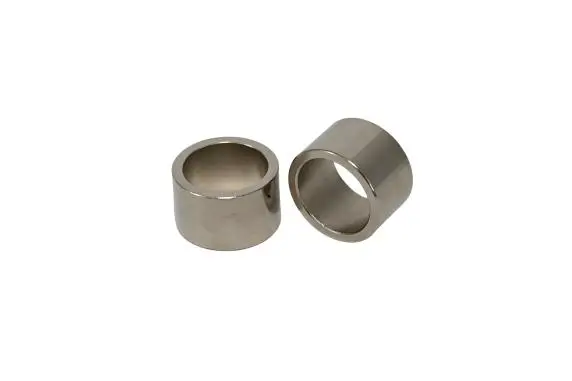
What Are Sintered Neodymium Magnets?
Sintered neodymium magnets are very dense and strong.They give the biggest push of magnetic force for each bit of space they take up in any machine.
The Neodymium Magnet Manufacturing Process for Sintered Types
The production of sintered NdFeB magnets uses a carefully controlled powder metallurgy process.Raw materials include neodymium, iron, boron, and small amounts of additives like praseodymium or dysprosium.These elements get melted together in a vacuum and then cooled very quickly by strip casting to create thin crystalline alloy flakes.Next, the flakes go through hydrogen decrepitation and jet milling.This step turns them into a fine, reactive powder with particles only 3 to 7 microns across.
Workers load the powder into a die.A strong magnetic field presses it while aligning the tiny particles in one main direction.Each particle behaves like a single magnetic domain, so the pressed block becomes anisotropic.The compacted “green” blocks move into a vacuum furnace afterward.They sinter at temperatures over 1,000°C, where heat fuses the particles into a dense, solid metal piece with a strong crystalline structure.Finally, diamond-coated tools slice and grind the hardened blocks into exact shapes.Wire electrical discharge machining helps create precise final dimensions.
Properties, Pros, and Cons
The powder metallurgy process creates a very dense material.It usually weighs between 7.4 and 7.6 grams per cubic centimeter.This density gives the magnets amazing strength.But they need gentle handling because they break easily.
- Pros:Sintered magnets have the strongest energy product you can get.It normally falls between 30 and 55 MGOe.Special versions add heavy rare earth elements.These versions stay strong even in very hot or tough conditions.The magnets behave like a hard ceramic.
- Cons:They are extremely brittle.Any hard bump can chip or crack them.Machining after sintering wastes a lot of material.The magnets also rust very quickly in water or moist air.Galvanic corrosion hits them fast and hard.
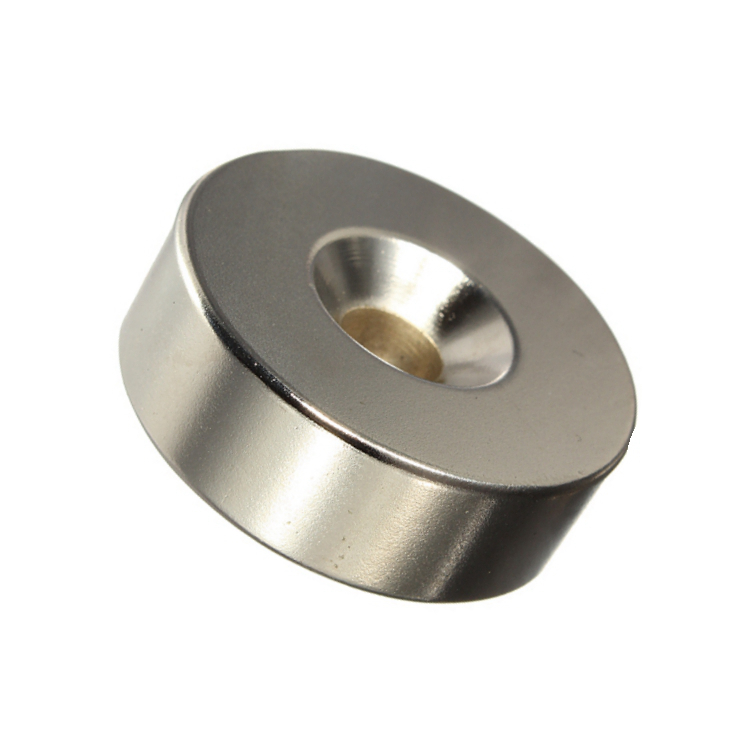
Nibboh’s NdFeB magnets can be made according your design with different grades to meet the application.Nibboh’s factory is in a prime location, close to the port and the airport.Nibboh Magnets has over 10 years of professional experience in producing permanent magnet materials.We have excellent professional expertise and a comprehensive service system.
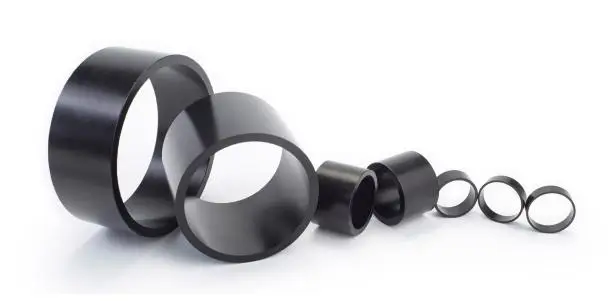
What Are Bonded Neodymium Magnets?
Bonded neodymium magnets combine metal and plastic technology.They do not melt the magnetic material into one solid piece.Instead, the process mixes fine magnetic powder with a plastic or resin.This creates a flexible composite material.The powder gets blended evenly into the non-magnetic binder.It forms a strong yet bendable magnet.The result stays much easier to shape than sintered magnets.You can mold it into many different forms.
The Neodymium Magnet Manufacturing Process for Bonded Types
Bonded neodymium magnets focus on easy design and strong shapes.They also aim for better toughness and almost no extra cutting.The NdFeB alloy starts as molten metal.It gets shot onto a very cold, fast-spinning copper wheel in a process called melt-spinning.This quick cooling turns it into thin ribbons.The ribbons have tiny crystals or no clear structure, with magnetic parts pointing in all directions.That makes the powder isotropic.
Workers mix this powder evenly with a plastic binder.Common binders include nylon or epoxy resin.The mixture then gets shaped into the final form.Methods include injection molding, compression molding, or extrusion.Injection molding pushes the hot mix into detailed molds under high pressure.Compression molding presses it straight down to pack more powder tightly.The finished part needs almost no extra machining.This keeps waste very low and shapes close to perfect right away.
Properties, Pros, and Cons
Bonded neodymium magnets have a special inner structure.Tiny magnetic particles sit scattered inside a plastic material.This setup gives them a lower density.It usually ranges from 3.5 to 6.0 grams per cubic centimeter.
- Pros:These magnets win big on shape options.You can make very detailed designs, thin sections, or rings with many magnetic poles all in one piece.The plastic part acts like a built-in cushion.It absorbs shocks well and makes the magnet much tougher against bumps.The material also fights rust naturally.No extra coatings are usually needed.
- Cons:The plastic binder lowers the magnet’s power.It cuts the strength down to only 5 to 12 MGOe.Heat can damage these magnets too.They stop working well once the plastic starts to break down from high temperatures.
Nibboh’s NdFeB magnets can be made according your design with different grades to meet the application.Nibboh’s factory is in a prime location, close to the port and the airport.Nibboh Magnets has over 10 years of professional experience in producing permanent magnet materials.We have excellent professional expertise and a comprehensive service system.
Head-to-Head Comparison
| Feature | Sintered Neodymium Magnets | Bonded Neodymium Magnets |
| Manufacturing Process | Powder metallurgy, high-heat sintering, and machining | Injection, compression, or extrusion molding |
| Material Density | 7.4–7.6 g/cm^3 | 3.5–6.0g/cm^3 |
| Maximum Energy Product (BHmax) | 30 to 55 MGOe | 5 to 12 MGOe |
| Magnetization Patterns | Anisotropic (Pre-aligned on a single axis) | Isotropic (Can be multi-pole magnetized in any direction) |
| Operating Temperature | Up to 230°C–250°C (with HRE doping) | Generally≤150°C (Limited by the polymer binder) |
| Corrosion Resistance | Poor (Requires Ni-Cu-Ni or heavy epoxy coating) | Good (Binder encapsulates particles; minimal coating needed) |
| Shape Flexibility | Low (Restricted to blocks, discs, rings, simple arcs) | Very High (Intricate gears, thin walls, insert-molded hubs) |
| Mechanical Durability | Brittle; highly susceptible to impact and fracture | Impact-resistant with higher tensile and flexural strength |
Manufacturing Process
Sintered and bonded neodymium magnets get made in very different ways.These differences decide where each type works best.Making sintered magnets uses a lot of energy.It needs very high heat of 1000 to 1100°C to fuse the powder.Bonded magnets form at much lower temperatures.The molding only goes up to 200–260°C.This cuts the energy needed by about 60 to 70 percent.Sintered magnets lose a big chunk of material later.They shrink and waste 30 to 40 percent during diamond grinding.Bonded magnets use the material far more efficiently.They reach over 95 percent material use thanks to near-perfect shaping right from the start.
Magnetic Strength (BHmax)
Sintered magnets lead the pack when it comes to strength.They win by a huge margin in the real world.The top commercial N52 grade sintered magnets reach up to 53 MGOe in maximum energy product.Their remanence goes above 1.4 Tesla too.This combo lets them create very strong pull in tiny sizes.They pack a lot of power into small spaces.Bonded magnets fall far behind in this area.They only hit between 10 and 12 MGOe at their best.The plastic binder takes up 20 to 35 percent of the total volume.That plastic has zero magnetic strength on its own.It dilutes the overall power of the magnet.Sintered versions stay much stronger as a result.
Temperature Resistance & Curie Temperature
Neodymium magnets handle heat in different ways.Both types lose their magnetism completely at the Curie temperature.That point sits between 312°C and 340°C for the basic alloys.Real-world use limits vary a lot more.Sintered magnets can work well at high heat.They add special heavy rare earth elements around the grain edges.This trick lets them run smoothly up to 250°C.Bonded magnets face a much stricter limit.The plastic around the powder softens at lower temperatures.Most versions fail above about 150°C.The plastic reaches its glass transition point and breaks down.Both magnetic strength and shape suffer when that happens.Sintered versions stay far ahead for hot environments.
Corrosion Resistance & Coating Needs
Neodymium magnets rust very quickly when they touch normal air moisture.Sintered magnets face a special kind of corrosion at the tiny gaps between their grains.Without protection, they can break down into loose magnetic powder in just a few months.They need strong coatings to stay safe.The most common fix is a three-layer nickel-copper-nickel plating applied with electricity.Bonded neodymium magnets handle rust much better on their own.The molding process wraps each tiny magnetic particle completely in plastic resin.This resin acts as a shield and keeps moisture away.Most bonded magnets work fine without any thick metal coating.Only special uses, like in medical tools or underwater gear, might add a very thin Parylene layer.Standard bonded versions skip heavy plating altogether.
Cost & Production Volume
Raw rare earth metals make up a big part of the cost for sintered magnets.They can account for up to 70 percent of the total price.Changes in those raw material prices swing the final cost a lot.The sintering step for sintered magnets takes place in slow batches.Lots of extra machining creates a huge amount of scrap too.Both things drive up the price per magnet.Bonded magnets work much better for big production runs.They become very cheap once the mold tooling cost gets paid off.The molding cycles happen fast.Material waste stays almost zero.This setup gives steady and low prices per unit.
Shape & Design Flexibility
Sintered magnets have strict shape limits.They get pressed in a straight die while a magnetic field lines up the particles.Then workers slice the hard block with diamond wire.This keeps commercial shapes simple.You mostly see blocks, cylinders, rings, and basic motor arcs.Bonded magnets give designers much more freedom.Injection molding lets factories create complex parts.You can make gears with teeth, uneven mounting flanges, or pieces with walls thinner than one millimeter.The biggest advantage comes from the powder itself.It stays isotropic with magnetic directions pointing every way.A single bonded ring can get magnetized with many poles all around.That kind of fancy multi-pole pattern works great in one continuous piece.Doing the same thing with a sintered magnet in one part is almost impossible.
Mechanical Strength & Brittleness
Sintered and bonded neodymium magnets handle stress in very different ways.This affects how well they last in tough factory settings.Sintered NdFeB breaks easily.It shows great strength when squeezed, but it snaps under pulling forces.Its tensile strength sits between 80 and 300 MPa.High-speed shaking or a quick hit can crack it right away.Bonded magnets use plastic as a smart cushion inside.The plastic stops tiny cracks from spreading.Tests on nylon-bonded versions show steady pulling strength.It can reach up to 47.8 MPa.These magnets bend well without breaking.They hold up during tight press-fit assembly.They also survive rough bumps and hard knocks much better.
Typical Applications
Sintered and bonded magnets go into different markets because of how they work.Their strengths pull them in opposite directions.Sintered magnets rule in heavy jobs that need the most power in a small space.They deliver top strength where size matters most.Bonded magnets take over in areas that need exact shapes and special magnetic patterns.They shine in precision machines, sensors, and everyday electronics.Complex designs and multi-pole setups fit bonded magnets perfectly.Sintered ones simply cannot match that kind of flexibility.Each type finds its own clear place in the real world.
When to Choose Bonded vs Sintered Neodymium Magnets
Automotive and Electric Vehicles (EVs):Cars and electric vehicles show this difference clearly.The main motors that drive EVs always use top-quality sintered neodymium magnets.They need the strongest power possible in a small space.This helps deliver high horsepower and longer driving range.The engine area can get as hot as 200°C.Sintered magnets handle that heat without losing strength.Nothing else works as well for these big traction motors.Other parts inside the same car use bonded neodymium magnets instead.Things like power steering sensors need them.Dashboard vibration feedback and seat motors rely on them too.Bonded magnets allow fancy multi-pole patterns.They also cost less when made in huge numbers.This makes them perfect for smaller electronic systems.Each type of magnet fits its own job in modern vehicles.
Medical Devices: Medical devices show how these two magnet types fit different needs.MRI machines need super strong and steady magnetic fields.They use huge blocks of sintered NdFeB magnets to create them.Smaller medical tools work better with bonded magnets.Things like portable CPAP breathing machines use them.Precision blood centrifuges rely on them too.In a tiny medical pump, a bonded ring magnet stands out.It gets magnetized with 24 poles around its edge.This high-resolution pattern cuts down bumpy spinning called cogging torque.The pump runs quietly and smoothly as a result.Patients feel more comfortable during use.Sintered magnets handle the heavy lifting in big machines.Bonded ones shine in small, precise, and quiet devices.
Renewable Energy: Modern offshore wind turbines use a special kind of generator.They rely on Permanent Magnet Synchronous Generators, or PMSGs.These generators make a lot of electricity even when the blades spin slowly.They do this without any gearboxes to speed things up.To create that strong power, the generators need huge amounts of sintered NdFeB magnets.The magnets provide the intense magnetic force required.Bonded magnets simply cannot deliver enough strength.They fall short for big utility-scale wind farms.Sintered magnets handle the job perfectly in these massive machines.The huge pull force they produce keeps everything running smoothly and efficiently.
Consumer Electronics: High-capacity hard disk drives use sintered NdFeB magnets.They power the strong voice coil motors inside.These motors move the read/write heads quickly and precisely.Smartphones and wireless earbuds take a different approach.They often use bonded magnets for tiny speakers and vibration motors.The magnets get molded into very exact shapes.This precision helps the parts work smoothly.Bonded magnets also stand up to hard drops.Their built-in toughness stops them from breaking apart.When a phone or earbud falls, the device usually keeps working.Sintered magnets drive the heavy-duty HDDs.Bonded ones fit perfectly in small, everyday gadgets that get handled roughly.
Conclusion
Sintered and bonded neodymium magnets serve different purposes in engineering.Choosing between them comes down to what a project really needs.Sintered neodymium magnets hold the crown for pure magnetic strength.They also stay strong at high temperatures.This makes them perfect for powerful electric vehicle motors.They power huge offshore wind turbines too.Bonded neodymium magnets give up some raw power.In return, they offer amazing design freedom.The process mixes magnetic powder evenly into a strong plastic.This creates magnets with complex shapes right from the mold.You can build parts with many magnetic poles in one piece.They last longer under bumps and resist rust much better.Each type wins in its own area of use.