


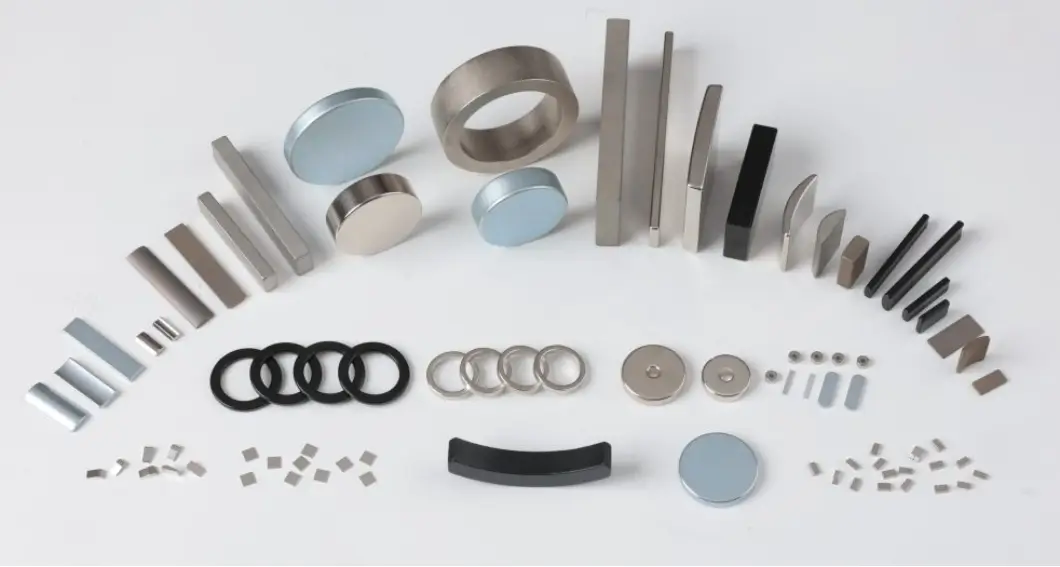
Neodymium magnets are the strongest permanent magnets you can buy today. Engineers use them a lot in electric car motors, wind turbines, phones, and factory machines. This report explains exactly what neodymium magnets are. It also covers their main features and the different grades made for industry work.
You will learn how people make these magnets step by step. The guide shows clear differences between sintered neodymium magnets and other types like ferrite or samarium cobalt. Engineers need to know the heat limits of these magnets. They must understand magnetic strength numbers too. Protective coatings matter a great deal for real projects.
The report gives full details on all neodymium magnet grades. It pays special attention to the very powerful N52 type. You can read about their key physical traits here. The text explains advanced methods like Grain Boundary Diffusion. It also covers safe ways to handle the magnets.
What Are Neodymium Magnets?
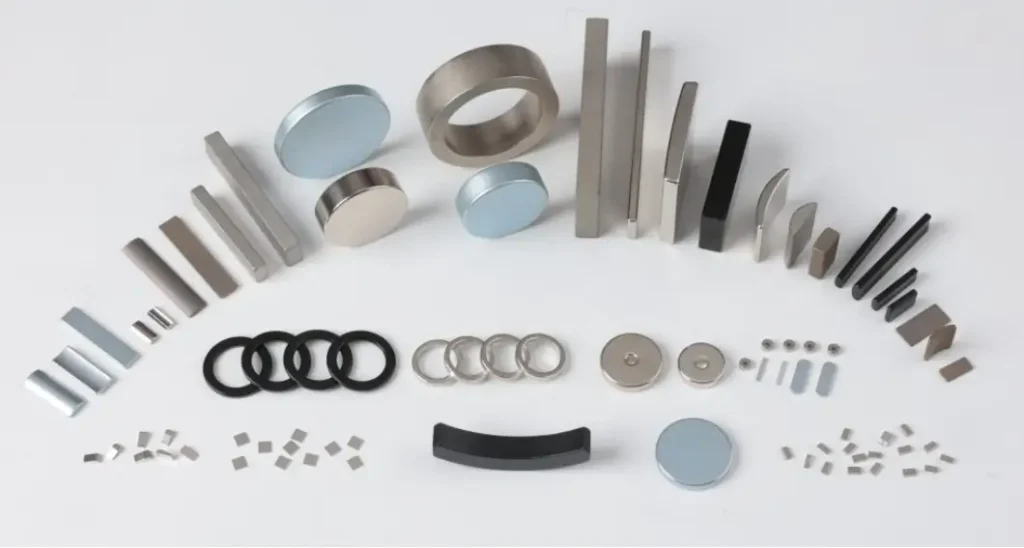
Neodymium magnets are permanent magnets. They come from a mix of neodymium, iron, and boron. These magnets have the strongest pull of any permanent magnet you can buy today. They belong to the rare earth magnet group. People pick them when they need a very strong magnet in a small size. That makes them perfect for many modern devices.
History and Discovery
Carl Auer von Welsbach was an Austrian chemist. He first separated neodymium as its own element back in 1885. Von Welsbach did this by repeating a careful process called fractional crystallization 167 times. He split a material called didymium into two new elements: neodymium and praseodymium. The strong modern neodymium magnets we use today came much later.
In 1982, a scientist named Masato Sagawa made a big breakthrough at Sumitomo Special Metals. He invented the Nd2Fe14B alloy for sintered neodymium magnets. Sagawa replaced costly cobalt and samarium with cheap, common iron and neodymium. At the same time, General Motors created its own method using a process called melt-spinning. These two discoveries together started large-scale production of powerful neodymium magnets.
Chemical Formula and Crystal Structure
The main chemical formula for neodymium magnets is Nd₂Fe₁₄B. This mix creates a special crystal shape called tetragonal. That shape gives the magnet very strong direction in its magnetism. Magnetic anisotropy means the magnet prefers to point its power in one clear direction.
This setup lets the material hold a huge amount of magnetic strength. Companies often mix in small amounts of dysprosium or terbium. These extra elements help the magnet stay strong even when it gets very hot. They make it much harder to lose its magnetism.
Comparison: Neodymium Magnets vs. Ferrite vs. Samarium Cobalt
Engineers frequently evaluate neodymium magnets against ferrite (ceramic) and samarium cobalt (SmCo) alternatives. Each material offers distinct operational advantages and physical limitations.
Material Comparison Table
| Feature | Neodymium Magnets (NdFeB) | Samarium Cobalt (SmCo) | Ferrite Magnets (Ceramic) |
| Magnetic Strength | Highest (Up to 55 MGOe) | High (16 to 32 MGOe) | Low (Up to 3.5 MGOe) |
| Material Cost | High | Very High | Lowest |
| Maximum Temp | Up to 230°C (Special grades) | Up to 350°C | Up to 180°C |
| Corrosion Resistance | Poor (Requires surface coating) | Excellent | Excellent |
| Physical Size | Highly compact | Compact | Bulky |
Neodymium magnets rule in devices that need very strong magnetism in a small space. Ferrite magnets win when it comes to how many get made around the world. They cost very little and do not rust easily. Samarium cobalt magnets work best in hot places like airplanes and military gear. Neodymium magnets often break down or lose power in those high-heat situations. Each type has its own special job.
Key Properties of Neodymium Magnets
Knowing the basic features of neodymium magnets helps you pick the right one. Manufacturers check these features in three main ways. They look at magnetic strength, heat resistance, and physical traits. This testing shows how the magnet will act when put under pressure. Good understanding leads to better choices every time.
Magnetic Properties
Magnetic strength is the main reason people value rare earth magnets. Labs test these magnets with special measurements. These numbers show how much real work a magnet can do.
- Maximum Energy Product (BHmax):It gets measured in units called MGOe.BHmax tells you how much magnetic energy the magnet can hold inside.Higher numbers mean a much stronger magnet. Neodymium magnets depend a lot on this number for their power.
- Remanence (Br):It shows up in Gauss or Tesla units.Br tells you how much magnetic pull stays in the magnet after the outside field turns off. This number shows the actual output strength you can get.
- Coercivity (Hcj): It comes in Oersteds or kA/m .Coercivity measures how well the magnet fights against forces that try to erase its magnetism. Magnets in tough spots with opposing fields need high coercivity to keep working.
Thermal Properties
Heat affects neodymium magnet strength a lot. Engineers have to watch certain temperature limits carefully.If a magnet gets too hot past its safe point, it can lose its magnetism forever.
- Maximum Operating Temperature: It shows the highest heat the magnet can handle for a long time without permanent damage. Most common grades stay safe only up to 80°C.
- Curie Temperature (Tc): This is the exact point where the magnet completely loses all its permanent magnetism. Standard neodymium magnets reach this between 310°C and 370°C.
- Reversible Temperature Coefficients: These numbers tell you how much pull the magnet temporarily loses for each degree it heats up. When the magnet cools back down to room temperature, it gets that strength back.
Physical and Mechanical Properties
Sintered neodymium magnets have special physical traits. These traits affect how you cut them, put them together, and handle them every day. Buyers need to know these limits well. If you ignore them, you can easily break the magnets during installation.
- Density: The density of these magnets runs from 7.4 to 7.6 grams per cubic centimeter.
- Hardness: Neodymium magnets rank very hard on the hardness scale. They measure between 57 and 61 on the Rockwell C scale. This extreme hardness stops you from drilling them easily or cutting them with normal tools.
- Brittleness: These magnets are also very brittle. They act just like a ceramic cup or plate.A quick hit can make them chip, crack, or shatter completely. Letting two magnets slam together usually ruins both of them.
- Machinability: You cannot shape these magnets with regular machining methods.Factories use special diamond-coated wheels instead. They also use a process called wire EDM to cut and form the raw material.
The N-Rating System
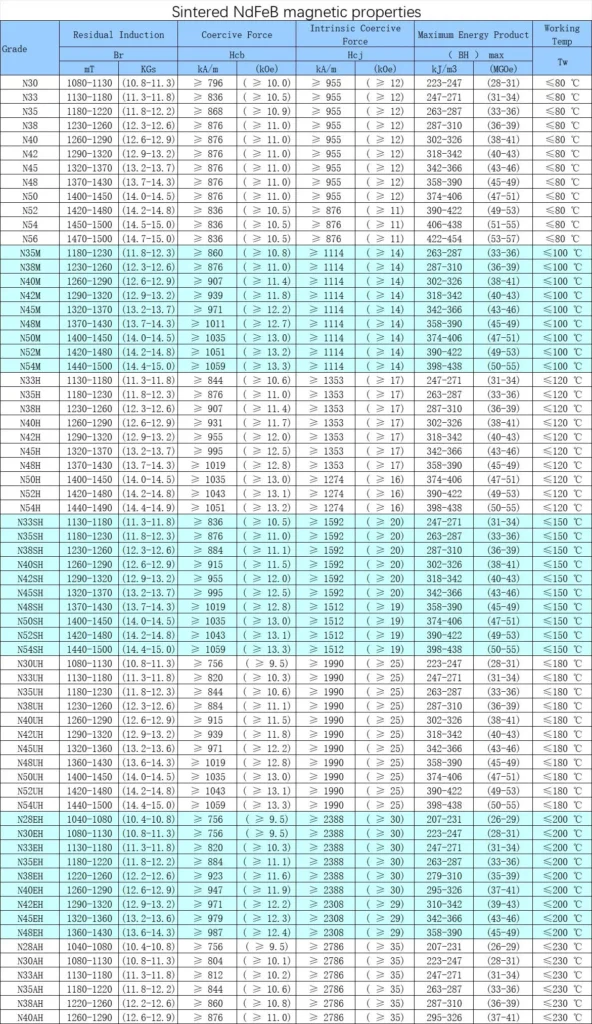
The N-rating system begins with the letter “N.”That stands for neodymium. The two numbers after it show the Maximum Energy Product in MGOe. This number tells you the main magnetic strength of the magnet.
You can find grades from N30 up to N55 in stores today. An N52 magnet gives about 48% more pull than an N35 magnet of the same size. Higher grades let engineers make magnets smaller. They still keep the same strong force this way. Smaller size matters a lot in phones and tiny electric motors. That helps modern devices stay compact and powerful.
Temperature Ratings and Suffixes
Standard neodymium magnets lose their strength quickly above 80°C.Heat is a big problem for them. Manufacturers fix this issue by adding heavy rare earth elements like dysprosium. This extra material boosts the magnet’s resistance to losing its pull .It raises the coercivity a lot. Letters added after the grade number show these better heat-handling versions. For example, grades like N42H or N52SH can work at higher temperatures. These special grades help magnets stay strong in hotter conditions.
Neodymium Magnet Grades and Temperature Ratings
| Temperature Suffix | Resistance Level | Max Operating Temperature | Curie Temperature | Example Grade |
| None | Standard | 80°C (176°F) | 310°C (590°F) | N52 |
| M | Moderate | 100°C (212°F) | 340°C (644°F) | N42M |
| H | High | 120°C (248°F) | 340°C (644°F) | N40H |
| SH | Super High | 150°C (302°F) | 340°C (644°F) | N42SH |
| UH | Ultra High | 180°C (356°F) | 350°C (662°F) | N38UH |
| EH | Extremely High | 200°C (392°F) | 350°C (662°F) | N35EH |
| AH/TH | Top Level | 220°C – 230°C | 350°C (662°F) | N33AH |
Data compiled from industry testing standards and material specifications.
Grade Selection Guide
Engineers have to balance three main things when picking neodymium magnet grades. They consider magnetic strength, how hot it will get, and how much money it costs .Choosing the strongest grade possible is not always the smartest move.
- General Consumer Goods: For everyday items like toys and home goods, standard grades work best.N35 or N42 magnets give great strength without high prices. They fit well for cabinet doors, craft projects, and simple store displays. These stay inside where heat is not a big problem.
- Compact Electronics: In small electronics, size and power matter most. Phones and hard drives often use N52 magnets. This top grade packs the strongest pull into the tiniest space. It keeps devices light yet very strong.
- Industrial Motors:Industrial motors need magnets that handle serious heat. High-speed servo motors usually pick N42SH grades. These can work safely up to 150°C without losing power.
- Automotive Applications: Electric cars face extreme heat from fast driving. Their motors often use N30EH or N33AH grades. These special versions stay strong during long, hard acceleration. The right grade saves money and keeps things working reliably.
Higher temperature resistance needs extra heavy rare earth elements. These elements cost a lot.That makes magnets like N35EH much more expensive. An N50 magnet can be physically stronger. Yet it usually costs way less money.
Common Applications of Neodymium Magnets
The exceptional strength-to-weight ratio of neodymium magnets drives product innovation across multiple global industries.
1.Automotive and Electric Vehicles (EVs)
The shift to electric cars around the world depends heavily on rare earth magnets. Neodymium magnets drive the powerful motors in electric and plug-in hybrid vehicles.
- Traction Motors: NdFeB magnets let engineers build smaller motors that still deliver huge twisting force. Toshiba came up with a smart new rotor design. It removed the internal top bridges. This change boosted the magnetic flow and cut the amount of magnet material needed by 30%.
- Sensors and Actuators: Cars also use permanent magnets in many other parts. Power steering systems rely on them. Electronic window motors need them too. Even anti-lock braking sensors depend on these magnets. They help make modern vehicles safer and smoother.
2.Renewable Energy Systems
Sustainable energy systems use thousands of tons of magnets every year. These magnets help make power generation much more efficient.
- Wind Turbines: Wind turbines depend on them a great deal. About 90% of wind turbines worldwide use direct-drive generators with neodymium magnets. These generators work very well even when the wind blows slowly. They turn low wind speeds into steady electricity.
- Offshore Installations: Offshore wind farms need huge amounts of these magnets. Massive arrays of neodymium magnets capture more energy out at sea. This setup also cuts down on repairs and mechanical breakdowns. Fewer moving parts mean less maintenance over time.
3.Medical Technology and Healthcare
Medical engineering requires perfect physical accuracy. It also needs magnets that stay very stable. Any mistake in this field can seriously harm patients.
- Magnetic Resonance Imaging (MRI): MRI machines depend on big groups of rare earth magnets. These create strong and steady magnetic fields. Doctors use those fields to take clear pictures inside the human body.
- Surgical Implants: Surgeons sometimes place neodymium magnets inside the body too. Gastroenterologists use them in special devices. These magnets go around the lower esophageal sphincter. They help treat long-term acid reflux problems. The magnets keep working reliably after surgery.
4.Consumer Electronics
Device miniaturization depends fully on powerful tiny magnets. Rare earth magnets make this possible. Without them, modern cell phones would have to be much bigger. They would need extra space for weaker parts.
- Acoustics: In sound systems, neodymium magnets play a key role .Headphones use them to move the voice coils. Smartphone speakers rely on NdFeB magnets too. High-quality audio gear depends on them as well. These strong magnets create clear sound in very small areas.
- Haptic Feedback: Haptic feedback works the same way in many devices. Wearable gadgets like smartwatches use magnetic vibration motors. Phones also use them for touch alerts you can feel. The magnets shake quickly to give you a physical buzz. This makes notifications easy to notice without sound.
5.Industrial Automation and Robotics
Industrial automation and robotics need fast and exact movements. Stable magnets make these movements possible.
- Servo Motors: Servo motors play a big role in robotic arms. These motors use neodymium magnets inside. The magnets help the arm move to exact spots quickly. They give fast response and perfect positioning. That precision keeps robots accurate and safe.
- Magnetic Couplings: Magnetic couplings serve another important job. Chemical plants use them in pumps. These couplings transfer twisting force through a sealed wall .No physical connection touches the dangerous fluids. This setup stops leaks that could harm people or the environment. The magnets keep everything safe and reliable.
6.Magnetic Separation Technologies
The global mining and recycling industries rely on strong magnets every day. They use these powerful fields to sort useful materials. Magnets also protect costly machines from damage.
- Mineral Extraction: In mining, rare earth magnetic separators do important work. They pull out tiny magnetic bits from regular ore. This process boosts product purity by as much as 35%.
- Food Processing: Food factories use neodymium grate magnets too. These magnets sit on production lines. They catch very small iron bits that could get into food. This keeps products safe.
7.Lifting and Holding Systems
Warehouses and construction sites use permanent magnets for heavy lifting jobs. These magnets make moving big items much easier and safer.
- Lifting Magnets: They can switch on and off easily. Workers use them to pick up huge steel plates and iron pipes. The magnets hold everything firmly without any electricity running.No power means less hassle on busy job sites.
- Magnetic Fasteners: Magnetic fasteners serve another useful purpose.Stores use hidden neodymium disc magnets in point-of-sale displays.High-end packaging also depends on these strong little magnets.They create clean, secure closures that open and close smoothly.The magnets stay out of sight but hold things tightly.
How Neodymium Magnets Are Made – Manufacturing Process
Making sintered neodymium magnets takes advanced powder metallurgy skills.It also needs very strict controls over the environment.Making sintered neodymium magnets follows a careful seven-step process.Each step builds on the last one.Here is how it works.
1.Raw Material Preparation and Melting
Technicians start by picking very pure rare earth elements.They match the exact amounts to the magnet grade needed.The mix includes neodymium, iron, boron, and tiny bits of elements like dysprosium.This ratio controls the final strength and heat resistance.Workers load everything into a special vacuum furnace.The vacuum keeps oxygen away so nothing rusts.The hot liquid metal pours onto a fast-spinning chilled drum.This quick cooling makes thin metal flakes.The flakes have a very fine and even crystal structure inside.
2.Hydrogen Decrepitation (HD)
The metal flakes go into a sealed chamber.Pure hydrogen gas fills the space.The alloy quickly soaks up the hydrogen.It swells up and breaks into rough, brittle powder.This step removes built-up stress.It also makes the material more even for the next grinding.
3.Jet Milling to Fine Powder
High-pressure gas shoots the rough powder around inside a jet mill.The particles crash hard into each other.This turns them into super-fine dust between 3 and 7 microns wide.The powder reacts fast with air oxygen.Workers keep it in a safe, oxygen-free space at all times.This prevents the powder from catching fire on its own.
4.Magnetic Field Alignment and Pressing
Loose powder needs its tiny magnetic parts lined up straight.A strong outside magnetic field does this job.It pulls all the particles into one clear direction.While the field holds them steady, big presses squeeze the powder tight.This forms a solid block called a green body.Factories use either side-pressing or rubber-mold pressing.Both ways give the best possible alignment.
5.High-Temperature Sintering and Heat Treatment
The green bodies go straight into a hot vacuum furnace.Temperatures climb fast to between 1,050°C and 1,100°C.This causes the particles to melt together at the edges.The whole block shrinks by 15-20% in size.It reaches almost full density.After that, workers heat it again at lower temperatures.This extra step strengthens the crystal edges.It greatly improves how well the magnet resists losing power.
6.Precision Machining and Shaping
Freshly sintered magnets come out rough and close to the right size.The material is too hard for normal tools.Workers use diamond-coated grinding wheels instead.They also use wire electrical discharge machines.These tools cut the magnets into exact discs, blocks, or rings.
7.Surface Coating and Magnetization
Raw magnets rust very quickly in normal air.Factories add protective layers right away.Common coatings include nickel plating or epoxy.These seal out oxygen and water completely.At this point, the magnets have zero magnetism.Workers place them in special holders.A huge electric pulse charges them all at once.Finally, teams check size, coating quality, and magnetic strength.Every magnet must pass these tests before shipping.
Advanced Manufacturing: Grain Boundary Diffusion (GBD)
The demand for magnets that handle high heat is growing fast in electric cars.This has pushed companies to create a new method called Grain Boundary Diffusion, or GBD.
Old ways mixed costly dysprosium or terbium all through the magnet powder.That approach lowered the magnet’s overall pull strength.It also made production much more expensive.
GBD technology changes everything for the better.Manufacturers no longer mix the rare elements into the whole powder.They coat only the outside surface of a finished magnet piece with Dy or Tb.Then they heat the magnet in a hot furnace.The heavy rare earth elements spread along the outer edges of the tiny crystal grains.This creates a strong protective layer around the inside parts.
The smart GBD method cuts the use of expensive heavy rare earths by 40% to 70%.At the same time, it keeps the magnet very resistant to heat.It also holds onto extremely high resistance against losing magnetism.Engineers now get stronger, cheaper, and more heat-proof magnets this way.
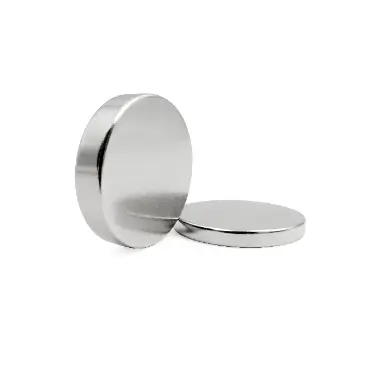
Nibboh’s Neodymium Magnet
Nibboh’s NdFeB magnets can be made according your design with different grades to meet the application.
Nibboh’s factory is in a prime location, close to the port and the airport.
Nibboh Magnets has over 10 years of professional experience in producing permanent magnet materials.
We have excellent professional expertise and a comprehensive service system.
A Note on Bonded Neodymium Magnets
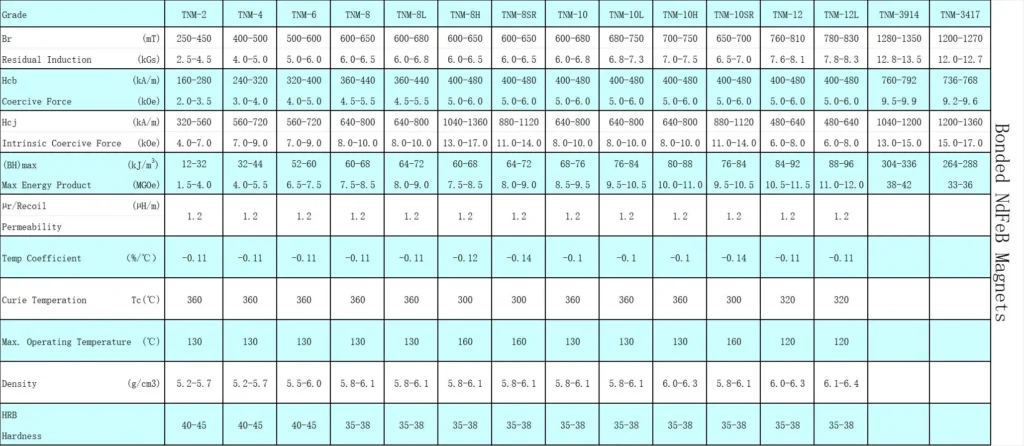
This Blog talks mostly about sintered neodymium magnets.Mechanical engineers also use bonded neodymium magnets quite often.These fit special jobs very well.Manufacturers make bonded magnets by mixing dry NdFeB powder with flexible plastic binders.They blend everything together carefully.Workers then shape the mixture in two main ways.They use injection molding or compression molding.This lets them create very complex shapes easily.Bonded neodymium magnets do not have as much magnetic pull as sintered ones.Their strength is lower overall.Yet they come out with super accurate sizes and shapes.No extra machining is needed most of the time.That saves a lot of money and time.Engineers pick bonded magnets when tight tolerances matter more than maximum power.
Conclusion
Neodymium magnets power much of today’s technology.From tiny speakers in phones to big motors in electric cars, these magnets deliver amazing strength.They pack huge magnetic power into small sizes.Knowing how neodymium magnets get made helps buyers see their true worth.