


Sintered NdFeB is a metal mix. It mainly contains neodymium, iron, and boron. Manufacturers often add other rare-earth elements. These include dysprosium (Dy) or praseodymium (Pr). These additions make the magnets stronger. They also help them work better in heat. The making process needs careful work. Workers control material mix precisely. They also control particle size. They align the magnetic parts. They use special heat treatments. Each step is very important. It affects the magnet’s final strength. It also affects how well it resists rust. It impacts its overall performance. Understanding this complex process shows why these magnets are vital. They are essential in high-performance devices. These range from small electronics to huge wind turbines.
What Is Sintered NdFeB? Quick Overview
Sintered NdFeB is a type of neodymium magnet. Manufacturers make it using a powder metallurgy process. This process involves high heat. This method is different from bonded NdFeB magnets. Bonded magnets mix NdFeB powder with a plastic glue. They then press or mold this mix. It is also different from hot-pressed NdFeB magnets. Hot-pressed magnets use hot shaping of thin metal strips. Sintered NdFeB magnets work better magnetically. They have higher density. They also have better magnetic alignment.
Sintered NdFeB magnets usually contain certain elements. They have about 29-32% Neodymium (Nd). They also have 64-69% Iron (Fe). They contain 1-2% Boron (B). Manufacturers often add other elements. These include Dysprosium (Dy), Praseodymium (Pr), Cobalt (Co), Gallium (Ga), and Aluminum (Al). These additions improve certain qualities. They increase coercivity, which means resistance to losing magnetism. They also make the magnets more stable in heat. The exact amounts of these elements are very important. They help create specific magnetic types. They also ensure the magnets perform as needed.
Sintered NdFeB magnets have amazing properties. They have a very high energy product (BHmax). This can be from 35 to 55 MGOe. This number shows their strong magnetic field. They also have strong coercivity. This means they resist demagnetization well. However, they have a lower Curie temperature. This is the temperature where they lose their permanent magnetism. This temperature is usually around 310-370°C. Other magnet types can handle more heat. Also, NdFeB metals can rust easily. So, they need protective coatings. These coatings might be nickel-copper-nickel or epoxy. These protect the magnets in most uses.
The Step-by-Step Production Process of Sintered NdFeB Magnets
Making sintered NdFeB magnets is a complex industrial process. It uses powder metallurgy. This method helps create the best magnetic qualities. Each step is carefully managed. This ensures top quality and performance. Here are the main NdFeB manufacturing steps:
1.Raw Material Selection and Weighing
The process starts with choosing pure raw materials. Workers weigh them precisely. These materials include neodymium (Nd), iron (Fe), and boron (B). They often add other elements. These are dysprosium (Dy), praseodymium (Pr), and cobalt (Co). The exact amounts depend on the magnet’s desired strength. They also depend on its performance needs. This first step is very important. The chemical mix directly controls the magnet’s basic magnetic traits.
2.Melting and Strip Casting
Workers melt the weighed raw materials together. They use a vacuum induction furnace. This process happens at about 1300°C. It makes a uniform metal mix. To get a fine structure, they cool the melted metal fast. This method is called strip casting. They pour the hot metal onto a spinning cold wheel. This forms thin metal strips. These strips are usually 200–400 μm thick. Fast cooling stops large grains from forming. It also creates a fine, even structure. This structure is key for later steps.
3.Hydrogen Decrepitation (HD)
Hydrogen decrepitation is a special step. It helps prepare the material for grinding. Workers expose the metal strips to hydrogen gas. They do this at high temperatures. Neodymium absorbs hydrogen easily. This makes the metal brittle. It then breaks into small pieces. This process greatly reduces the energy needed for grinding. It also helps make particle sizes more even. Think of it like using a chemical tool. It breaks down the material before it gets ground.
4.Jet Milling / Powder Production
After hydrogen decrepitation, the brittle metal becomes a fine powder. Workers use jet milling for this. High-speed streams of inert gas hit the particles together. This gas is often nitrogen or argon. This action grinds them into a very fine, even powder. The particles are about 3–5 μm in size. This super fine powder is essential. It helps achieve high density. It also helps with good magnetic alignment later. This step must happen in a gas that doesn’t react. This prevents the reactive NdFeB powder from rusting.
5.Magnetic Field Alignment and Pressing
This step is crucial for making anisotropic magnets. These magnets have a preferred direction for magnetism. Workers put the fine NdFeB powder into a mold. They then apply a strong outside magnetic field. This field lines up the magnetic axes of each powder particle. They all point in the same direction. While still in the magnetic field, workers press the powder. They form a “green compact.” This is a fragile, un-sintered block. They use either uniaxial pressing (pressure from one direction) or isostatic pressing (pressure from all directions). This alignment is like arranging many tiny compass needles. They all point the same way. This makes the magnet’s final strength as high as possible.
6.Sintering
Sintering is the main part of the sintering process NdFeB. Workers heat the green compacts to a high temperature. This is usually between 1050–1100°C. They do this in a vacuum or with an inert gas. During sintering, the powder particles join together. The material becomes denser. It reduces empty spaces. It does not melt completely. This process creates the special structure of sintered NdFeB. The main Nd2Fe14B grains are surrounded by a neodymium-rich layer. This densification is like baking clay into ceramic. The clay particles bond to form a strong object. Sintering is vital for getting a high magnetic energy product.
7.Annealing / Heat Treatment
After sintering, the magnets get a careful heat treatment. People call this annealing or tempering. This step happens at lower temperatures. It is usually around 500-600°C. It improves the magnetic properties. It especially boosts coercivity. It also releases any internal stress. This stress built up in earlier steps. The annealing process refines the magnet’s structure. It helps the magnet reach its best ability. This means it resists demagnetization as much as possible.
8.Machining, Surface Treatment & Coating
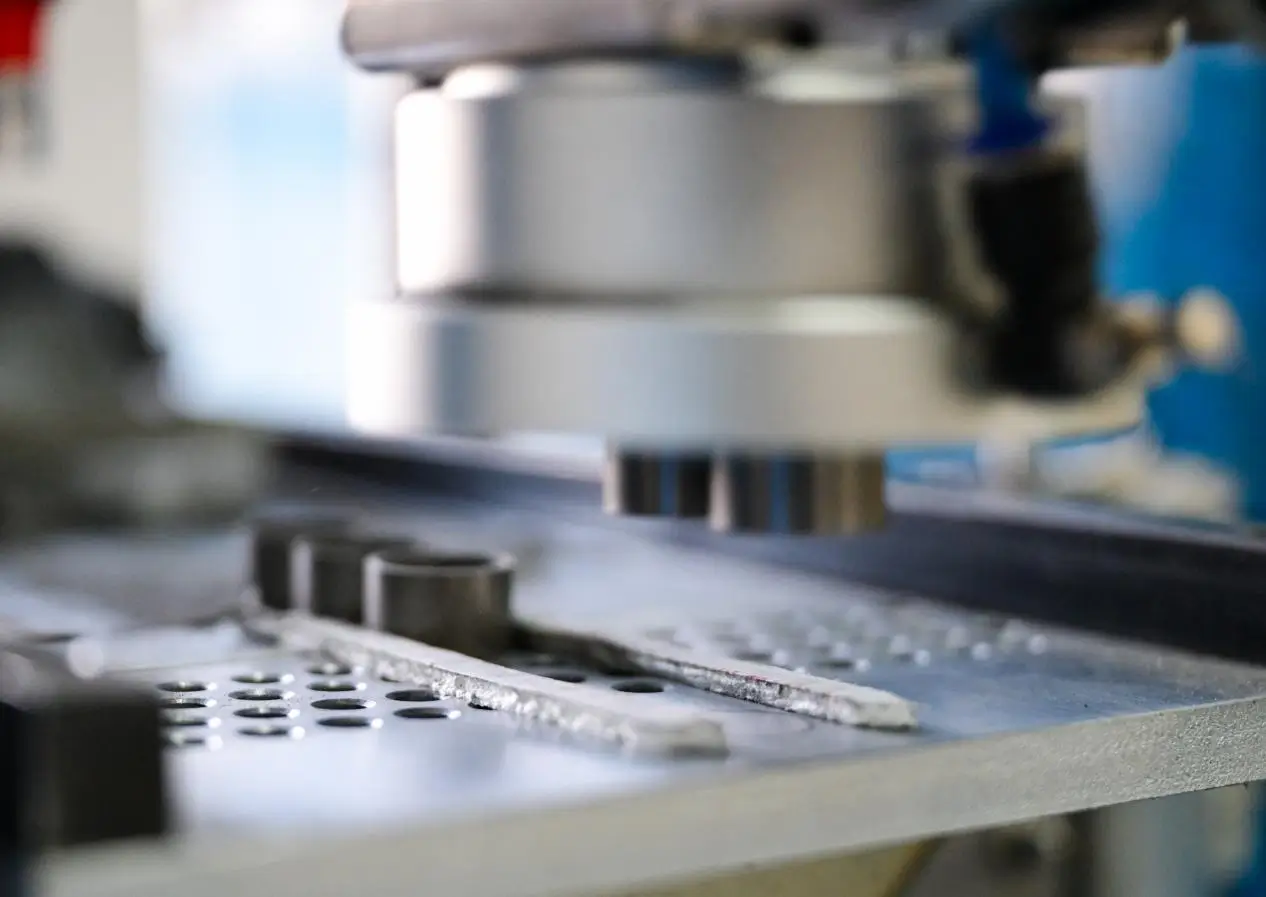
Sintered NdFeB magnets are naturally brittle. They often come in shapes that need more work. So, workers machine the sintered blocks. They use grinding, slicing, and drilling. They often use diamond tools. These magnets can rust easily. This is true in wet or harsh places. So, they get a surface treatment and coating. Common coatings include nickel-copper-nickel (Ni-Cu-Ni), zinc, epoxy, or parylene. This protective layer is very important. It helps the magnet last long. It also helps it perform well. It stops rust from damaging it.
9.Magnetization and Final Inspection
The last step is magnetization. The finished and coated magnets are exposed to a strong magnetic field. This field is usually a quick pulse. A capacitor discharge magnetizer creates it. This field permanently magnetizes the material. It sets the magnetic direction. After magnetization, each magnet gets a strict final check. Workers test its quality. This includes checking magnetic performance. They look at remanence, coercivity, and energy product. They also check its size and coating. Only magnets that pass all tests are sent out.
Why the Sintered Process Produces the Strongest NdFeB Magnets
The sintered NdFeB production process makes magnets very strong. These magnets have better magnetic traits. Other types include bonded or injection-molded NdFeB. This strength comes from three main reasons:
Higher Density: Sintering packs the powder tightly. It reaches almost full density. This removes empty spaces. These spaces would make the magnetic field weaker. Bonded magnets, however, contain a lot of non-magnetic glue. This makes them less dense. It also lowers their magnetic power.
Better Magnetic Alignment: The magnetic field alignment step is important. It happens during pressing. This step makes sure the tiny crystals of Nd2Fe14B line up. They point in a chosen direction. This lining up makes the magnet’s strength (remnance, Br) and energy (BHmax) as high as possible. Bonded magnets can also be aligned. But they usually do not line up as well. This is because of the glue and less strong pressing.
Superior Microstructure: High-temperature sintering and later heat treatment create a good structure. This structure has clear Nd2Fe14B grains. A neodymium-rich layer surrounds these grains. This structure is key for high coercivity. It also helps with overall magnetic performance. Bonded magnets do not have this refined metal structure.
Here is a quick comparison of sintered NdFeB with bonded NdFeB and ferrite magnets:
Feature | Sintered NdFeB | Bonded NdFeB | Ferrite Magnets (Ceramic) |
Magnetic Strength (BHmax) | Very High (35-55 MGOe) | Medium (5-12 MGOe) | Low (1-5 MGOe) |
Max Operating Temp | Moderate (80-200°C, grade dependent) | Moderate (100-150°C) | High (250-300°C) |
Cost | High (due to rare-earths & complex process) | Medium (lower rare-earth content) | Low (abundant raw materials) |
Density | High (approx. 7.5 g/cm³) | Medium (approx. 6.0 g/cm³) | Medium (approx. 4.8 g/cm³) |
Typical Applications | EVs, Wind Turbines, MRI, High-perf. Motors | Sensors, Small Motors, Office Equipment | Speakers, Motors, Magnetic Separators |
Where Are Sintered NdFeB Magnets Used? Top Real-World Applications
Sintered NdFeB magnets are very strong. They are also small. These traits make them vital in many modern technologies. Their sintered NdFeB magnets applications range widely. They power electric cars. They also help medical devices work precisely.
Electric Vehicles (EVs) and High-Efficiency Motors
Sintered NdFeB magnets are key to electric vehicles. They are a main part of the EV revolution. Car makers use them in Permanent Magnet Synchronous Motors (PMSMs). These motors are best for EV traction. They offer high power. They are also very efficient. They are small in size. These magnets help EV motors create strong force. They also produce much power. This comes from a smaller space. This leads to longer driving ranges. It also improves car performance. The demand for neodymium magnet production grows. This is because more people buy electric cars.
Renewable Energy – Wind Turbines
Sintered NdFeB magnets are important for green energy. They play a big role in direct-drive wind turbine generators. These turbines are different from older ones. They do not use a gearbox. This reduces maintenance needs. It also makes them more reliable. The magnets have a strong magnetic field. This lets generators make electricity well. They work even when the wind is light. This helps capture more energy. It makes wind power more useful. This drives the growth of uses of sintered NdFeB magnets.
Consumer Electronics
Sintered NdFeB magnets are everywhere. You find them in your phone. You also find them in home entertainment systems. They are in hard disk drives. They help position the read/write heads accurately. They are in smartphone speakers. They also power vibration motors. This gives clear sound and phone alerts. They are in wireless earbuds. This allows for small, high-quality sound. Their power to create strong magnetic fields in tiny packages is key. It helps make electronic gadgets smaller. It also makes them work better.
Medical Equipment
Medical uses need accuracy. They also need reliability. Sintered NdFeB magnets provide both. Their most common use is in MRI machines. These machines need strong, steady magnetic fields. These fields create clear pictures of body parts. Doctors also use them in surgical tools. They are in hearing aids. They help with sound. Their strength and small size are critical in these devices.
Industrial & Automation
In factories, sintered NdFeB magnets improve work. They help with automation. They are parts of many sensors. These sensors check position or speed. They are in robots. They help with exact movements. They are in magnetic separators. These sort materials in recycling. They also work in mining. They are in various holding devices. Their strong magnetic force ensures steady operation. They work well in tough industrial places.
Other Emerging & Surprising Uses
Sintered NdFeB magnets appear in new places. They are in aerospace systems. They are also in defense systems. These include control parts and guidance systems. They are in magnetic levitation (Maglev) trains. These trains move without friction. They travel very fast. They are even in magnetic therapy devices. People constantly seek better performance. They also want smaller devices. This means new uses of sintered NdFeB magnets will keep appearing.
Challenges and Limitations of Sintered NdFeB
Sintered NdFeB magnets are amazing. But they also have some problems. These magnets face several challenges.
Temperature Limits: High-grade NdFeB magnets work up to 200°C. Their magnetic power drops a lot at higher heat. This is important for hot places. Examples include some industrial motors. It also includes powerful electronics. The Curie temperature is quite low. Other magnet types handle more heat.
Brittleness: Sintered NdFeB is hard. It is also brittle. It can chip or crack easily. This happens if you drop it. It also happens if it gets hit. So, workers must handle it carefully. Applications need strong ways to hold them.
Rare-Earth Supply/Price Volatility: The main materials are rare-earth elements. Neodymium and dysprosium are examples. Their supply can be tricky. World events can affect their price. This causes prices to change a lot. People worry about getting enough for a long time. This makes scientists look for ways to use less rare earth. They also look for other magnet materials.
Corrosion without Coating: NdFeB metals react easily. They can rust and corrode. This happens especially in wet places. Without good coatings, their magnetic power can quickly get worse. This is true in harsh environments. A protective layer is very important.
Recycling Difficulties: People are trying to recycle NdFeB magnets. But it is still hard. It is not always cheap or easy. The magnets have many different metals. It is hard to separate them from old products. This makes large-scale recycling difficult. It means we still rely on new resources from the earth.
Conclusion
The sintered NdFeB production process is amazing. It starts with weighing raw materials. It ends with the final magnetic pulse. This process shows modern science and engineering. This complex journey changes common elements. It makes them into the world’s strongest magnets. These magnets deliver great performance. They come in small sizes. Careful control happens at each NdFeB manufacturing step. This includes melting and strip casting. It also includes hydrogen decrepitation and jet milling. Magnetic alignment and high-temperature sintering are also key. These steps give the magnets their unmatched strength. They also give them their efficiency.
Sintered NdFeB magnets are still very important. They are vital in our fast-changing world. Their big impact is clear. You see it in electric cars. You see it in green energy. You see it in small electronics. You also see it in precise medical tools. Industries always need better performance. They want more efficiency. They also need smaller parts. So, the uses of sintered NdFeB magnets will grow. There are still challenges. Rare-earth supply can change. Temperature limits exist. But research continues. Scientists work on using less heavy rare-earth elements. They develop new methods like grain boundary diffusion. They also improve recycling. This promises a stronger future for these magnetic powerhouses. It will also be more sustainable.