


Engineers and product designers often ask a key question. How does heat change neodymium magnets in tough industrial settings?Neodymium magnets are the strongest permanent magnets you can buy today. Yet they react strongly to changes in temperature.When the temperature goes up, the magnets lose some power. Heat shakes up the tiny magnetic domains inside.These domains start to point in random directions. That makes the overall magnetic field weaker.Each grade of neodymium magnet has its own limit. Most standard grades work well up to about 80°C (176°F).Some special high-temperature grades can handle more heat. They stay strong even up to 200°C (392°F) in certain cases.The key point is simple. Always check the magnet’s grade before using it in a hot environment.Pick the right one, and it will perform reliably. Choose wrong, and the magnet can lose strength fast or even become useless.
Quick Refresher: What Makes Neodymium Magnets So Powerful?
Neodymium magnets are made from an alloy of neodymium, iron, and boron.Its formula is Nd₂Fe₁₄B.This alloy forms a special tetragonal crystal structure.That structure gives the magnet very strong resistance to changing its magnetic direction.We call this property high magnetocrystalline anisotropy.It means the magnet really wants to keep its magnetism pointed one way.The strength of a permanent magnet is measured by something called Maximum Energy Product.People write it as BH_max and measure it in MGOe.Neodymium magnets have the highest BH_max of any commercial magnet.Their values usually range from 30 to 55 MGOe.
This high energy density lets designers make parts much smaller.Yet the magnets still deliver strong holding power or torque.Manufacturers use two main ways to make these magnets.Each method affects how well the magnet handles heat and keeps its strength.
Sintered vs Bonded Neodymium Magnets
Understanding the manufacturing method is critical for predicting thermal behavior.
| Parameter | Sintered NdFeB Magnets | Bonded NdFeB Magnets |
| Production Method | Pressed powder heated for densification | Magnetic powder mixed with polymer resin |
| Maximum Energy Product (BHmax) | 200–400 kJ/m^3 (Highest strength) | 70–120 kJ/m^3 (Lower strength) |
| Maximum Operating Temperature | Up to 230°C (with specific heavy rare earth alloys) | Limited to 150°C (constrained by polymer binder) |
| Temperature Coefficient (alpha Br) | -0.11% / °C | -0.12% to -0.15% / °C |
| Corrosion Resistance | Poor (Requires Ni-Cu-Ni or epoxy coating) | Good (Protected by the polymer matrix) |
| Shape Flexibility | Limited to basic blocks, discs, and cylinders | Excellent (Can be injection molded into complex shapes) |
Sintered neodymium magnets give the strongest magnetic power.They also handle heat better than bonded ones.Bonded neodymium magnets let you shape them in more ways.Their plastic binders make them resist rust naturally.Those same binders break down easily in high heat.That limits how hot bonded magnets can get.Neodymium magnets are the strongest at normal room temperature.Still, their crystal structure has a big weakness.The tiny atomic bonds that keep magnetism lined up are not very heat-stable.Older magnets like Samarium Cobalt or Alnico hold their magnetism better when things get hot.
The Science of Temperature on Magnetism
Neodymium magnets lose strength when they get hot.To really understand why, look closely at what happens inside the material.A magnet has billions of tiny areas called magnetic domains.Inside each domain, the atoms line up their tiny magnetic pulls in the same direction.In a fully charged neodymium magnet, most domains point the same way toward the north pole.
Heat means atoms move faster.As the temperature goes up, atoms in the Nd₂Fe₁₄B crystal shake more and more.This shaking fights against the forces that keep the magnetic directions lined up neatly.
When the heat gets strong enough, atoms start to wiggle wildly.Their quick movements break the perfect alignment of magnetic moments.Domains begin to point in random directions.When that happens, the magnetic fields from different domains cancel each other out.The magnet’s overall pull gets weaker as a result.
Neodymium magnets have a negative temperature coefficient.This means their magnetic strength drops steadily as the temperature rises.The drop happens at a fairly even rate for each degree of extra heat.
The Reversible Temperature Coefficients (α and β)
Engineers utilize two specific metrics to calculate expected thermal losses in motor and sensor designs:
- α(Alpha) – Reversible Temperature Coefficient of Induction (Br): This value defines the percentage of residual magnetic flux lost per degree Celsius increase. For standard sintered neodymium magnets, $\alpha$ typically equals -0.11% to -0.12%/°
- β(Beta) – Reversible Temperature Coefficient of Intrinsic Coercivity (Hcj): This value defines the percentage of resistance to demagnetization lost per degree Celsius increase. For neodymium, $\beta$ falls between -0.40% and -0.65%/°C.
The β value matters a lot in electric vehicle motor design.It plays a key role there.β is much bigger than α in neodymium magnets.This difference creates an important effect when heat builds up.A neodymium magnet loses its ability to fight against opposing magnetic fields quickly.That ability is called coercivity.At the same time, its basic magnetic strength drops much more slowly.That strength is known as remanence.Heat hurts the magnet’s resistance to demagnetization far faster than it weakens the raw pull.Engineers keep this in mind when they pick magnets for car motors.They need parts that stay strong even under hot running conditions.
Key Temperature Thresholds Every User Must Know
Engineers must know two key temperature limits when checking NdFeB magnets.Every datasheet lists both of them clearly.One limit shows the safe range for normal use.The other marks the point where the magnet starts to fail for good.These numbers help set safe working conditions.They also warn about absolute danger zones.Staying below the safe limit keeps the magnet strong.Going past the failure point can ruin it quickly.
Maximum Operating Temperature
The maximum operating temperature is the hottest level a magnet grade can handle.Above that point, it starts to lose strength forever.If you keep the magnet cooler than this limit, the heat only messes things up for a little while.The tiny magnetic parts get jumbled but snap back when it cools down.
Regular neodymium magnets have a max of 80°C (176°F).That’s their safe upper limit in most cases.Special high-temperature versions add heavy rare earth elements.Those extras make the crystal structure much tougher against heat.With those changes, the max temperature can climb as high as 230°C (446°F).Some grades reach that level without permanent damage.Going over the listed max temperature always hurts the magnet for good.Its power drops and never fully comes back.
Curie Temperature of Neodymium Magnets
The Curie temperature is the absolute hottest point for neodymium magnets.At that exact temperature, heat totally overpowers the magnetic forces inside.The tiny magnetic domains get completely scrambled.The material switches from being strongly magnetic to barely magnetic at all.
Standard NdFeB magnets have a Curie temperature between 310°C and 370°C (590°F to 698°F).That’s the point of no return for their natural magnetism.Once a magnet hits its Curie point, it loses all of its pull.Even after it cools back down to room temperature, it stays completely weak.The magnet has zero magnetic strength left at that stage.You need strong industrial machines to remagnetize it and bring the power back.
Temperatures close to 900°C do even worse damage.That much heat changes the metal structure forever.After such extreme heat, no amount of remagnetizing will work.The magnet becomes useless for good.
Warning: The Curie temperature is only a theoretical limit for complete failure.In real life, it is not something engineers use for everyday designs.A neodymium magnet starts to lose its strength badly way before it hits that point.The damage becomes permanent long before reaching the Curie temperature.Engineers should never rely on the Curie point for their plans.They must always use the Maximum Operating Temperature as their guide.That number keeps the magnet working safely and reliably.Ignoring it can ruin the magnet much earlier than expected.
Maximum Operating Temperature by Grade
The permanent magnet industry uses a simple letter-number code for neodymium magnets.It starts with the letter “N” to stand for neodymium.Next comes a two-digit number like 35, 42, or 52.That number shows the magnet’s maximum energy product in MGOe.
The most important part for heat comes at the end.Manufacturers add a letter suffix to show how well the magnet handles high temperatures.These higher heat ratings come from mixing in special elements.Metallurgists add heavy rare earths like dysprosium or terbium to the basic Nd₂Fe₁₄B alloy.Those extra elements greatly boost the magnet’s resistance to heat.This boost is called higher intrinsic coercivity, or H_cj.With stronger coercivity, the magnet can take much more heat.It keeps its magnetic direction steady without flipping permanently.
NdFeB Magnet Grades Temperature Range Table
The following table details the neodymium magnet grades temperature maximums industrial standards:
| Grade Suffix | Meaning | Max Operating Temp (°C) | Max Operating Temp (°F) | Typical Application |
| None (e.g., N52) | Standard | 80°C | 176°F | Consumer electronics, packaging, sensors |
| M (e.g., N48M) | Moderate | 100°C | 212°F | Small DC motors, audio speakers |
| H (e.g., N45H) | High | 120°C | 248°F | Industrial actuators, magnetic separators |
| SH (e.g., N42SH) | Super High | 150°C | 302°F | Electric vehicle (EV) traction motors |
| UH (e.g., N38UH) | Ultra High | 180°C | 356°F | Wind turbine generators, alternators |
| EH (e.g., N35EH) | Extremely High | 200°C | 392°F | Aerospace components, heavy machinery |
| AH / TH / VH | Top Level | 230°C | 446°F | Down-hole drilling equipment, extreme environments |
Data compiled from industry technical specifications. Note: High-energy grades like N50 and N52 without suffixes often possess a lower practical operating limit of 60°C due to their optimized maximum remanence over coercivity.
Manufacturers face a basic trade-off when making neodymium magnets.Adding dysprosium boosts the temperature rating shown by the suffix.That same addition lowers the maximum energy product shown by the N-number.The two qualities work against each other.A super-strong grade like N52EH simply does not exist.You cannot get both top strength and top heat resistance at once.Engineers who need extreme heat resistance, such as the EH rating for 200°C, have to accept weaker raw power.They usually end up with something around N35EH.That lower N-number still provides decent strength for many hot environments.It just means the magnet cannot push or pull as hard as the highest N-grades.
Reversible vs Irreversible Loss Explained
Material scientists split magnetic field loss into three main types when checking heat performance.These types are reversible loss, irreversible loss, and permanent loss.Reversible loss means the magnet gets weaker only while it is hot.It goes back to full strength once it cools down.Irreversible loss happens when heat causes some lasting damage.The magnet stays weaker even after it returns to room temperature.Permanent loss is the worst kind.The magnet loses its power for good and cannot recover at all.Knowing the difference between reversible and irreversible loss helps a lot.Engineers can then design parts that work safely and last longer.
Reversible Loss
Reversible losses manifest when the ambient temperature rises, but the magnet remains below its designated Maximum Operating Temperature.
Heat makes the tiny magnetic domains wiggle a little out of line.This causes a small, temporary drop in the magnet’s power.The drop follows a pattern called the α temperature coefficient.For most neodymium magnets, strength decreases in a straight line as heat rises.A typical N42 magnet loses about 0.11% of its pull for each 1°C increase.If the temperature climbs from 20°C to 70°C, the magnet’s pulling force drops by around 5.5%.That loss feels noticeable in real use.Once the magnet cools back down to 20°C, everything changes.The magnetic domains snap right back into perfect order.The magnet gets back 100% of its original strength on its own.No permanent damage occurs at all.
Irreversible Loss
Irreversible losses occur when the environmental temperature exceeds the Maximum Operating Temperature but stays below the Curie temperature.
Too much heat flips some magnetic domains for good.These domains turn around and point the wrong way.They line up against the main magnetic direction.The magnet loses a big part of its strength right away.When it cools back to room temperature, nothing fixes itself.The flipped domains stay reversed.The magnet ends up permanently weaker.The metal alloy itself does not get damaged.Its basic structure holds together fine.Manufacturers can still save the magnet.They put it into a strong industrial magnetizing coil.A huge outside magnetic field gets applied.This powerful pulse forces all domains back into line.The magnet returns to full strength again.
Permanent Structural Loss
Permanent losses happen when the temperature goes way too high.It climbs above the original sintering temperature of the material.This usually means temperatures over 900°C.
Such extreme heat causes big, permanent changes in the metal.These changes wreck the special Nd₂Fe₁₄B crystal structure completely.Once that happens, the magnet can never be charged up again.No amount of remagnetizing will bring it back.The whole alloy gets ruined for good.It turns into useless scrap metal.There is no way to fix or reuse it after that point.
What Happens When Temperature Rises (B-H Curve Dynamics)
Engineers use a special chart to predict when a magnet will lose its strength for good due to heat.This chart is called a demagnetization curve.People also know it as a B-H curve.It shows magnetic flux density (B) on the up-and-down Y-axis.The side-to-side X-axis shows an opposing external field (H) trying to wipe out the magnetism.
A typical neodymium B-H curve looks mostly flat and straight for a long way.It stays high and level at first.Then it drops sharply all of a sudden.This quick drop is called the knee point.The knee point marks where the magnet starts to weaken fast.Engineers watch this spot closely to avoid trouble in real use.
The Knee Point Shift
The main cause of heat-related magnet failure is how the knee point moves on the chart.At room temperature of 20°C, neodymium magnets have very strong resistance to losing their magnetism.This resistance is called intrinsic coercivity.The knee point sits far to the left on the graph.It often reaches deep into the third quadrant.In that position, the magnet handles opposing forces with ease.
As heat rises, intrinsic coercivity falls quickly.The knee point starts to slide upward and to the right.It moves into the second quadrant where the action happens.Once there, the magnet becomes much easier to demagnetize.Engineers watch this shift closely to keep things safe.
The Load Line and Permeance Coefficient
The shape of a magnet decides its Permeance Coefficient, or Pc.A tall and skinny magnet has a high Pc.A flat and wide disc magnet has a low Pc.Engineers draw the Pc as a straight line on the B-H graph.This line starts right at the origin.People call it the load line.Where the load line crosses the B-H curve shows the magnet’s real working spot.That spot is the operating point.
If the operating point stays above the knee point, only temporary losses happen.Heat makes the knee point move up and to the right.The knee keeps shifting as temperature rises.At some point, the knee crosses over the load line.When the operating point drops below the knee, big trouble starts.The magnet loses strength right away and for good.This is irreversible demagnetization.When the magnet cools down later, it does not go back to normal.It settles on a new, much lower operating line.The magnet stays weaker forever after that.
Pro Tip: To protect magnets in high-heat environments without paying premium prices for high-temperature grades, engineers can alter the physical dimensions of the magnet. Increasing the thickness of the magnet in the direction of magnetization increases the Permeance Coefficient. This dimension change steepens the load line. A steeper load line keeps the operating point safely above the shifting knee point during thermal spikes.
Low-Temperature Performance
Neodymium magnets handle extreme cold much better than heat.They actually get stronger in low temperatures.As the temperature drops below room temperature, the magnet’s remanence (Br) goes up.Its maximum energy product (BHmax) also increases.These changes make the magnet pull harder.
At -100°C, a typical neodymium magnet becomes about 2% stronger than at room temperature.The boost comes from how the atoms behave in the cold.Even at -196°C in liquid nitrogen, the magnet still works well.It keeps around 87% of its normal room-temperature strength.That level is still very useful for many jobs.When the magnet warms back up to room temperature, everything returns to normal.It regains 100% of its original power safely.Cold does not cause any lasting damage at all.This makes neodymium magnets great for things like space equipment or cryo applications.
The Spin Reorientation Transition (SRT)
Cooling neodymium magnets to very low temperatures causes a special change.This change is called the spin reorientation transition.
At room temperature, the magnetic easy axis in Nd₂Fe₁₄B lines up straight with the crystal’s c-axis.Everything stays perfectly aligned.When the temperature drops below 135 Kelvin, or about -138°C, things shift.The preferred direction for magnetism starts to tilt away from the c-axis.It moves outward at an angle.This creates what experts call a 30-degree easy-cone pattern.
The sudden change makes the magnet lose usable magnetic pull fast.The drop can reach up to 15%.That loss happens right away.For jobs in space or near absolute zero, engineers avoid neodymium magnets completely.They need steady magnetic fields in extreme cold.Instead, they choose Praseodymium-Iron-Boron magnets, or Pr-Fe-B.These keep their c-axis alignment even at very low temperatures.Another good option is Samarium Cobalt, or SmCo.Its resistance to demagnetization actually gets stronger as it cools down to 2 Kelvin.Both choices work reliably where neodymium would fail.
How to Choose the Right High-Temperature Neodymium Magnet Grade
Engineers must utilize a comprehensive decision matrix to select the appropriate permanent magnet for high-temperature applications. When the operating environment exceeds 150°C, the choice often comes down to high-grade NdFeB or Samarium Cobalt (SmCo).
Neodymium vs. Samarium Cobalt Temperature Decision Matrix
| Specification | High-Temp Neodymium (NdFeB) | Samarium Cobalt (SmCo) |
| Max Energy Product (BHmax) | Extremely High (up to 42 MGOe for SH) | High (16 to 32 MGOe) |
| Max Operating Temp (Tmax) | 150°C to 230°C (Requires SH/UH/AH grades) | 300°C to 350°C |
| Curie Temperature (Tc) | 310°C to 370°C | 700°C to 850°C |
| Temp Coefficient of Remanence (α) | High (-0.11% / °C) | Very Low (-0.035% / °C) |
| Corrosion Resistance | Poor (Requires protective coating) | Excellent (No coating needed) |
| Mechanical Strength | Brittle | Very Brittle |
| Cost Profile | High (Due to Dysprosium additions) | Very High (Due to Cobalt scarcity) |
Engineers pick high-temperature NdFeB magnets like N42SH or N38UH for certain jobs.These magnets give the strongest pull possible in a tiny size.Miniaturization and maximum strength come first.The temperature in the device must never go above 180°C.Cooling systems have to stay in place to keep things safe.
For hotter spots, engineers turn to SmCo magnets instead. Aerospace parts often need them.Down-hole drilling tools use them too. Marine equipment relies on SmCo in tough conditions. These magnets handle temperatures over 200°C without trouble. SmCo keeps its magnetic strength very steady.Its output barely changes even when heat goes up and down.The performance stays almost flat across a wide temperature range.SmCo also fights rust on its own. No extra coatings are needed to protect it from corrosion.T hat makes it simple and reliable in harsh places
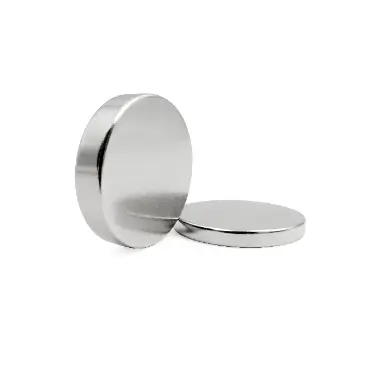
Nibboh’s NdFeB magnets can be made according your design with different grades to meet the application.
Nibboh’s factory is in a prime location, close to the port and the airport.
Nibboh Magnets has over 10 years of professional experience in producing permanent magnet materials.
We have excellent professional expertise and a comprehensive service system.
Conclusion
Temperature dictates the operational boundaries of permanent magnet technology. As industrial trends demand smaller, denser, and more powerful components, the heat generated within enclosed systems continues to rise. Neodymium magnets offer unparalleled strength, but their vulnerability to thermal demagnetization, governed by shifting B-H curves and negative thermal coefficients, requires strict engineering oversight.